
Abatacept significantly reduced steroid-refractory chronic graft versus host disease and the use of prednisone following allogeneic hematopoietic stem cell transplantation.
Abatacept significantly reduced steroid-refractory chronic graft versus host disease and the use of prednisone following allogeneic hematopoietic stem cell transplantation.

The European Medicines Agency’s Committee for Medicinal Products for Human Use has recommended granting marketing authorization to capmatinib for use as a single agent in select adult patients with advanced non–small cell lung cancer harboring a METex14 skipping alteration.

The European Medicines Agency’s Committee for Medicinal Products for Human Use has adopted a positive opinion supporting the approval of adjuvant atezolizumab, after complete resection and platinum-based chemotherapy, in adult patients with non–small cell lung cancer with a high risk of recurrence and whose tumors express PD-L1 of 50% or higher and do not harbor EGFR mutations or ALK alterations.
The Damon Runyon Cancer Research Foundation awarded a total of $3.6 million to 9 winners of the Damon Runyon-Rachleff Innovation Awards. The grants support investigators whose ideas have the potential to significantly advance the prevention, diagnosis, or treatment of cancer.

Matthew Galsky, MD, discusses the impact of recent developments in the advanced urothelial carcinoma treatment paradigm.
Short-term radiotherapy followed by total neoadjuvant chemotherapy was found to be noninferior to long-term chemoradiotherapy in patients with locally advanced rectal cancer, according to findings from the phase 3 STELLAR study.

Scientists at Yale Cancer Center have discovered new consequences of specific gene mutations that play a role in the development of myelodysplastic syndromes and acute myeloid leukemia.

Ruben Mesa, MD, Jamile M. Shammo, MD, FASCP, FACP, Angela G. Fleischman, MD, PhD, and Stephen T. Oh, MD, PhD discuss the emerging treatment landscape in myelofibrosis.

Recent developments across the breast cancer paradigm include the utilization of trastuzumab deruxtecan in patients with metastatic HER2-positive breast cancer, plus neoadjuvant treatment strategies in triple-negative breast cancer.

The FDA has granted an orphan drug designation to the PD-1 inhibitor toripalimab as a potential therapeutic option for patients with small cell lung cancer.

The FDA has granted a fast track designation to the antibody-drug conjugate CMG901 as a single-agent treatment for patients with unresectable or metastatic gastric and gastroesophageal junction cancer that is relapsed or refractory to approved therapies.
In a 16 to 0 vote, with 1 abstention, the FDA’s Oncologic Drugs Advisory Committee voted in support of basing future approvals for PI3K inhibitors on randomized data instead of single-arm clinical trials.

The safety, tolerability, and preliminary efficacy of the irreversible, small molecule pan-FGFR inhibitor KIN-3248 is under investigation in adult patients with advanced tumors harboring FGFR2 and/or FGFR3 gene alterations, as part of the phase 1 KN-4802 trial.
Press Release
Investigators from Hackensack University Medical Center’s John Theurer Cancer Center confirm that cryopreserved stem cells collected before a first stem cell transplant to treat multiple myeloma are just as viable and potent for use in a second "salvage" transplant 20 years later.

Traditional eligibility criteria for pancreatic cancer clinical trials reinforce underrepresentation of racial and ethnic minorities in clinical trial candidacy and skew standards of care in favor of non-Hispanic White participants.
The addition of novel anti–LAG-3 antibody relatlimab-rmbw to antiPD-1 antibody nivolumab offers treatment-naïve patients with unresectable or metastatic melanoma an efficacious and tolerable immunotherapy treatment option.

Hadeel Assad, MD, discussed how CDK4/6 inhibitors have been implemented into practice and provided updates on key clinical trials in HER2-positive breast cancer and triple-negative breast cancer.

The FDA has granted a fast track designation to the CAR T-cell therapy ADI-001 for the treatment of patients with relapsed/refractory B-cell non-Hodgkin lymphoma.

Roy S. Herbst, MD, PhD, discusses the rationale for exploring immunotherapy/TKI combinations like pembrolizumab plus lenvatinib in patients with non–small cell lung cancer, and outlined the different efforts that comprise the LEAP clinical trial program.

Ulka Nitin Vaishampayan, MBBS, discusses the intent of the PROBE trial, as well as updates regarding the KEYNOTE-564 trial and novel agents in kidney cancer treatment.

Standard chemoradiation therapy regimens have had marked success for patients with muscle-invasive bladder cancer; however, up to 30% of patients who receive treatment with bladder preserving intent will have recurrence.

Press Release
Rebecca D. Edmonds, MD, a surgical oncologist specializing in the treatment of diseases of the liver, pancreas, gallbladder, spleen, colon, thyroid and breast, has joined the Allegheny Health Network Cancer Institute.

Pragmatic clinical trials “inform a clinical or policy decision by providing evidence for adoption of the intervention into real-world clinical practice.”
David P. Carbone, MD, PhD, discusses the evolution of immunotherapy and targeted therapy in non–small cell lung cancer and the importance of biomarker testing for personalized therapy.

The combination of tislelizumab and gemcitabine/cisplatin continued to demonstrate a greater progression-free survival benefit than chemotherapy alone when used in the frontline treatment of patients with recurrent or metastatic nasopharyngeal cancer.
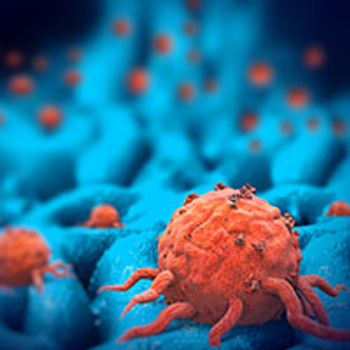
The safety, tolerability, and preliminary efficacy of the anti-HER2 CAR macrophage therapy, CT-0508, will be investigated in patients with solid tumors and HER2 overexpression, as part of a first-in-human phase 1 study.

Marlana M. Orloff, MD, overviews how pivotal efficacy and safety data of tebentafusp will improve the treatment paradigm for adult patients with HLA-A*02:01–positive unresectable or metastatic uveal melanoma.
Trastuzumab emtansine as a second-line treatment led to shorter median treatment duration and time to treatment failure in patients with HER2-positive metastatic breast cancer who progressed on pertuzumab and trastuzumab–based regimens.
The FDA has accepted for priority review a supplemental biologics license application for trastuzumab deruxtecan for the treatment of adult patients with unresectable or metastatic non–small cell lung cancer whose tumors have a HER2 mutation and who have received a prior systemic therapy.

Press Release
Elizabeth Plimack, MD, MS, chief of the Division of Genitourinary Medical Oncology and professor in the Department of Hematology/Oncology at Fox Chase Cancer Center, has been appointed Deputy Director.