
The NCCN guidelines for AML have been updated to include ziftomenib as a category 2A recommendation for NPM1-mutant, relapsed/refractory AML management.
The NCCN guidelines for AML have been updated to include ziftomenib as a category 2A recommendation for NPM1-mutant, relapsed/refractory AML management.

Sonrotoclax is under priority review by the FDA for the treatment of adult patients with relapsed or refractory, BTK inhibitor–pretreated MCL.
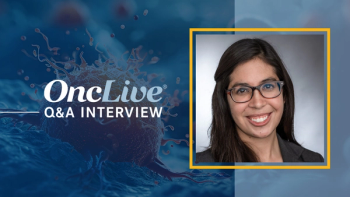
Christine Ryan, MD, discusses the limitations of current MCL treatment strategies, advances in treatment, and the evolving role of BTK inhibition.

T-DM1 showed the lowest LVEF decline vs other HER2-targeted regimens, underscoring key differences in cardiac safety.

Experts discuss insights and considerations for identifying and managing HER2-mutated non–small cell lung cancer.
B7-H3–directed CAR T cell therapy was well-tolerated and demonstrated an acceptable safety profile in recurrent glioblastoma.

The FDA approved durvalumab plus FLOT for the perioperative treatment of resectable gastric and gastroesophageal junction cancers.

Joshua Richter, MD, discusses the evaluation of the FcRH5 x CD3 bispecific antibody in multiple myeloma.

Liso-cel was approved in the EU for relapsed/refractory MCL after at least 2 lines of therapy, including a BTK inhibitor.

Subcutaneous toripalimab generated non-inferior efficacy and safety outcomes vs the IV formulation in recurrent/metastatic non squamous NSCLC.

Roswell Park Comprehensive Cancer Center unveiled a comprehensive mobile cancer screening initiative for breast and prostate cancer.

OBI-902 received orphan drug designation from the FDA for the treatment of patients with cholangiocarcinoma.

In a recent Peer Exchange, bladder cancer experts reviewed the current treatment paradigm for muscle-invasive bladder cancer (MIBC) and discussed updates from ESMO 2025.
INDIGO TGR analyses showed vorasidenib markedly slowed tumor growth and improved PFS and TTNI vs placebo in IDH1/2-mutant grade 2 glioma.

MD Anderson Cancer Center received more than $29 million from the Cancer Prevention and Research Institute of Texas to support prevention programs, research efforts, and faculty recruitment.
The FDA granted fast track designation to AVZO-103 for urothelial cancer previously treated with enfortumab vedotin.

Sacituzumab tirumotecan plus pembrolizumab improved PFS as first-line treatment in PD-L1–positive advanced NSCLC.

Shubham Pant, MD, MBBS, explores frontline chemotherapy decision-making in metastatic pancreatic cancer.

Sequential intracerebroventricular and intraventricular administration of CAR T-cell therapy was better tolerated in pediatric central nervous system tumors.
Vorasidenib is being integrated in the real-world setting for the treatment of patients with IDH-mutated glioma.
18F-Fluciclovine PET/MRI detected disease progression and ruled out disease in non-progressors among patients with solid tumor brain metastases.

Phase 2 study finds 177Lu-Dotatate safe in advanced intracranial meningioma, with a 6-month PFS rate surpassing historical benchmarks.

The top 5 OncLive TV videos of the week cover insights in ovarian cancer, lung cancer, urothelial cancer, and prostate cancer.
Erdafitinib had a safety profile that was deemed tolerable in patients with recurrent or progressive IDH wild-type glioma harboring F3T3 gene fusions.

Eflornithine plus lomustine produced superior OS and PFS outcomes vs lomustine in WHO grade 3 IDH-mutated astrocytoma.
Temozolomide plus radiotherapy significantly improved OS vs radiotherapy alone in IDH-mutant low-grade gliomas without codeletions of 1q and 19q.
Long-term ReNeu results showed deeper, more durable responses to mirdametinib in NF1-PN with extended treatment in both adults and children.
HER2-directed CAR T-cell therapy was safe in patients with brain/leptomeningeal metastases from HER2-positive breast cancer.

The FDA approved 5 therapeutic options spanning lung cancer, urothelial cancer, NF1-associated PNs, and AL amyloidosis.
B7-H3–directed CAR T-cell therapy given intraventricularly was well tolerated and showed early efficacy signals in patients with recurrent glioblastoma.