

The FDA has approved the Guardant360 CDx as a companion diagnostic for encorafenib in patients with mCRC harboring BRAF V600E mutations.
The FDA has approved the Guardant360 CDx as a companion diagnostic for encorafenib in patients with mCRC harboring BRAF V600E mutations.
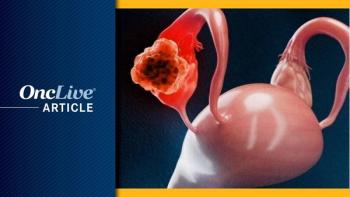
The combination of relacorilant and nab-paclitaxel generated an OS benefit vs nab-paclitaxel monotherapy in platinum-resistant ovarian cancer.

The INAVO123 trial is exploring frontline inavolisib plus a CDK4/6 inhibitor and letrozole in PIK3CA-mutant, hormone receptor–positive breast cancer.

Mutahar Ahmed, MD, FACS, details the transvesical surgical approach for radical prostatectomy.
Maxwell Lloyd, MD, details the implications of DESTINY-Breast11 and DESTINY-Breast05 data for the use of T-DXd in early-stage HER2-positive breast cancer.

Breast cancer experts convened during an OncLive Scientific Interchange and Workshop to discuss the evolving use of oral SERDs in ER-positive breast cancer.

Shaji Kumar, MD, discusses the mechanism of action of cevostamab, as well as data with a cevostamab-containing triplet in relapsed/refractory myeloma.

Extending endocrine therapy beyond 5e years significantly reduces relapse risk in young women with HR-positive early-stage breast cancer.
Sofi-cel has received FDA breakthrough therapy designation for heavily pretreated patients with relapsed/refractory T-ALL and T-LBL.
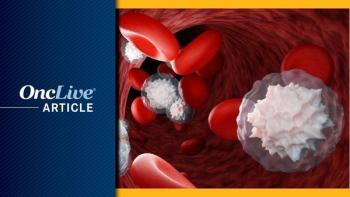
The FDA has granted orphan drug designation to zavabresib for the treatment of patients with myelofibrosis.

HS-20093 demonstrated durable responses and disease control in relapsed/refractory osteosarcoma and STS in phase 2 ARTEMIS-002 trial data presented at ESMO 2025.

Rahul Banerjee, MD, FACP, discusses the ongoing investigations of mezigdomide and CELMoDs in multiple myeloma.

Lung cancer experts stress the importance of lung cancer screening and discuss ways that technological advances are transforming screening processes and outcomes.
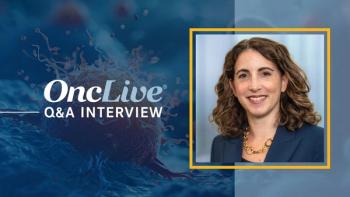
Erica L. Mayer, MD, MPH, discusses updated data with CDK4/6 inhibitors and ongoing investigations of oral SERDs in HR-positive breast cancer.
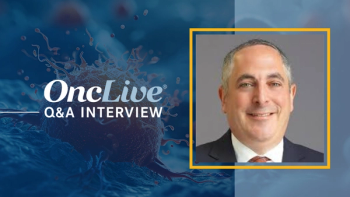
Jonathan H. Sherman, MD, FAANS, FCNS, FACS, discusses innovations in brain surgery and the importance of balancing oncological and functional outcomes.

A research team at Roswell Park has identified an immune-suppressing metabolic checkpoint in the tumor microenvironment, and a way to overcome it.
The FDA has granted fast track designation to gamgertamig for autoimmune hemolytic anemia and immune thrombocytopenia.
The FDA has given priority review to a new drug application for gedatolisib in hormone receptor–positive, HER2-negative, PIK3CA wild-type advanced breast cancer.

Legubicin significantly improved PFS vs doxorubicin in advanced soft tissue sarcoma, with reduced cardiotoxicity and consistent benefit across subgroups.
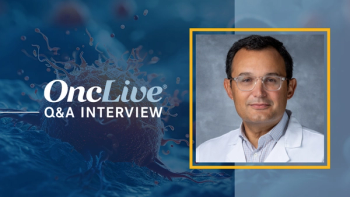
Guillermo Garcia-Manero, MD, discusses how updated VERONA trial data showed no OS benefit with venetoclax plus azacitidine vs azacitidine alone in MDS.
The FDA approval of perioperative enfortumab vedotin plus pembrolizumab reshapes curative-intent care for cisplatin-ineligible MIBC.
Melphalan/HDS produced antitumor activity in metastatic uveal melanoma, including a consistent ORR across key subgroups.

Experts discuss the latest advancements in early lung cancer screening, including biomarkers and technologies that enhance detection and patient outcomes.

Patients with pancreatic lesions have been treated with endoscopy-guided microwave therapy according to researchers at WVU Medicine.
Epcoritamab displayed a significant PFS benefit vs chemotherapy in relapsed/refractory DLBCL.
The EMA has validated a Type II variation application for trastuzumab deruxtecan plus pertuzumab in first-line HER2-positive metastatic breast cancer.
Toripalimab and chidamide demonstrated particularly notable efficacy outcomes in well-differentiated liposarcoma and dedifferentiated liposarcoma.
Xiuning Le, MD, PhD, discusses the FDA approval of sevabertinib for pretreated, advanced, nonsquamous NSCLC with tumors harboring HER2 TKD mutations.
Ianalumab plus ibrutinib showed promising efficacy and uMRD rates with manageable safety in a phase 1b study of patients with CLL.

The top 5 OncLive TV videos of the week cover insights in multiple myeloma, breast cancer, and colorectal cancer.