
Bladder cancer experts share the most anticipated abstracts expected at the 2026 Genitourinary Cancers Symposium.
Bladder cancer experts share the most anticipated abstracts expected at the 2026 Genitourinary Cancers Symposium.
Deepti Radia, MBBS, BSc, MRCPI, FRCPath, MSc Med Ed, discusses 4-year data from the PATHFINDER trial of avapritinib in advanced systemic mastocytosis.
Ibrutinib plus bendamustine and rituximab prolonged PFS in patients with previously untreated mantle cell lymphoma who achieved a CR.

Roswell Park Comprehensive Cancer Center highlighted key presentations from its researchers at TCT 2026.

The FDA has issued REMS safety updates regarding the use of the denosumab biosimilars Enoby and Ospomyv for patients with breast and prostate cancers.

The portable, noninvasive device has been approved for concomitant use with gemcitabine and nab-paclitaxel in locally advanced pancreatic cancer.
OncLive heard from experts across oncology specialties about the biggest updates from the 2026 Transplantation and Cellular Therapy Meetings.

Experts preview key prostate cancer abstracts to watch at the 2026 Genitourinary Cancers Symposium.
Ibrutinib plus venetoclax yielded sustained complete response rates and a favorable safety profile in relapsed/refractory mantle cell lymphoma.

Real-world data showed that adding PD-1 inhibitors to induction chemotherapy extended OS and PFS vs chemotherapy alone in frontline HNSCC.
Patients with mucosal HNSCC deemed unsuitable for curative-intent CRT achieved a 12-month in-field LRC of 80% with high-dose palliative radiation therapy.
Orca-Q produced to high engraftment rates and promising survival outcomes in high-risk hematologic malignancies with haploidentical donors.
The FDA approved the PD-L1 IHC 22C3 pharmDx as a companion diagnostic for patients with PD-L1–positive ovarian cancer who could receive pembrolizumab.
A study from Sylvester Cancer Center suggests that blocking p300 may help resensitize cancer cells to chemotherapy.
An sNDA has been filed with the FDA for aminolevulinic acid topical gel plus RhodoLED red light lamps in superficial basal cell carcinoma.

Experts highlight key RCC studies at the 2026 Genitourinary Cancers Symposium, with a focus on combination-based strategies and patient-reported outcomes.
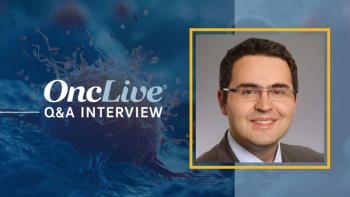
Mehmet Bilen, MD, discusses a retrospective analysis of patients receiving apalutamide vs darolutamide for metastatic castration-sensitive prostate cancer.
The FDA has approved pembrolizumab plus paclitaxel with/without bevacizumab for PD-L1–positive platinum-resistant ovarian cancer.
Experts break down the FDA’s draft guidance on the use of MRD end points to support accelerated drug approvals in multiple myeloma.

Manish A. Shah, MD, and Raji Shameem, MD, discuss potentially paradigm-shifting results from the HERIZON-GEA-01 study.

A Mayo Clinic study demonstrated how treatment sequencing may affect survival in early-stage pancreatic cancer.
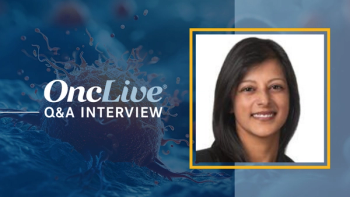
Sunandana Chandra, MD, MS, discusses how resectability, anatomy, prior therapy, and patient fitness guide multidisciplinary treatment decisions in CSCC.
Here is your cheat sheet to all therapeutic options that were cleared by the FDA in January 2025 spanning tumor types.

Orca-T was associated with OS, RFS, and NRM improvements in patients with hematologic malignancies who also received myeloablative conditioning.

Data from the phase 3 LU005 trial found no OS benefit and high immune-related toxicity with concurrent/adjuvant atezolizumab and chemoradiation in LS-SCLC.

Age was correlated with worse survival among those undergoing allogenic hematopoietic cell transplantation for acute lymphoblastic leukemia.

Researchers at Yale School of Medicine have identified biological markers for a rare, aggressive eye cancer that predicts secondary tumors in the liver.
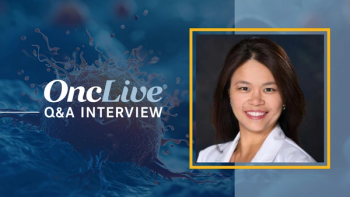
Deborah J. Wong, MD, PhD, discusses data with ficerafusp alfa plus pembrolizumab in HPV-negative HNSCC.
Neoadjuvant pembrolizumab plus docetaxel and cisplatin produced a high ORR and a high OS rate in resectable HNSCC.

The top 5 OncLive TV videos of the week cover insights in acute lymphoblastic leukemia, breast cancer, urothelial cancer, ovarian cancer, and follicular lymphoma.