Sarah Crafton, MD, discusses the role of secondary surgical cytoreduction in recurrent ovarian cancer.
Sarah Crafton, MD, discusses the role of secondary surgical cytoreduction in recurrent ovarian cancer.

The UK National Institute for Health and Care Excellence has approved palbociclib in combination with fulvestrant for the treatment of female patients with hormone receptor–positive, HER2-negative locally advanced or metastatic breast cancer who have received prior endocrine therapy.
Kathryn E. Beckermann, MD, PhD, discusses the available single-agent and combination options for the treatment of patients with metastatic renal cell carcinoma.

The director of Sylvester Comprehensive Cancer Center is named the first holder of the Oscar de la Renta Endowed Chair in Cancer Research.
Daniel A. Barocas, MD, MPH, FACS, discusses the CEASAR study in prostate cancer, as well as therapeutic updates in renal cell carcinoma.

The FDA has granted a priority review designation to pembrolizumab for the treatment of patients with Bacillus Calmette-Guerin–unresponsive, high-risk, non-muscle invasive bladder cancer with carcinoma in-situ with or without papillary tumors who are ineligible for or chose to not undergo cystectomy.

The FDA has granted a priority review designation to a supplemental Biologics License Application for durvalumab for the frontline treatment of patients with extensive-stage small cell lung cancer.
China’s National Medical Products Administration has granted approval to enzalutamide for the treatment of patients with metastatic castration-resistant prostate cancer who are asymptomatic or mildly symptomatic following progression on androgen deprivation therapy in whom chemotherapy is not yet clinically indicated.
Sam S. Chang, MD, discusses the utility of genetic testing in prostate cancer and pivotal research efforts.

Experts from West Cancer Center highlighted the exciting research being conducted at their institution.

The FDA has granted a priority review to a new drug application for pemigatinib as a treatment for patients with previously treated, locally advanced or metastatic cholangiocarcinoma with FGFR2 fusions or rearrangements.
Mary J. Fidler, MD, discusses how recent research has impacted the EGFR-mutant non–small cell lung cancer landscape.

Raajit K. Rampal, MD, PhD, discusses current available treatments for patients with polycythemia vera and myelofibrosis, as well as the unmet needs in this area of research.

China’s National Medical Products Administration has approved the combination of pembrolizumab plus carboplatin and paclitaxel for the first-line treatment of patients with metastatic squamous non–small cell lung cancer.

Sham Mailankody, MBBS, discusses ongoing research and recent advances in relapsed/refractory multiple myeloma.

Lee S. Schwartzberg, MD, FACP, discusses paradigm shifts in hormone receptor–positive breast cancer and triple-negative breast cancer.

Single-agent vorasidenib or ivosidenib led to brain penetrance and 2-hydroxyglutarate suppression in patients with low-grade glioma who harbor IDH1 mutations.

The Chinese-manufactured trastuzumab biosimilar HLX02 demonstrated similar objective response rates to the reference product at 24 weeks in patients with treatment-naïve or recurrent metastatic HER2-positive breast cancer.

Treatment with brigatinib demonstrated a 57% reduction in the risk of disease progression or death compared with crizotinib in patients with advanced ALK-positive non–small cell lung cancer who had not received a prior ALK inhibitor.

Jamie E. Chaft, MD, explains how the PACIFIC trial has impacted the treatment of patients with stage III unresectable non–small cell lung cancer and the research being done to move immunotherapy into the neoadjuvant setting.

Sergio A. Giralt, MD, discusses the changing frontline treatment setting in multiple myeloma, how to determine transplant eligibility, and the utility of testing for minimal residual disease negativity.
After 3 years of struggling to meet targets for improved care quality and cost efficiency, many of the 175 practices that have remained in the Oncology Care Model of the Centers for Medicare & Medicaid Services have a decision to make: Assume a share of the downside risk for failure to meet financial targets or exit the OCM by December 3.

The frontline combination of atezolizumab (Tecentriq) and bevacizumab (Avastin) reduced the risk of disease progression or death by 42% compared with sorafenib (Nexavar) in patients with unresectable hepatocellular carcinoma.
Floor J. Backes, MD, discusses subtle differences among PARP inhibitors that can help determine their optimal use in advanced ovarian cancer.
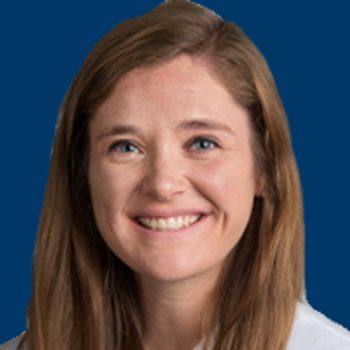
Christine Bestvina, MD, discusses immunotherapy options in squamous non–small cell lung cancer, unanswered questions regarding patient selection, and directions for future research.

Nisha A. Mohindra, MD, detailed current treatment strategies and some of the next-generation inhibitors that could shift sequencing approaches in ALK-positive and ROS1-positive non–small cell lung cancer.
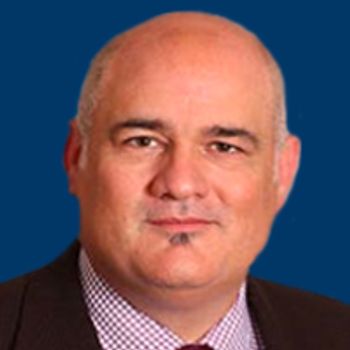
John Hays, MD, PhD, discusses ongoing research with immunotherapy in ovarian cancer, challenges with determining predictive biomarkers of response, and promising emerging modalities.
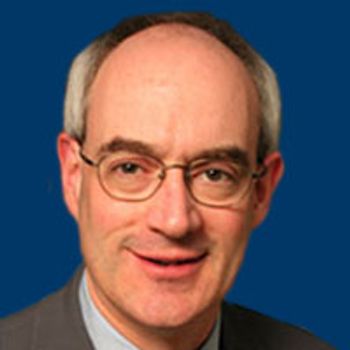
Everett E. Vokes, MD, discusses remaining questions in stage III non–small cell lung cancer following the PACIFIC results.
Lee S. Schwartzberg, MD, FACP, discusses the development and approval process for biosimilars and explains how their availability could drive down out-of-pocket costs for patients.
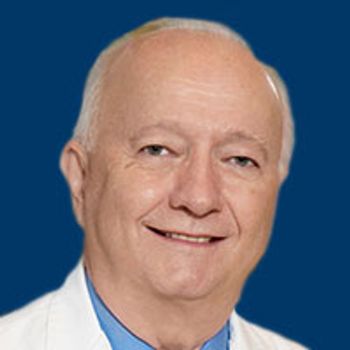
Larry J. Copeland, MD, discusses how therapy for patients with ovarian cancer has evolved in recent years.