
The European Commission has approved abiraterone acetate (Zytiga) in combination with prednisone/prednisolone for the treatment of adult men with newly-diagnosed high-risk metastatic hormone-sensitive prostate cancer.
The European Commission has approved abiraterone acetate (Zytiga) in combination with prednisone/prednisolone for the treatment of adult men with newly-diagnosed high-risk metastatic hormone-sensitive prostate cancer.
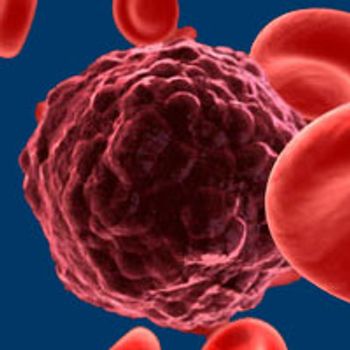
A supplemental biologics license application has been submitted to the FDA for daratumumab for use in combination with bortezomib, melphalan and prednisone for the treatment of patients with newly diagnosed multiple myeloma who are ineligible for autologous stem cell transplantation.

Scott Paulson, MD, discusses developments with NETs and liver cancer.

The FDA granted a priority review to durvalumab in October for the treatment of patients with stage III, unresectable non-small cell lung cancer whose disease has not progressed following platinum-based chemoradiation.

Jonathan Warner, MD, discusses the evolving role of surgery and radiation therapy in the treatment landscape for patients with prostate cancer.

Jonathan Ledermann, MD, discusses the promise of immunotherapy in ovarian cancer and emphasized the importance of participation in clinical trials.

Loren K. Mell, MD, explains his research for risk-stratifying patients with head and neck cancer.

Alexandra Taylor, MD, discusses the advances with targeted therapies in endometrial cancer, as well as the challenges that still exist in the treatment and management of patients with advanced disease.
The European Commission has approved nilotinib (Tasigna) for the treatment of pediatric patients with Ph+ chronic myeloid leukemia in the chronic phase.
New results again demonstrated the benefit of frontline osimertinib in patients with EGFR-positive advanced non-small cell lung cancer and CNS metastases at baseline.

The addition of atezolizumab to bevacizumab, carboplatin, and paclitaxel delayed progression or death compared with bevacizumab and chemotherapy alone for patients with advanced non-squamous non–small cell lung cancer.
Investigators working in the UK and Europe found a correlation between minimal residual disease kinetics and risk for relapse in pediatric patients with acute lymphoblastic leukemia.

Oncology providers contend that the sweeping $1.5 trillion in tax cuts sought by Republicans would trigger sequester cuts that would drive more independent practices out of business and reduce patient access to care.
The FDA has granted the the anti–B-cell maturation antigen (BCMA) chimeric antigen receptor (CAR) T-cell therapy bb2121 a breakthrough therapy designation for previously treated patients with relapsed/refractory multiple myeloma.
The FDA has approved sunitinib (Sutent) for use as an adjuvant therapy in patients with renal cell carcinoma who have received nephrectomy and are high risk for recurrence.
The FDA has approved obinutuzumab (Gazyva) in combination with chemotherapy, followed by obinutuzumab alone, for the first-line treatment of patients with advanced follicular lymphoma.

Sarah K. Tasian, MD, discusses the success of CAR T-cell therapy, as well as novel agents and immunotherapies that appear promising in the treatment of children with leukemia.

Results from a retrospective, multi-institutional study showed that lowering the dose of sorafenib (Nexavar) for patients with HCC reduced pill burden and treatment costs, while showing a trend toward improved treatment completion.
The FDA announced that it has approved the IMPACT tumor profiling assay, while also making it easier for some device manufacturers to bring their products to market.

Cabozantinib (Cabometyx) remains to be the sole oral drug to meet 3 clinical trial endpoints of progression-free survival, overall survival, and overall response rate in patients with advanced RCC.

Owen A. O'Connor, MD, PhD, discussed the utilization of acalabrutinib (Calquence), how it sequences with other approved therapies, and the promise for chimeric antigen receptor T-cell therapy in mantle cell lymphoma.

Two studies focusing on the role of the metabolic profiles of Hodgkin Lymphoma and Diffuse Large B Cell Lymphoma have been accepted for publication in Seminars in Oncology.

The FDA has approved fulvestrant (Faslodex) for use in combination with the CDK4/6 inhibitor abemaciclib (Verzenio) to treat patients with HR+/HER2- advanced or metastatic breast cancer who have progressed after endocrine therapy.

The European Medicines Agency’s Committee for Medicinal Products for Human Use has recommended approval of brentuximab vedotin (Adcetris) in adults with CD30-positive cutaneous T-cell lymphoma after at least 1 prior systemic therapy.

Bayer and Loxo Oncology have entered into a partnership to develop and market larotrectinib (LOXO-101) and LOXO-195 in the United States and worldwide.
Przemyslaw W. Twardowski, MD, discusses a variety of factors to consider when treating patients with prostate cancer.

Guru P. Sonpavde, MD, discusses degarelix, androgen-deprivation therapy, and ongoing trials with immunotherapy that are crucial to advancing the treatment of patients with prostate cancer.

Sumanta K. Pal, MD, discusses advancements in prostate cancer, bladder cancer, and promising results in kidney cancer.

Loretta J. Nastoupil, MD, discusses the study of the triplet of ublituximab, umbralisib (TGR-1202) and ibrutinib in CLL.
Jacqueline Claudia Barrientos, MD, discusses emerging treatment options in CLL.