
Nancy Y. Lee, MD, discusses the ongoing JAVELIN HEAD AND NECK 100 trial and the overall impact of immunotherapy for patients with head and neck cancer.
Nancy Y. Lee, MD, discusses the ongoing JAVELIN HEAD AND NECK 100 trial and the overall impact of immunotherapy for patients with head and neck cancer.
Joel Neal, MD, discusses the latest therapeutic changes to the ALK-positive NSCLC armamentarium.
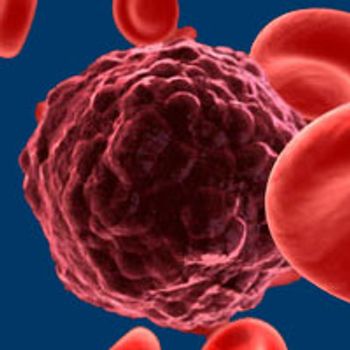
Researchers in China have concluded that mutation of the SF3B1 gene is “significantly associated” with poorer progression-free survival and overall survival in patients with chronic lymphocytic leukemia.
Douglas Levine, MD, provides his insight on some of the recent data with PARP inhibitors in ovarian cancer, as well as his predictions for the field in the next several years.
Long-term results from the Nordic MCL2 and MCL3 trials showed patients with mantle cell lymphoma who are positive for minimal residual disease following allogenic stem cell transplant had significantly shorter survival.

Julia A. Elvin, MD, PhD, discusses genomic research in ovarian cancer and how it could potentially impact treatment decisions for patients.

A group of researchers from several institutions in the US, including John Theurer Cancer Center, studied the development of a new, web-based intervention - Pep-Pal- to provide psychoeducation and skills for caregivers of cancer patients who are experiencing significant burden and distress including depression and anxiety.
John Theurer Cancer Center Oncology Nurses recently attended the 42nd Annual National Oncology Nursing Society’s (ONS) conference "Congress" in Denver, Colorado. Nurses in attendance presented projects they have been involved with in their area of expertise to the largest group of oncology nurses worldwide.
Watson for Oncology combined with real world data from Cota aims to help oncologists improve cancer treatment and reduce costs.
MedStar Georgetown University Hospital in Washington, D.C. in collaboration with John Theurer Cancer Center, part of Hackensack Meridian Health, Hackensack University Medical Center in Hackensack, N.J., announce the 100th blood stem cell transplant performed since the BMT program’s first patient was treated in September, 2013.

Neeta Somaiah, MD, discusses the efficacy of CMB305 in patients with synovial sarcoma or myxoid/round cell liposarcoma.
Heather Wakelee, MD, discusses the latest developments with EGFR inhibitors and immunotherapy agents in non-small cell lung cancer.
Peter Voorhees, MD, discusses treatments for both newly diagnosed and relapsed patients with multiple myeloma.
Toni Choueiri, MD, reflects on avelumab/axitinib results and other emerging combos in RCC.

The FDA has granted a priority review to a supplemental new drug application for alectinib (Alecensa) for the frontline treatment of patients with ALK-positive locally advanced or metastatic non–small cell lung cancer.
The FDA has approved CPX-351 for adult patients with newly diagnosed therapy-related acute myeloid leukemia or AML with myelodysplasia-related changes.
Jorge Garcia, MD, and Kim Chi, MD, share their insights on the LATITUDE trial in prostate cancer.
The FDA has granted a priority review to a new drug application for acalabrutinib for patients with previously-treated mantle cell lymphoma.
The FDA has approved ibrutinib for the treatment of adult patients with chronic graft versus host disease following the failure of 1 or more lines of systemic therapy. The BTK inhibitor is now the first FDA-approved therapy for the treatment of cGVHD.
Primo N. Lara Jr, MD, discusses the KEYNOTE-037 pembrolizumab/epacadostat findings in patients with advanced RCC, and how the combination could change treatment in this population.
The FDA has granted acalabrutinib a breakthrough therapy designation for patients with previously-treated mantle cell lymphoma.

Targeted therapies are beginning to carve out a growing number of indications in non–small cell lung cancer, emphasizing the importance of precision medicine.
The FDA has approved enasidenib along with a companion diagnostic as a treatment for patients with relapsed or refractory IDH2-mutated acute myeloid leukemia.
The FDA has granted an accelerated approval to nivolumab for the treatment of adult and pediatric patients with microsatellite instability-high or mismatch repair deficient metastatic colorectal cancer that has progressed following treatment with a fluoropyrimidine, oxaliplatin, and irinotecan.

The FDA granted a priority review in March to a new drug application for maintenance olaparib, and is scheduled to make its final decision on the PARP inhibitor before the end of the year.
The therapeutic paradigm continues to evolve in advanced non-small cell lung cancer, with increased emphasis being placed on rational combinations and biomarkers in the next few years.
Saad Z. Usmani, MD, discusses recent multiple myeloma data, the potential role of CAR T-cell therapy, and what therapeutic advancements the community can expect in the remainder of 2017.
Kite Pharma has submitted a Marketing Authorization Application to the European Medicines Agency for axicabtagene ciloleucel (axi-cel) to treat 3 forms of non-Hodgkin lymphoma.
Scientists from The Wistar Institute demonstrate how a mutation in ovarian clear cell carcinoma can be exploited to design a targeted treatment.
The cost of cancer care continues to be a top concern for patients and their healthcare providers. In response, the Association of Community Cancer Centers (ACCC) has launched The Financial Advocacy Boot Camp, the first free online training program designed for all those who work to assist cancer patients in navigating financial issues related to their cancer treatment.