
The FDA’s Oncologic Drugs Advisory Committee voted 17-0 to recommend approval for ABP-215, a biosimilar for bevacizumab (Avastin) to treat a range of solid tumors.
The FDA’s Oncologic Drugs Advisory Committee voted 17-0 to recommend approval for ABP-215, a biosimilar for bevacizumab (Avastin) to treat a range of solid tumors.

Following treatment with single-agent nivolumab (Opdivo), patients with head and neck squamous cell carcinoma saw improved or stable quality of life scores.
The combination of carfilzomib (Kyprolis), lenalidomide (Revlimid), and dexamethasone reduced the risk of death by 21% compared with lenalidomide and dexamethasone alone for patients with relapsed multiple myeloma.
Bajil J. Shah, MD, discusses the significant impact CAR T-cell therapy can have on the treatment landscape for patients with acute lymphoblastic leukemia.
Oncologic Drugs Advisory Committee voted 10-0 today to recommend approval of a biologics license application for tisagenlecleucel (CTL019) for the treatment of patients aged 25 or younger with relapsed/refractory B-cell acute lymphoblastic leukemia.

Patients with IGHV-mutated chronic lymphocytic leukemia had high rates of minimal residual disease-negative status in bone marrow following first-line treatment with a combination of ibrutinib (Imbruvica), fludarabine, cyclophosphamide, and obinutuzumab.
The future of treatment for ovarian cancer may lie in immunotherapy combinations with PARP inhibitors or checkpoint inhibitors.
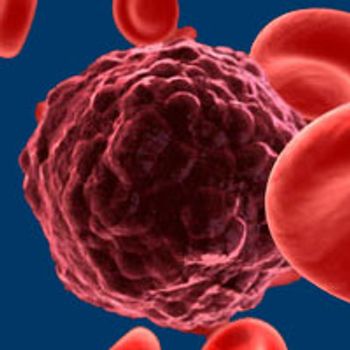
Phase III results from the RAY trial showed that patients with mantle cell lymphoma treated with ibrutinib (Imbruvica) had superior quality of life compared with patients treated with temsirolimus.
The FDA has granted a full approval to blinatumomab (Blincyto) as a treatment for adults and children with relapsed/refractory B-cell precursor acute lymphoblastic leukemia, regardless of Philadelphia chromosome status.

Patients with metastatic renal cell carcinoma had an objective response rate of 40% and a 2-year overall survival rate of nearly 70% with the immune checkpoint combination of ipilimumab (Yervoy) and nivolumab (Opdivo), in phase I results from CheckMate-016.

The FDA’s Oncologic Drugs Advisory Committee voted 6-1 in favor of approving gemtuzumab ozogamicin (Mylotarg) in combination with daunorubicin and cytarabine for the treatment of patients with newly-diagnosed CD33-positive acute myeloid leukemia.

Oliver Sartor, MD, discusses the analysis of African-American men receiving sipuleucel-T for castrate-resistant prostate cancer compared with Caucasians, and the implications of this research.

Thomas Kipps, MD, PhD, discusses the details of the integrated analysis from the iwCLL meeting, his ongoing research with ROR1 as a target in chronic lymphocytic leukemia, and pivotal combination studies being conducted with ibrutinib.

Christian Winther Eskelund, MD, discusses TP53 mutations in mantle cell lymphoma.
The FDA has accepted a supplemental new drug application for dasatinib (Sprycel) for use in children with Philadelphia chromosome-positive chronic phase chronic myeloid leukemia (CP Ph+ CML).

In 2016, just a quarter of oncology practices considered themselves prepared for upcoming US Pharmacopeia (USP) standards on hazardous drug management, according to the 2017 Genentech Oncology Trend Report.

The FDA has granted a priority review to a new drug application for the CDK4/6 inhibitor abemaciclib as a treatment for patients with advanced hormone receptor–positive, HER2-negative breast cancer.
Shilpa Gupta, MD, MBBS, discusses the future of drug therapies for kidney cancer, and the challenges facing the research landscape.
Jeffrey S. Weber, MD, PhD, discusses both pivotal studies for dabrafenib/trametinib in patients with melanoma and any unanswered questions that remain after the extensive 5-year follow-up.
Gennaday Bratslavsky, MD, discusses the evaluation and management of RCC and highlighted genetic testing for the patient’s family.
The triplet combination of HER2-targeted therapy and an aromatase inhibitor improved progression-free survival by more than 5 months compared with the combination of trastuzumab (Herceptin) and an aromatase inhibitor in patients with HER2+/HR+ breast cancer.
Eric Smith, MD, PhD, discusses the response to CD19 CAR T-cell therapy in B-cell ALL.

Pierre Massion, MD, on the necessity of having more people undergo lung cancer screening, ongoing clinical trials emphasizing the importance of early detection, and how to determine who is at highest risk for lung cancer.

The addition of T-VEC (T-VEC; Imlygic), a herpes simplex virus 1-based oncolytic virus, to CTLA-4 inhibitor ipilimumab (Yervoy) improves the objective response rate in patients with unresected stage IIIb to IV melanoma.

Rachel Dibble, NP, discusses the importance of palliative care at the start of diagnosis for patients with non-small cell lung cancer and explained its differences from end-of-life care.
The FDA has placed a clinical hold on the phase III KEYNOTE-183 and KEYNOTE-185 pembrolizumab (Keytruda) trials and ordered the discontinuation of the lenalidomide/dexamethasone/pembrolizumab arm of the KEYNOTE-023 trial in patients with multiple myeloma.

Melissa Johnson, MD, discusses the impact of immunotherapy for patients with non-small cell lung cancer—those with both high and low levels of PD-L1 expression—and how the treatment and the role of PD-L1 will continue to progress in the coming years.

Ziv-aflibercept (Zaltrap) prolonged overall survival compared to placebo across subgroups of patients with metastatic colorectal cancer with wild-type and mutated RAS, KRAS, and BRAF genes.
While expected improvements in survival did not emerge with SIRT plus chemotherapy, an unanticipated benefit was observed with SIRT in patients with metastatic colorectal cancer.
Adjuvant nivolumab (Opdivo) extended recurrence-free survival compared with adjuvant ipilimumab (Yervoy) in patients with advanced melanoma enrolled in the phase III CheckMate-238 trial.