
Radiotherapy alone is often used to treat early-stage glottic cancer, a cancer of the vocal chords, however, the optimal radiation treatment schedule remains unknown.
Radiotherapy alone is often used to treat early-stage glottic cancer, a cancer of the vocal chords, however, the optimal radiation treatment schedule remains unknown.
In some cases, the Lassa virus starts with a fever and general weakness, moving toward headache, muscle pain, possible facial swelling, deafness, and worse. About 15 percent of patients hospitalized with severe cases die.
An early round of clinical testing shows that users of nivolumab (Opdivo), a drug sanctioned for treatment of small-cell lung cancer, more than tripled their five-year survival rate beyond the statistical average.
Findings from a clinical trial led by a researcher at NYU Langone's Perlmutter Cancer Center helped pave the way for the recent, accelerated approval by the US Food and Drug Administration of a highly effective immunotherapy as first-line treatment for patients with advanced bladder cancer who are not eligible for treatment with standard chemotherapy.
Luis A. Diaz, MD, has been named the Head of the Division of Solid Tumor Oncology in the Department of Medicine at Memorial Sloan Kettering Cancer Center.
Nima Sharifi, MD, honored by Clinical Research Forum for research showing that testosterone-related genetic mutation leads to deadlier outcomes in prostate cancer.

Norman (Ned) E. Sharpless has been named as the next director of the National Cancer Institute.

Astellas Pharma and Pfizer have announced that phase III results from the PROSPER trial of enzalutamide (Xtandi) in men with nonmetastatic castration-resistant prostate cancer will be ready later this year.

Following a second prospectively planned, unblinded analysis, drug manufacturer XBiotech has cancelled the phase III XCITE study of MABp1 (Hutruo; formerly Xilonix) in patients with advanced colorectal cancer.

Results from a phase I/II study demonstrated that enasidenib (AG-221) is well-tolerated and associated with a median overall survival of more than 9 months in patients with IDH2-mutated relapsed/refractory acute myeloid leukemia.

John C. Byrd, MD, sheds light on the game-changing efficacy of ibrutinib in chronic lymphocytic leukemia.
Data from phase I pooled expansion cohorts showed that mirvetuximab soravtansine (IMGN853) induced a solid response rate in patients with platinum-resistant ovarian cancer who had received 1 to 3 prior lines of therapy.

Patients with ovarian cancer who had a partial response to previous platinum-based therapy had superior progression-free survival with or without germline BRCA mutations after treatment with niraparib (Zejula), according to a posthoc analysis of data from the ENGOT-OV16/NOVA trial presented at the 2017 ASCO Annual Meeting.
In follow-up results to data first presented in December 2016, investigators found that the combination of olaparib (Lynparza) and cediranib maleate continued to show superior progression-free survival compared with olaparib alone for women with BRCA-negative recurrent platinum-sensitive ovarian cancer.

Christine M. Lovly, MD, PhD, discusses the changing treatment landscape for patients with EGFR-mutant and ALK-positive NSCLC.

Investigators conducting a small multinational study in Asian patients have concluded that 6 to 9 months of treatment with neoadjuvant imatinib is a promising treatment for patients with large gastric gastrointestinal stromal tumors.

Concurrent treatment with CTL-119 cell therapy and ibrutinib (Imbruvica) led to complete marrow clearance of leukemic cells in 8 of 9 evaluable patients with heavily pretreated or genetically high-risk chronic lymphocytic leukemia, results of a pilot study showed.

Results from a single-arm, multicenter trial showed that the antibody-drug conjugate sacituzumab govitecan (IMMU-132) was well-tolerated and produced a median duration of response of 6.0 months in previously treated patients with metastatic non–small cell lung cancer.

The FDA’s Oncologic Drugs Advisory Committee has scheduled a public hearing to discuss a biologics license application for tisagenlecleucel-T for patients aged 3 to 25 years with relapsed/refractory B-cell acute lymphoblastic leukemia.

Hackensack Meridian Health will pilot a study using IBM's Watson for Oncology and Cota.

An analysis in locally advanced squamous cell carcinoma of the head and neck showed that weekly low-dose schedules of chemoradiotherapy produce comparable survival outcomes and response rates as the standard 3-weekly schedule.
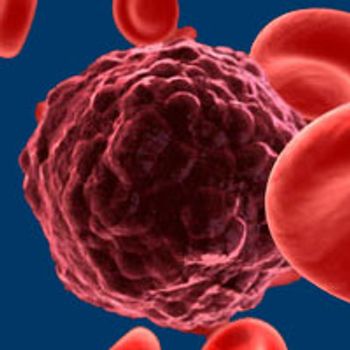
The FDA has accepted a new drug application from Jazz Pharmaceuticals, granting priority review to the company’s novel CPX-351 injection (Vyxeos) for acute myeloid leukemia.

The FDA has granted a priority review designation to sunitinib (Sutent) for use as an adjuvant therapy in patients with renal cell carcinoma who have received nephrectomy and are high risk for recurrence.

Driven by newer agents, the cost of US oncology medicines has increased 88% over the past 5 years, according to the QuintilesIMS Institute Global Oncology Trends 2017 report.

The UK’s National Institute for Health and Care Excellence will allow first-line use of pembrolizumab (Keytruda) for non–small cell lung cancer as part of the Cancer Drugs Fund.

Physicians treating hepatocellular carcinoma often have to choose between a tyrosine kinase inhibitor (TKI) and immunotherapy but oncologists need better tools to make an informed choice.

Adding ramucirumab (Cyramza) to docetaxel led to a statistically significant improvement in progression-free survival (PFS) versus docetaxel alone in previously treated patients with locally advanced or unresectable or metastatic urothelial carcinoma.
Eric Lambright, MD, discusses the ongoing role of surgery in the treatment of patients with lung cancer.

Key opinion leaders spoke with OncLive to share the top-5 abstracts they find to be the most exciting and/or potentially practice-changing across breast cancer, lung cancer, genitourinary cancers, gastrointestinal cancers, hematologic malignancies, and supportive care being presented at the 2017 ASCO Annual Meeting.

Results from the KEYNOTE-028 study showed that pembrolizumab (Keytruda) was associated with a median duration of response of 6 months and a 6-month progression-free survival rate of 40.4% in women with advanced PD-L1–positive endometrial cancer.