
Christof Vulsteke, MD, PhD, discusses the significance of the FDA approval of enfortumab vedotin plus pembrolizumab for cisplatin-ineligible MIBC.

Your AI-Trained Oncology Knowledge Connection!
Christof Vulsteke, MD, PhD, discusses the significance of the FDA approval of enfortumab vedotin plus pembrolizumab for cisplatin-ineligible MIBC.
Andrea Franson, MD, discusses the mechanism of action of tovorafenib and its emerging role within the evolving treatment paradigm for pLGG.

Joshua K. Sabari, MD, discusses the significance of the FDA approval of subcutaneous amivantamab for the treatment of patients with EGFR-mutant NSCLC.
Noa Biran, MD, highlighted the real-world use of the SKY92 gene expression profiling assay for multiple myeloma risk stratification.
Marlise Rachael Luskin, MD, MSCE, discusses the rationale, structure, and toxicity considerations of pediatric-inspired regimens in AYA ALL.
Yannis K. Valtis, MD, discusses real-world outcomes for obecabtagene autoleucel and brexucabtagene autoleucel in relapsed/refractory acute lymphoblastic leukemia.
Jacob Sands, MD, discusses challenges in the diagnosis and management of LEMS in patients with small cell lung cancer.
Joshua Richter, MD, elaborates on the best scenarios for certain CELMoD-based treatments for patients with multiple myeloma.
Sara M. Tolaney, MD, MPH, discusses updated safety data from ASCENT-04 evaluating sacituzumab govitecan plus pembrolizumab in PD-L1–positive TNBC.

Jason A. Mouabbi, MD, discusses the role of FES-PET/CT imaging in the diagnosis of lobular breast cancer.

Zev A. Wainberg, MD, discusses current available frontline chemotherapy regimens for patients with metastatic pancreatic cancer.
Tsewang Tashi, MD discusses updated long-term data for avapritinib in indolent systemic mastocytosis from part 3 of the PIONEER trial.
Zev A. Wainberg, MD, MSc, outlines factors informing his choice between standard frontline chemotherapy regimens in metastatic pancreatic cancer.

Dong Kim, MD, discusses the evolving decision-making process for selecting a frontline chemotherapy regimen in pancreatic cancer.
Adam Fox, MD, discusses the process and timing of ordering NGS testing for patients with NSCLC.
Andre Henri Goy, MD, discusses key developments in mantle cell lymphoma presented at the 2025 ASH Annual Meeting.
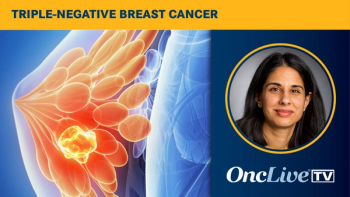
Sara Tolaney, MD, MPH, outlines emerging treatments and trials in the first-line setting for triple-negative breast cancer
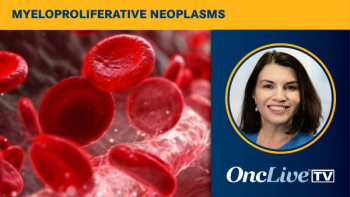
Tracy George, MD, discusses the findings from the SUMMIT trial and what they mean for patients with non-advanced systemic mastocytosis.
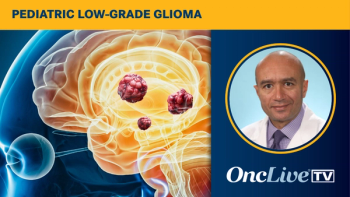
Mohamed Abdelbaki, MD, discusses second-line targeted therapy options for pediatric low-grade glioma.

Eytan M. Stein, MD, discusses the significance of the FDA approval of revumenib as a targeted therapy for relapsed/refractory, NPM1-mutant AML.

Peter Forsberg, MD, discusses the importance of data from the MajesTEC-3 trial in mulitple myeloma, in addition to the next steps for the coMMit Consortium.
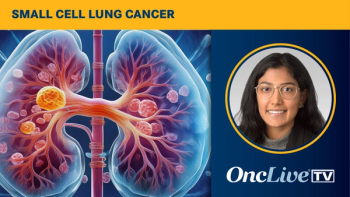
Shailee S. Shah, MD, details current screening and diagnostic guidelines for small cell lung cancer–associated LEMS.
Anand Patel, MD, shares primary efficacy results from a phase 2 study evaluating a TKI plus inotuzumab ozogamicin–based therapy in newly diagnosed Ph-positive ALL.
Erica Mayer, MD, MPH, discusses giredestrant plus everolimus vs physician’s choice of endocrine therapy plus everolimus in ER+, HER2-negative locally advanced or metastatic breast cancer.

Pasi A. Jänne, MD, PhD, discusses considerations for selecting a frontline combination regimen in EGFR-mutated NSCLC.
Antonio Gonzalez-Martin, MD, discusses the key safety findings from the NAPISTAR1-01 trial of TUB-040 in ovarian cancer.
Kevin Punie, MD, discusses PRO data from the phase 3 ASCENT-03 trial.
Hope S. Rugo, MD, discusses an open-label umbrella study evaluating elacestrant in combination with everolimus or abemaciclib in ER-positive/HER2-negative advanced breast cancer.
Samer Alkassis, MD, PhD, discusses how cathepsin protease expression may correlate with survival outcomes to trastuzumab deruxtecan in metastatic breast cancer.