
David Piccioni, MD, PhD, assistant professor, Neuroscience and Neuro-Oncology, UC San Diego Health, discusses tumor profiling of brain metastases of patients with non-small cell lung cancer, breast cancer, and melanoma.

Your AI-Trained Oncology Knowledge Connection!
David Piccioni, MD, PhD, assistant professor, Neuroscience and Neuro-Oncology, UC San Diego Health, discusses tumor profiling of brain metastases of patients with non-small cell lung cancer, breast cancer, and melanoma.
Alberto Montero, MD Staff Physician in the Department of Solid Tumor Oncology, Cleveland Clinic, discusses reducing readmission rates for oncology patients.
Frank A. Sinicrope, MD, medical oncologist, Departments of Gastroenterology and Hepatology and Oncology, Mayo Clinic, discusses patients with metastatic colorectal cancer (mCRC) who are mismatch repair-deficient.
Sarah Holstein, MD, PhD, Assistant Professor of Oncology, Lymphoma/Myeloma Service Department of Medicine, Roswell Park Cancer Institute, discusses an updated of analysis CALGB/ECOG/BMT CTN 100104, which investigated lenalidomide maintenance therapy after single autologous stem cell transplant (ASCT) for multiple myeloma.
S. Yousuf Zafar, MD, associate professor of medicine, Duke Cancer Institute, discusses the potential of immunotherapy for the treatment of patients with colorectal cancer (CRC).
Barbara J. Gitlitz, MD, associate professor of Clinical Medicine, Keck Hospital of USC Norris Comprehensive Cancer Center, discusses treating patients with EGFR exon 20 insertion mutations in lung cancer.
Fred C. Kass, MD, oncology/hematology, internal medicine, Cancer Center of Santa Barbara, discusses challenges associated with optimal treatment sequencing for patients with HER2-positive breast cancer.
Joyce A. O'Shaughnessy, MD, Texas Oncology-Baylor Charles A. Sammons Cancer Center, discusses new developments in molecular profiling in patients with metastatic breast cancer.
Jordi Giralt, MD, PhD, pathology, radiology, oncology, University Hospital Vall d'Hebron, discusses a study that examined mucoadhesive clonidine (Clonidine Lauriad) in the prevention of severe radiomucositis in patients with head and neck cancer.
Asher A. Chanan-Khan, MD, chair, Hematology/Oncology, Mayo Clinic in Florida, discusses ibrutinib as a backbone of treatment for patients with chronic lymphocytic leukemia (CLL).
Joseph F. Renzulli, II, MD, FACS, assistant professor of surgery (urology) clinical, Alpert Medical School, discusses the expanded access program in the United States for radium-223 dichloride in patients with metastatic castration-resistant prostate cancer.
Joyce A. O'Shaughnessy, MD, Texas Oncology-Baylor Charles A. Sammons Cancer Center, discusses how the results of phosphoprotein assays can impact treatment decisions for select patients with advanced breast cancer.
John P. Leonard, MD, medical oncology, NewYork-Presbyterian Hospital/Weill Cornell Medical Center, discusses the phase III SELENE study, which is examining the addition of ibrutinib to either R-CHOP or bendamustine plus rituximab for the treatment of patients with follicular lymphoma.
Noah D. Kauff, MD, FACOG, gynecologist and geneticist, director, Ovarian Cancer Screening and Prevention, Gynecology Service, Department of Surgery, Memorial Sloan Kettering Cancer Center, discusses the main challenges in treating uterine cancer.
Lajos Pusztai, MD, DPhil, professor of Medicine (Medical Oncology), chief, Breast Medical Oncology, co-director, Cancer Genetics Research Program, Yale Cancer Center, discusses the Breast Cancer Index in patients with ER-positive/HR-positive breast cancer.
Lee M. Krug, MD, associate attending physician, Division of Thoracic Oncology, Department of Medicine, Memorial Sloan Kettering Cancer Center, discusses a phase I study examining intra-pleural administration of GL-ONC1 in patients with malignant pleural effusion.
Ruben A. Mesa, MD, deputy director, Mayo Clinic, discusses the intended patient population with myelofibrosis and low platelet counts for pacritinib.
Joyce A. O'Shaughnessy, MD, Texas Oncology-Baylor Charles A. Sammons Cancer Center, discusses insights from adding phosphoprotein testing to genomic testing for patients with breast cancer.
Shannon Puhalla, MD Assistant Professor of Medicine, Division of Hematology, University of Pittsburgh, discusses recent updates of the PALOMA-3 trial.
Dicken Shiu-Chung Ko, MD, Department of Urology, Massachusetts General Hospital, discusses current evidence of renal transplantation following tumor excision.
Peter Voorhees, MD, UNC Lineberger Comprehensive Cancer Center, discusses the future treatment paradigm for myeloma.
Walter J. Curran, Jr., MD, Executive Director, Winship Cancer Institute of Emory University, Associate Vice President, Woodruff Health Sciences Center, discusses new developments in the delivery of radiation for patients with lung cancer.
Neal D. Shore, MD, medical director, Carolina Urologic Research Center, managing partner, Atlantic Urology Clinics, discusses preliminary results of the Harris poll, which surveyed how men with advanced prostate cancer communicate with their practitioners.
Eleftherios P. Mamounas, MD, surgical oncologist, UF Health Cancer Center - Orlando Health, discusses which patients with breast cancer are most likely to benefit from endocrine therapy.
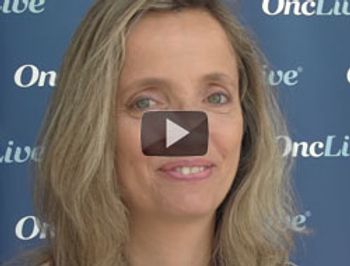
Rocio Garcia-Carbonero, MD, PhD, Universidad de Sevilla, discusses the quality of life results from the RAISE study. The RAISE study was a phase III randomized, double-blind study of FOLFIRI plus ramucirumab or placebo in patients with metastatic colorectal cancer (mCRC) after first-line therapy with bevacizumab, oxaliplatin, or fluoropyrimidine.
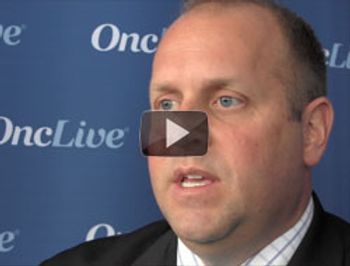
Peter Krein, PhD, senior director, Medical and Scientific Affairs, QIAGEN, discusses the company's latest advancements in liquid biopsies in comparison to surgical biopsies.
Joyce A. O'Shaughnessy, MD, Texas Oncology-Baylor Charles A. Sammons Cancer Center, discusses what recent research has shown regarding phosphoprotein assays in treatment decision-making for patients with breast cancer.
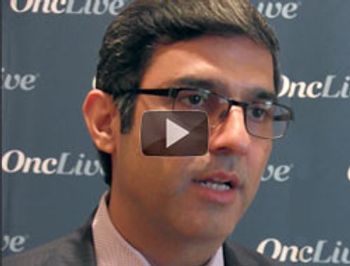
Mohammad Jahanzeb, MD, professor of Clinical Medicine, Hematology Oncology, University of Miami's Miller School of Medicine, discusses potential mechanisms for overcoming HER2 resistance in breast cancer.
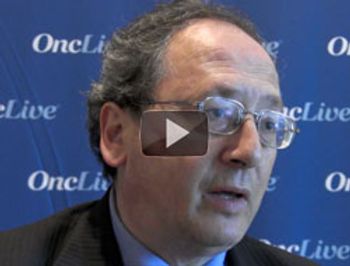
Anthony D. Elias, MD, professor, Division of Medical Oncology, University of Colorado School of Medicine, discusses using androgen receptor inhibitors as a potential treatment of patients with HER2-positive breast cancer.

Anees B. Chagpar, MD, MA, MPH, MBA, FRCS(C), FACS, associate professor of surgery (oncology), director, The Breast Center at Smilow Cancer Hospital at Yale-New Haven, assistant director, Global Oncology, Yale Comprehensive Cancer Center, discusses sequencing therapies for patients with HER2-positive breast cancer.