
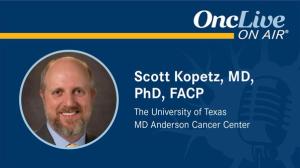
Dr. Allison highlights everything from his proudest professional moments, to MD Anderson’s Moon Shot program, to his musical talents, to next steps he’s taking in cancer research.

Your AI-Trained Oncology Knowledge Connection!
Dr. Allison highlights everything from his proudest professional moments, to MD Anderson’s Moon Shot program, to his musical talents, to next steps he’s taking in cancer research.
Dr. Kalyan and Dr. Mouli discuss the importance of multidisciplinary care in hepatocellular carcinoma, data regarding real-world personalization treatment recommendations, and the benefits of decision-making analysis tools in the space.
Dr. Ku underscores key takeaways from the CheckMate649 and DESTINY-Gastric02 trials in gastric/GEJ cancer and highlights ongoing research that has the potential to further inform treatment selection and sequencing in the field
Dr. Gradishar discusses the evolution of SERDs in breast cancer, novel SERDs that could shift the paradigm of breast cancer treatment, and ongoing research that could solidify the role of these agents in the field.
Dr. Tagawa discusses the incidence and identification of FGFR alterations in bladder cancer, the approval and use of erdafitinib in the second-line setting for patients with advanced bladder cancer, and research directions with the FGFR inhibitor in the field.
Dr. Yarchoan underscores the unique characteristics of fibrolamellar carcinoma, treatment options for these patients, and ongoing research efforts to expand the limited paradigm in this disease.
Dr. Shah discusses the FDA approval of brexucabtagene autoleucel in relapsed/refractory B-cell acute lymphoblastic leukemia, key findings from the pivotal ZUMA-3 trial, and next steps with CAR T-cell therapy in the field.
Dr. Jain and Dr. Spaggiari highlight key advancements in the treatment of patients with colorectal cancer liver metastases, patient and disease factors to consider during surgical and systemic treatment decisions, and the importance of multidisciplinary care in this patient population.
Dr. Johnson discusses the mechanism of action of VS-6766 alone and in combination with defactinib, expectations for the ongoing phase 2 RAMP 202 trial in KRAS-mutant non–small cell lung cancer, and where the combination could be used in practice pending further positive study results.
Dr. Abid discusses immune-compromising factors that are indigenous to CAR T-cell therapy recipients, the immunogenic potential of different COVID-19 vaccines, determinants of vaccine responses, and the potential need for booster vaccine dosing in this population.
Dr. Ilson discusses treatment sequencing for patients with gastric and gastroesophageal junction cancer, the integration of immunotherapy into the frontline setting, and key ongoing studies in the field.
Dr. Gordan discusses the advantages of in-house genomic testing, the transition from external to internal sequencing, and the anticipated effects of the move.
Dr. DeNunzio discusses how proton beam therapy is being used throughout oncology, the advantages of the modality and how it complements other treatment interventions, and where research with the therapy is headed.
Dr. Moore discusses the basis for studying the combination of VS-6766 and defactinib in recurrent low-grade serous ovarian cancer, data that has been generated with the combination from the phase 1/2 FRAME trial, and the potential role for the combination in clinical practice.
Dr. Patel discusses the role of biomarker testing in lung cancer, the FDA approvals of amivantamab and mobocertinib in EGFR exon 20 insertion–positive NSCLC, and future research directions in this subset of lung cancer.
Dr. Scott and Dr. Torres-Roca discuss their research of a pooled retrospective analysis exploring genomic-adjusted radiation dose–based radiation therapy in solid tumors and what using genomics to guide radiation dosing decisions could mean for oncology practices.
Dr. Aggarwal and Dr. Girard discuss the significance of the 5-year survival data from the pivotal PACIFIC trial and the real-world benefit of the study regimen in patients with unresectable stage III non–small cell lung cancer.
Dr. Monk discusses the significance of the FDA approval of tisotumab vedotin and notable research that was presented at the 2021 ESMO Congress in cervical cancer.
Dr. Dietrich discusses the latest developments with immunotherapy and targeted therapy in stage III non–small cell lung cancer.
Dr. Neel discusses the momentum of molecularly-driven research and treatment strategies in oncology, the continuation of current research trends, and potential future directions throughout the field.
Dr Pegram and colleagues focus on key clinical trials such as DESTINY-Breast01, HER2CLIMB, NALA, and SOPHIA in the setting of advanced HER2-positive breast cancer and discuss the practical considerations of these data.
In the second segment, Dr Pegram and colleagues discuss the clinical implications of the data from select trials in the neoadjuvant and adjuvant settings for patients with HER2-positive breast cancer.
In the first segment, Dr Pegram and colleagues highlight some of the challenges and remaining unmet needs in the management of patients with HER2-positive breast cancer.
Dr. Loaiza-Bonilla discusses approaches to frontline treatment selection in metastatic pancreatic cancer, the effects of adverse effects and toxicities in treatment planning, and treatment options available to patients post gemcitabine-based regimens.
Lisberg discusses the excitement with datopotamab deruxtecan in non–small cell lung cancer and previews anticipated data from the NSCLC cohort of the TROPION-PanTumor01 trial at the International Association for the Study of Lung Cancer 2021 World Conference on Lung Cancer.
Dr. McKay discusses the importance of patient selection in advanced renal cell carcinoma, selecting between available combination regimens, and nuances regarding the timing of treatment in this disease.
Dr. Sosa discusses the rise in thyroid cancer cases, patient risk factors, the financial challenges associated with long-term treatment and testing, and future research directions in the field.
Dr. Sekeres discusses the current unmet needs of patients with higher-risk myelodysplastic syndromes receiving hypomethylating agents, the potential utility of novel combinations in development, and the incorporation of other end points beyond overall survival in clinical trials.
Dr. Janjigian discusses the FDA approval of nivolumab plus chemotherapy in advanced or metastatic gastric cancer, gastroesophageal junction cancer, and esophageal adenocarcinoma, key findings from the pivotal CheckMate-649 trial, and future directions with immunotherapy in the field.
Dr. Krie and Dr. Yuan discussed treatment-related adverse effects one should be aware of and prepared to manage, recommended management strategies for these TRAEs, and important points to emphasize to patients before they begin treatment.