






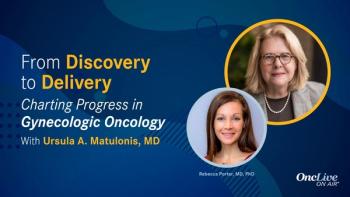
Drs Matulonis and Porter discuss the role of immunotherapy in gynecologic cancer management, focusing on clinical breakthroughs and future directions.
Drs Matulonis and Porter discuss the role of immunotherapy in gynecologic cancer management, focusing on clinical breakthroughs and future directions.
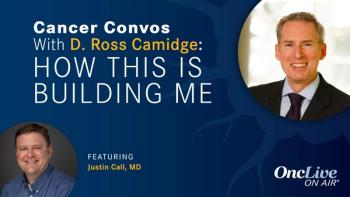
Drs Camidge and Call discuss Dr Call's career path, which transitioned from community oncology to full-time phase 1 research within community practice.
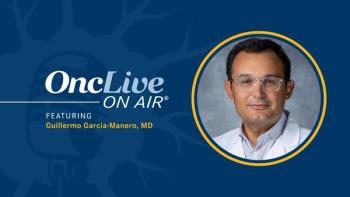
Dr Garcia-Manero contextualizes lisaftoclax's potential to improve outcomes historically achieved with azacitidine alone in higher-risk MDS.
Dr Banerjee discussed the potential of CELMoDs for multiple myeloma management, highlighting their superior efficacy and safety compared with IMiDs.
Dr Falchi discusses why the FDA approval of epcoritamab plus lenalidomide/rituximab is clinically meaningful for relapsed/refractory follicular lymphoma.
Surbhi Sidana, MD, discusses the FDA approval of BVd for relapsed or refractory multiple myeloma.
Jonathan R. Strosberg, MD, reviews the clinical implications of PRRT with 177Lu-edotreotide for metastatic gastroenteropancreatic neuroendocrine tumors.
Hirsch Matani, MD, and Elizabeth Zhang-Velten, MD, co-hosted a discussion with Valentina Bonev, MD, DABS, FACS, FSSO, about the interplay between surgery and radiation in breast cancer care.
Drs Rhodes and Patel highlight how the chronic lymphocytic leukemia treatment paradigm continues to evolve with advances in targeted therapy.
Dr Vulsteke discusses the FDA approval of enfortumab vedotin plus pembrolizumab for patients with cisplatin-ineligible muscle-invasive bladder cancer.
Drs Rotow and Woodard talk through recent updates to the perioperative non–small cell lung cancer treatment paradigm.
Kathryn S. Nevel, MD; and Michael Veronesi, MD, PhD, lead an OncLive Ask the Expert discussion on evolving imaging strategies in glioma.
Drs Camidge and Fleming discussed how Fleming's interest in biostatistics led to a multifaceted career in clinical trial design and analysis.
Dr Mouabbi highlights the ways that ctDNA has evolved from a research tool to a potential clinical decision-making aid in breast cancer.
Dr Phull reviews findings from a translational study that longitudinally profiled the fecal microbiome of patients with newly diagnosed myeloma.

Drs Kim and Malhotra discuss factors that make IB6 unique vs other NSCLC biomarkers and the study of sigvotatug vedotin in previously treated NSCLC.
Drs Armstrong and Tawagi highlight chronic lymphocytic leukemia updates from the 2025 ASH Annual Meeting.
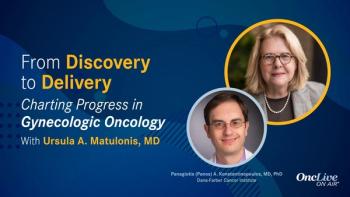
Drs Matulonis and Konstantinopoulos discuss the different subtypes of endometrial cancer and treatment developments for this disease.
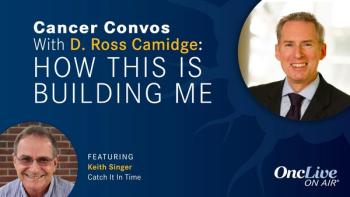
Camidge and Singer discuss how Singer's background in broadcasting and cable television has led to a career in promoting cancer awareness.
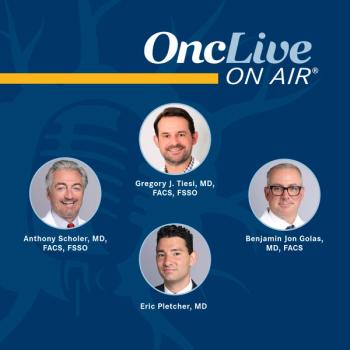
Drs Tiesi, Scholer, Golas, and Pletcher discuss the use of hepatic artery infusion in colon cancer and liver cancer management.
Dr Shu discusses updated data from the VISION trial of tepotinib in patients with non–small cell lung cancer harboring MET exon 14 skipping mutations.
Drs Tiesi, Scholer, Golas, and Pletcher discussed the use of PIPAC, a minimally invasive regional cancer therapy, in patients with peritoneal cancers.
Dr Rutherford discusses the use of ctDNA testing for guiding lymphoma management and trials that seek to determine the best use of this type of assay.
Dr Pant discusses factors that drive frontline chemotherapy selection for metastatic pancreatic cancer and the role of NALIRIFOX in this treatment setting.
Drs Sands and Shah discuss LEMS symptom identification and what guidelines currently note as best practices for the diagnosis of this disease.
Dr Richter discusses the rationale for targeting FcRH5 in myeloma and the evaluation of cevostamab-based combination strategies in this disease.
Dr Kline discusses longer-term efficacy data from the FIREFLY-1 study of tovorafenib in patients with relapsed/refractory pediatric low-grade glioma.
Drs Camidge and Blumenthal discussed Dr Blumenthal's experience serving on both sides of the oncology regulatory divide.
Daniel Spratt, MD, discusses key updates to the National Comprehensive Cancer Network Guidelines for prostate cancer.
Marc S. Raab, MD, discusses evaluating teclistamab–based induction regimens in patients with newly diagnosed multiple myeloma