

An interview with Brian Rini, MD, whose research has focused on RCC, prostate, and other genitourinary cancers, as well as on antiangiogenic therapy and immunotherapy.
An interview with Brian Rini, MD, whose research has focused on RCC, prostate, and other genitourinary cancers, as well as on antiangiogenic therapy and immunotherapy.

Agents that target the c-MET pathway may prove to have significant benefit when combined with inhibitors of angiogenesis.

Adding brivanib alaninate to cetuximab had no survival advantage over cetuximab alone in patients with KRAS wild-type chemorefractory metastatic colorectal cancer.
New research on predictive and prognostic biomarkers for therapy targeting EGFR strongly suggests that panitumumab should be reserved for mCRC tumors with wild-type KRAS.

Optical biomarkers derived from nondysplastic metaplastic cells can detect the presence of high-grade dysplasia and adenocarcinoma from Barrett's esophagus.

The use of advanced gene analysis techniques in a small group of women with triple-negative metastatic breast cancer has revealed activity in two pathways found in most patients with this subtype.

The concept of screening people at high risk for developing lung cancer with low-dose computed tomography continues to gain support in the oncology community.

The development of crizotinib has helped crystallize a relatively rare molecular subset of NSCLC and holds the potential for wider use in treating patients with the disease.

IMRT was superior to CRT in reducing recurrence and significant side effects in men with localized prostate cancer, according to a comparative effectiveness study based on the SEER-Medicare database.
HER2 status in patients with breast cancer has emerged as a durable and effective marker for evaluating tumors and selecting therapies.
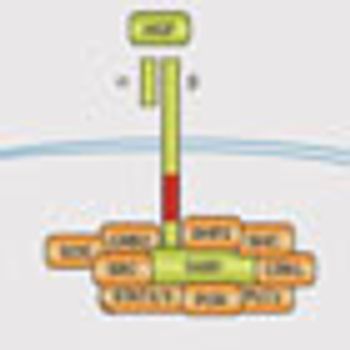
The MET signaling network has emerged as an important target for cancer therapy, with a particularly significant role in controlling the cancer hallmarks of metastasis and angiogenesis.

Jill M. Siegfried, PhD, is an investigator into the role of growth factors and hormones in the development and growth of lung cancer.

It is always difficult to distinguish what may legitimately be considered disease flare from the more likely scenario of the events simply representing the natural history of the malignancy.