
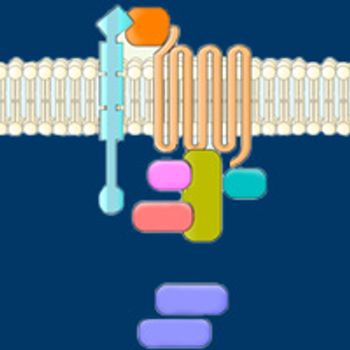
Investigators continue to find innovative ways to attack the WNT pathway beyond targeting the major molecular players.
Investigators continue to find innovative ways to attack the WNT pathway beyond targeting the major molecular players.
Baseline clinical characteristics coupled with measurable cardiac parameters can be used to predict the risk of heart failure among adults with acute leukemia who receive anthracycline-based therapy, according to recent study findings.
Treatment approaches are being refined by the primary location of gastroesophageal junction tumors.

As part of the virtual platform for the 5th Annual School of Gastrointestinal Oncology™, Anthony B. El-Khoueiry, MD, reviewed sequencing in first-line therapy for hepatocellular carcinoma.

Therapeutic options for pretreated HER2-positive breast cancer now include tucatinib (Tukysa) as part of a triplet regimen with a tolerable safety profile that promises improved quality of life.

Investigators of the first global adaptive phase 2/3 GBM Adaptive Global Innovative Learning Environment platform trial are implementing a multiarm, 2-stage approach to concurrently evaluate single-agent and combination regimens in glioblastoma.
The degree to which nature and nurture affect disease has long been debated in medicine, and it is an issue that esteemed breast cancer researcher and medical oncologist Joyce A. O’Shaughnessy, MD, has been working to unravel for her patients throughout a career that spans more than 30 years.

During a recent OncLive Peer Exchange®, a panel of experts in adult and pediatric leukemias provided an update on minimal residual disease testing in acute lymphoblastic leukemia.

The need to adapt effectively and provide consistent care to patients with cancer during the public health threat caused by coronavirus disease 2019 has prompted the expanded use of telehealth.

Although numerous therapies have been introduced for patients with metastatic castration-resistant prostate cancer, the question of how to optimally sequence treatments for those who experience progression remains a vexing clinical challenge.
To determine the 10-year oncologic outcomes and recurrence patterns after robot-assisted radical cystectomy, a group within the Department of Urology at Roswell Park Comprehensive Cancer Center performed a retrospective review.
From the earliest moments of medical school instruction, through residency and fellowship training, physicians are taught the primacy of the randomized phase 3 trial in the hierarchy of evidence-based medicine.