
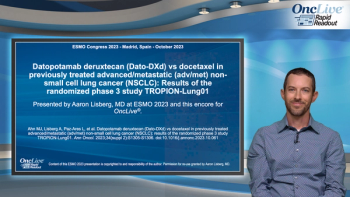
Aaron Lisberg, MD, reviews data from the TROPION-Lung01 study investigating Dato-DXd in previously treated patients with advanced/metastatic NSCLC.
Aaron Lisberg, MD, reviews data from the TROPION-Lung01 study investigating Dato-DXd in previously treated patients with advanced/metastatic NSCLC.
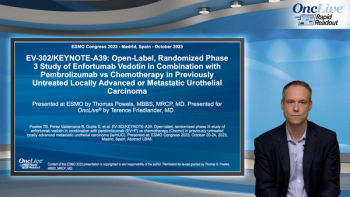
Terence Friedlander, MD, presents significant data from the EV-302/KEYNOTE-A39 study of enfortumab vedotin in combination with pembrolizumab versus chemotherapy in patients with previously untreated locally advanced or metastatic urothelial carcinoma.
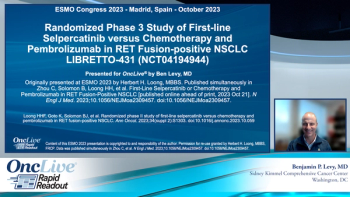
Expert oncologist Benjamin Levy, MD, shares data from the LIBRETTO-431 trial comparing selpercatinib to chemotherapy plus pembrolizumab in RET fusion-positive NSCLC following ESMO 2023.
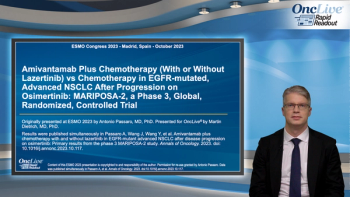
Martin Dietrich, MD, PhD, presents key data from the phase 3 MARIPOSA-2 study, which investigated amivantamab plus chemotherapy, with or without lazertinib, versus chemotherapy in patients with EGFR-mutated advanced NSCLC who experienced disease progression on osimertinib.
Shannon Westin, MD, reviews the results of the Phase III DUO-E/GOG-3041/ENGOT-EN10 trial in patients with newly diagnosed advanced or recurrent endometrial cancer.

Expert oncologist Aditya Bardia, MD, reflects on data from the TROPION-Breast01 trial of dato-DXd versus chemotherapy in metastatic HR+/HER2– breast cancer following ESMO 2023.
Expert oncologist Yasir Elamin, MD, shares data from the BRIGHTSTAR trial and considers how it may inform real-world use of brigatinib in patient with ALK-rearranged metastatic non–small cell lung cancer.
Expert oncologist Helena Yu, MD, reviews data from HERTHENA-Lung01 following the IASLC 2023 World Conference on Lung Cancer and considers how patritumab deruxtecan will fit into clinical practice.
Sandip P. Patel, MD, reviews data from the preliminary results of the EVOKE-02 study investigating sacituzumab govitecan plus pembrolizumab in first-line metastatic non–small cell lung cancer.
Sponsored Content: Neal Shore, MD, FACS reviews new data on the TITAN trial of apalutamide in patients with mCSPC.
Jason R. Westin, MD, MS, FACP, presents the overall survival analysis from ZUMA-7, a phase 3 study investigating axicabtagene ciloleucel (axi-cel) versus standard-of-care therapy in patients with relapsed/refractory large B-cell lymphoma (R/R LBCL).
Arvind Dasari, MD, MS, presents data from the FRESCO-2 clinical trial evaluating fruquintinib in patients with refractory metastatic colorectal cancer, and provides insights on the clinical implications of the results.
Whitney S. Graybill, MD, MS, presents data from an analysis of the phase 3 PRIMA trial that looked to identify baseline characteristics associated with long-term progression-free survival with niraparib in patients with advanced ovarian cancer.
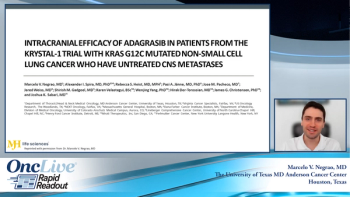
Marcelo Negrao, MD, presents key data from the KRYSTAL-1 trial investigating adagrasib in patients with KRAS G12C-mutated non-small cell lung cancer (NSCLC) and untreated central nervous system (CNS) metastases.
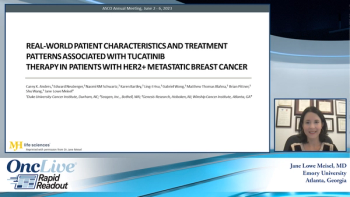
Jane Lowe Meisel, MD, presents data from a retrospective study investigating patient characteristics, treatment patterns, and clinical outcomes for tucatinib-based treatment in the real-world setting both overall and following fam-trastuzumab deruxtecan (T-DXd).
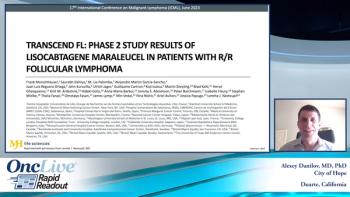
Alexey Danilov, MD, PhD, reviews data from the phase 2 TRANSCEND FL trial investigating lisocabtagene maraleucel and discusses the clinical implications of the results.
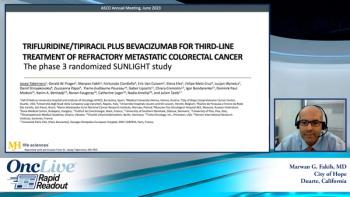
Marwan G. Fakih, MD, reviews data from the phase 3 randomized SUNLIGHT trial investigating trifluridine/tipiracil plus bevacizumab for third-line treatment of refractory metastatic colorectal cancer.
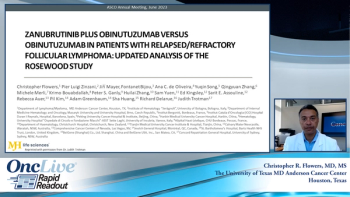
Dr. Christopher Flowers showcases a comprehensive and updated analysis of the ROSEWOOD study, evaluating the efficacy and safety of combining zanubrutinib with obinutuzumab versus obinutuzumab monotherapy.
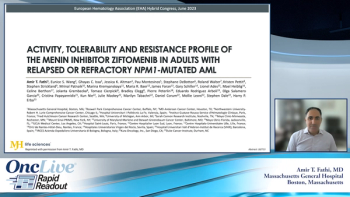
Expert Amir Fathi, MD, reviews recent clinical data with ziftomenib in patients with relapsed/refractory acute myeloid leukemia.
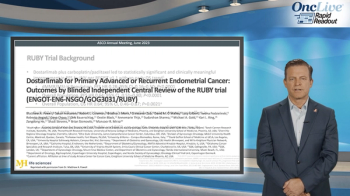
Matthew Powell, MD, presents data from the blinded independent central review of the RUBY trial, which studied dostarlimab in patients with primary advanced or recurrent endometrial cancer.
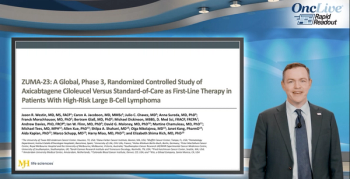
Jason R. Westin, MD, MS, FACP, reviews the background and study design of ZUMA-23, the first Phase III, randomized controlled study to evaluate CAR T-cell therapy as a first-line regimen in patients with high-risk LBCL.
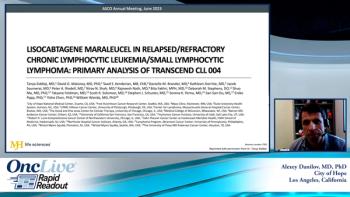
Alexey Danilov, MD, PhD, presents an analysis of data from the Phase 1 TRANSCEND CLL 004 study investigating lisocabtagene maraleucel in patients with relapsed/refractory CLL or SLL.
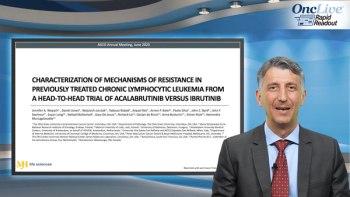
Paolo Ghia, MD, PhD, reviews data from the ELEVATE-RR trial investigating acalabrutinib versus ibrutinib for the treatment of relapsed/refractory chronic lymphocytic leukemia (R/R CLL).
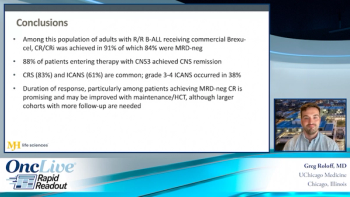
Greg Roloff, MD, reviews data on the outcomes of patients with relapsed/refractory B-ALL who received treatment with brexucabtagene autoleucel.
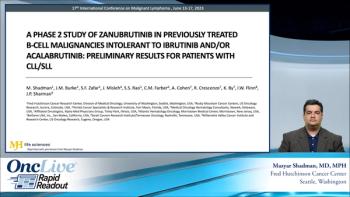
Key opinion leader Mazyar Shadman, MD, MPH, reviews data from a clinical trial studying zanubrutinib in the context of ibrutinib- and/or acalabrutinib-intolerant CLL/SLL.
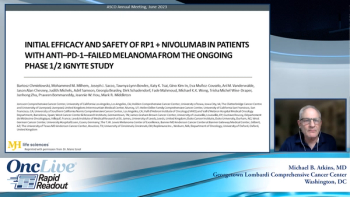
Expert Michael Atkins, MD, reviews data from the ongoing IGNYTE study utilizing RP1 in combination with nivolumab in relapsed/refractory melanoma.
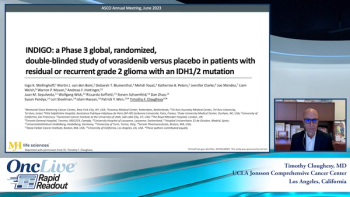
Timothy Cloughesy, MD, reviews data from the phase 3 INDIGO trial investigating vorasidenib in patients with residual or recurrent grade 2 glioma with an IDH1 or IDH2 mutation.
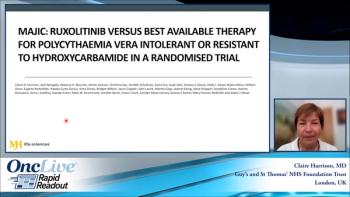
Claire Harrison, MD, reviews the use of ruxolitinib in patients who are ineligible for hydroxycarbamide for the management of polycythemia vera (PV).
Guillermo Garcia-Manero, MD, reviews data from the COMMANDS trial comparing the efficacy and safety of luspatercept to epoetin alfa in patients with lower-risk myelodysplastic syndromes (MDS) who are dependent on blood transfusions and have not previously received erythropoiesis-stimulating agents (ESAs).