
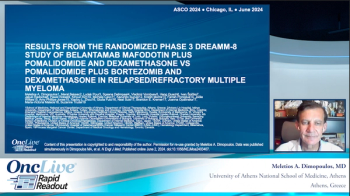
DREAMM-8 (NCT04484623) is an ongoing, randomized, open-label, phase 3 study evaluating BPd vs PVd in patients with RRMM previously treated with ≥1 line of therapy including lenalidomide.
DREAMM-8 (NCT04484623) is an ongoing, randomized, open-label, phase 3 study evaluating BPd vs PVd in patients with RRMM previously treated with ≥1 line of therapy including lenalidomide.
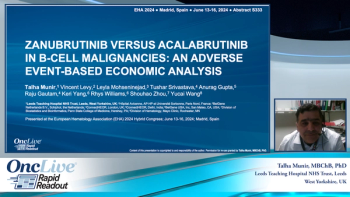
An economic analysis of Zanubrutinib versus Acalabrutinib and associated QoL benefits in AE management in patients with B-cell malignancies.
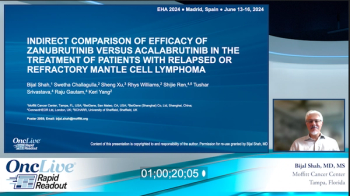
The study assessed the comparative efficacy of zanubrutinib vs acalabrutinib in patients with R/R MCL, in the absence of head-to-head clinical trials, using population-adjusted indirect treatment comparison via simulated treatment comparison approach. Data source for the efficacy of zanubrutinib was informed by the pooled individual patient-level data from 2 clinical trials: BGB-3111-206 (NCT03206970) and BGB-3111-AU-003 (NCT02343120). The efficacy of acalabrutinib was informed by the published aggregated data of the ACE-LY-004 trial (NCT02213926).

A phase 3, randomized, double-blind, placebo-controlled study to determine if prior TAS-102 and/or regorafenib treatment status and sequence affect the efficacy and safety of fruquintinib in patients with mCRC. This study used data from both FRESCO (NCT02314819) and FRESCO-2 (NCT04322539).
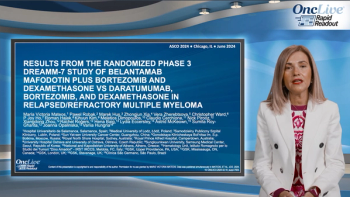
DREAMM-7 (NCT04246047) is a global, randomized, open-label, phase III head-to-head trial evaluating the efficacy and safety of BVd triplet vs SoC triplet, DVd, in patients (pts) with RRMM with ≥1 prior line of therapy.
Zanidatamab is a HER2-targeted bispecific antibody that binds to two non-overlapping HER2 domains and crosslinks neighboring HER2 proteins. In the primary analysis of the phase 2b HERIZON-BTC-01 trial (NCT04466891), after a median follow-up of 12.4 months, zanidatamab showed encouraging antitumor activity with rapid and durable responses and a manageable safety profile in patients with previously treated HER2+ BTC.
Tropion-Lung05 (NCT04484142) is a phase 2, multicenter, single-arm, open-label study evaluating Dato-DXd in patients with advanced/metastatic NSCLC with actionable genomic alterations who have progressed on or after targeted therapy and platinum-based CT.
Dr. Aditya Bardia presents the findings of DESTINY-Breast06 (NCT04494425) in chemotherapy naive patients with HER2-low and HER2-ultra low metastatic breast cancer demonstrating progression-free survival of trastuzumab deruxtecan compared to chemotherapy treatment of physician’s choice.
IMROZ (NCT03319667) is the first global Phase 3 study of an anti-CD38 mAb in combination with VRd in patients with transplant-ineligible NDMM.
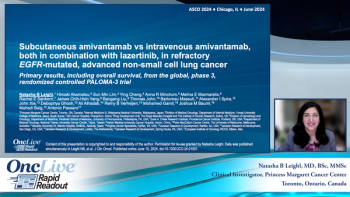
Dr. Natasha Leighl presents the primary results of the phase 3, randomized controlled PALOMA-3 (NCT05388669) trial assessing the overall survival and non-inferiority of subcutaneous amivantamab compared to intravenous amivantamab, in combination with lazertinib, in patients with refractory EGFR-mutated, advanced non-small cell lung cancer.
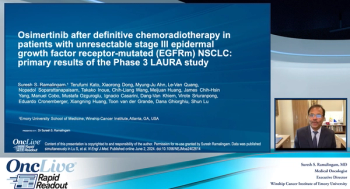
The LAURA study (NCT03521154) evaluates the efficacy and safety of Osimertinib as a maintenance therapy following chemoradiotherapy in patients with unresectable stage III EGFR-mutated non-small cell lung cancer.
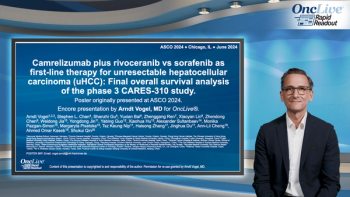
This is a final overall survival analysis on the phase 3 CARES-310 study (NCT03764293), a randomized, open-label, international phase 3 trial comparing camrelizumab plus rivoceranib vs sorafenib as first-line therapy for unresectable hepatocellular carcinoma (uHCC).
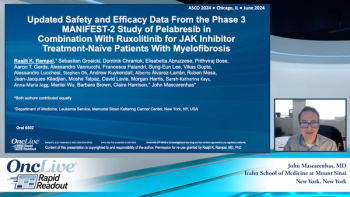
This is safety and efficacy update on the MANIFEST-2 trial (NCT02158858), a global, randomized, double-blind, active-control, phase 3 study using pelabresib in combination with ruxolitinib for JAK inhibitor treatment-naïve patients with myelofibrosis.
A secondary investigation stemming from the Phase 3 MARIPOSA study, this analysis stratifies outcomes of utilizing amivantamab plus lazertinib compared to osimertinib in the treatment of first-line EGFR-mutant advanced non-small cell lung cancer (NSCLC) by biomarkers and disease characteristics indicative of high-risk disease.
Jorge Cortes, MD, discusses 4-year outcomes with ponatinib in patients with chronic myeloid leukemia harboring a T315I mutation.
A 3 year survival update on the RELATIVITY-047 trial (NCT03470922), a global, randomized, double-blind phase 2/3 study comparing nivolumab plus relatlimab vs nivolumab in previously untreated metastatic or unresectable stage III or IV melanoma.
Dr. Martin Reck presents the five year update of CheckMate 9LA (NCT03215706) and exploratory analysis of efficacy in patients who discontinued treatment due to treatment related adverse events in patients with metastatic non-small lung cancer.
CROWN (NCT03052608) is a phase 3 clinical trial evaluating progression free survival with the use of loratinib in patients with advanced ALK+ NSCLC.
COMBI-AD (NCT01682083) evaluated dabrafenib plus trametinib for patients with BRAF-mutated AJCC-stage III melanoma, and here the final results for RFS, distant-metastasis-free survival and overall survival are presented.
PIVOTAL (NCT02938299) is an open label, randomized, multicenter, phase 3 trial evaluating Daromun as a neoadjuvant intralesional therapy for resectable, locally advanced Stage III melanoma.
This is an evaluation of the results of a network meta-analysis covering the comparative efficacy of bruton tyrosine kinase Inhibitors in relapse/refractory chronic lymphocytic leukemia.
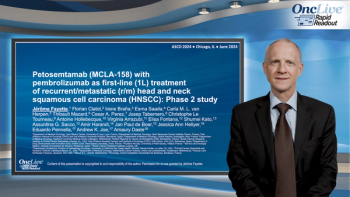
Dr. Jérôme Fayette presents the findings of a phase 2 study (NCT03526835) assessing the overall response rate of petosemtamab in combination with pembrolizumab compared to pembrolizumab monotherapy in patients with recurrent or metastatic head and neck squamous cell carcinoma.
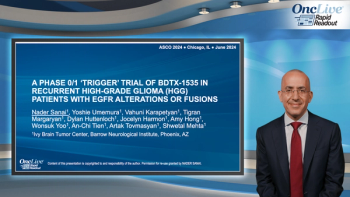
Dr. Nader Sanai presents the findings of a phase 0/1 trigger trial (NCT06072586) that evaluates the CNS penetration of BDTX-1535 in patients with recurrent high-grade gliomas and EGFR mutations.
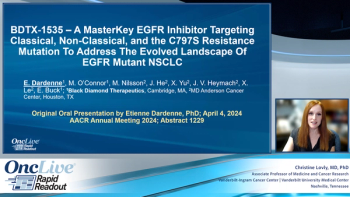
Christine Lovly, MD, PhD, shares data on BDTX-1535, a “masterkey” EGFR inhibitor targeting classical, non-classical, and the C797S resistance mutation in patients with EGFR mutant non-small cell lung cancer (NSCLC), from a presentation at AACR 2024.
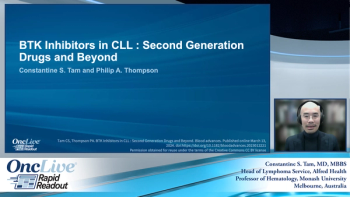
Dr. Constantine Tam provides an overview of the current and emerging treatment landscape for chronic lymphocytic leukemia (CLL), with a focus on Bruton's tyrosine kinase (BTK) inhibitors like ibrutinib and the next generation of BTK inhibitors under development.
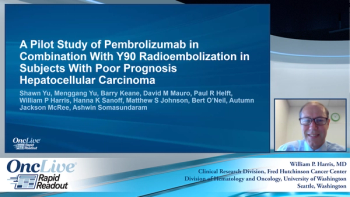
William Harris, MD, presents the study design and rationale for HCRN GI15-225, an open-label, single-arm multicenter, pilot study exploring whether using immunotherapy drugs in combination with locoregional therapies for patients with non-metastatic HCC is safe and beneficial, using pembrolizumab every 3 weeks starting 1 week before initial Y90 radioembolization.
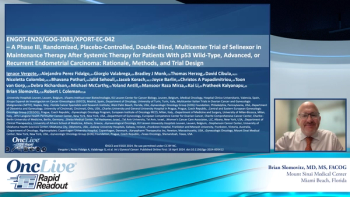
Brian Slomovitz, MD, MS, FACOG, presents the study design, rationale, and primary endpoints of ENGOT-EN20/GOG-3083/XPORT-EC-042, which will be evaluating the efficacy of selinexor compared with placebo as maintenance therapy in patients with advanced or recurrent TP53wt endometrial cancer.
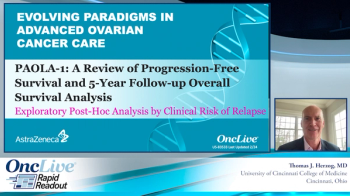
Thomas J. Herzog, MD, examines the PAOLA-1 trial results, focusing on the primary endpoint of progression-free survival (PFS) and key secondary endpoint of overall survival for olaparib in combination with bevacizumab for the treatment of advanced ovarian cancer. He discusses the 5-year overall survival data in relation to the PFS data and reviews the safety profile of the combination therapy with over 5 years of median follow-up. Dr. Herzog also considers the impact of these data on clinical decision-making and patient counseling from the perspective of a practicing gynecologic oncologist.
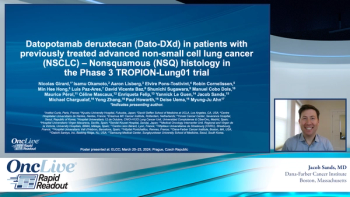
Jacob Sands, MD, shares updated data from the phase 3 TROPION-Lung01 trial of datopotamab deruxtecan versus docetaxel in non-squamous non-small cell lung cancer recently presented at the 2024 European Lung Cancer Congress (ELCC).
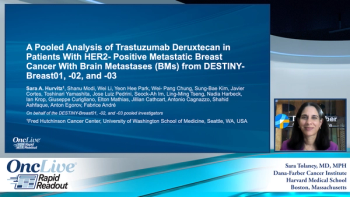
Sara Tolaney, MD, MPH, presents an exploratory pooled analysis of efficacy and safety data of trastuzumab deruxtecan vs comparator in patients with HER2-positive metastatic breast cancer and brain metastases from DESTINY-Breast01, -02, and -03.