Rapid Readouts

1 expert is featured in this series.

Constantine S. Tam, MD discusses long-term results of patients receiving Zanubrutinib in the Phase 3 ALPINE study confirm sustained benefit of Zanubrutinib in patients with Relapsed/Refractory Chronic Lymphocytic Leukemia or Small Lymphocytic Lymphoma: Up to 6 years of follow-up with the long-term extension.
1 expert is featured in this series.

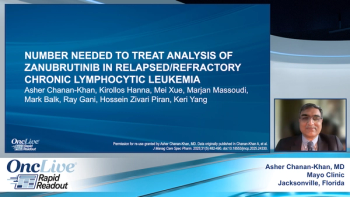
Constantine S. Tam, MD, presents a modeled analysis estimating the number needed to treat (NNT) to prevent one progression or death when using zanubrutinib versus other covalent Bruton tyrosine kinase inhibitors (BTKis) in patients with high-risk relapsed/refractory chronic lymphocytic leukemia (R/R CLL).

1 expert is featured in this series.

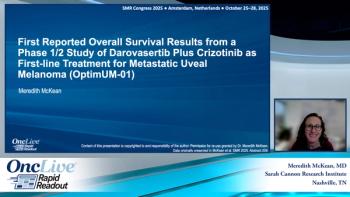
The presentation highlights results from the OptimUM-01 study evaluating darovasertib + crizotinib as first-line treatment for metastatic uveal melanoma, showing improved median overall survival (21.1 months) and higher response rates compared with historical standard therapies. The combination demonstrated a manageable safety profile, supporting its continued evaluation in the ongoing registrational OptimUM-02 trial.

1 expert is featured in this series.

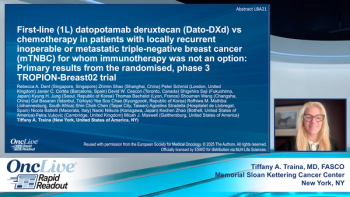
Tiffany Traina, MD, FASCO, highlights results from the phase 3 TROPION-Breast02 trial showing that datopotamab deruxtecan significantly improved progression-free and overall survival versus chemotherapy in patients with previously untreated triple-negative breast cancer who were not eligible for immunotherapy.

1 expert is featured in this series

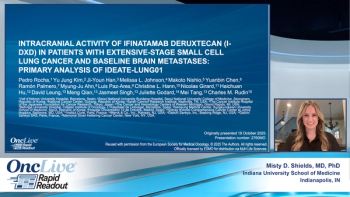
Misty D. Shields, MD, PhD, reviews primary findings from the IDeate-Lung01 trial, highlighting the promising systemic and intracranial efficacy and manageable safety profile of ifinatamab deruxtecan (I-DXd) in patients with extensive-stage small cell lung cancer, including those with baseline brain metastases.

1 expert is featured in this series.

Summarize long-term results from the phase 2 EDGE-Gastric Arm A1 study evaluating domvanalimab (anti-TIGIT) + zimberelimab (anti-PD-1) + FOLFOX as first-line therapy for advanced HER2-negative gastric, GEJ, or esophageal adenocarcinoma. Key data shown include ORR, PFS, OS, and safety outcomes, demonstrating encouraging clinical activity and manageable toxicity, along with context regarding the ongoing phase 3 STAR-221 trial.

1 expert is featured in this series.

Seth Wander, MD, PhD discusses an overview of emerging data and evolving treatment strategies in advanced gastric and gastroesophageal cancers, with a focus on the role of biomarkers in guiding targeted and immunotherapy-based treatment. The presentation highlights clinical trial outcomes, testing considerations, and future directions shaping the personalized management of these patients.

1 expert is featured in this series.

Laura Huppert, MD discusses LBA20 – primary results from ASCENT-03: a randomized phase 3 study of Sacituzumab Govitecan (SG) vs chemotherapy (Chemo) in patients (Pts) with previously untreated Advanced Triple-Negative Breast Cancer (TNBC) who are unable to receive PD-(L)1 inhibitors (PD-[L]1i)

An expert discusses Trastuzumab deruxtecan (T-DXd) vs trastuzumab emtansine (T-DM1) in patients (pts) with high-risk human epidermal growth factor receptor 2–positive (HER2+) primary breast cancer (BC) with residual invasive disease after neoadjuvant therapy (tx): Interim analysis of DESTINY-Breast05

Ifinatamab Deruxtecan in Extensive-Stage Small Cell Lung Cancer: Primary Analysis of the Phase 2 Ideate-Lung01 Study

Jacob Sands, MD, provides a post hoc analysis of TROPION-Lung01 , which showed improved intracranial activity and progression-free survival with datopotamab deruxtecan (Dato-DXd) versus docetaxel. Among patients with measurable brain metastases, Dato-DXd achieved a central nervous system confirmed overall response rate of 38%, with all evaluable patients showing disease control. No intracranial responses were seen in the docetaxel arm.