Maurie Markman, MD, president of Medicine and Science, Cancer Treatment Centers of America, discusses the latest advances in treatment for gynecological malignancies and other tumor types.
Maurie Markman, MD, president of Medicine and Science, Cancer Treatment Centers of America, discusses the latest advances in treatment for gynecological malignancies and other tumor types.
Sumanta Kumar Pal, MD, associate clinical professor, Department of Medical Oncology and Therapeutics Research, co-director, Kidney Cancer Program, City of Hope, discusses the role of PD-L1 in metastatic renal cell carcinoma.
David S. Snyder, MD, associate chair and professor, Department of Hematology and Hematopoietic Cell Transplantation, City of Hope, discusses emerging agents in myelofibrosis.
Maung Myo Htut, MD, assistant clinical professor of hematology and hematopoietic cell transplantation, City of Hope, discusses the use of immunotherapy in the treatment of patients with multiple myeloma.
Maurie Markman, MD, discusses the cause and impact of the opioid addiction epidemic in the United States.

City of Hope is currently the only institution in Southern California to offer both FDA-approved CAR T-cell therapies.
Ravi Salgia, MD, PhD, discusses the evolving role of ALK-directed therapies for patients with non-small cell lung cancer.
Ravi Salgia, MD, PhD, associate director, Clinical Sciences Research, Arthur & Rosalie Kaplan Chair, Medical Oncology, professor and chair, Department of Medical Oncology & Therapeutics Research, City of Hope, discusses effective agents in the treatment of patients with ALK-positive tumors.
Sagus Sampath, MD, assistant professor, Department of Radiation Oncology, City of Hope, discusses the safety profile of immunotherapy in combination with radiation in the treatment of patients with lung cancer.
Loretta Erhunmwunsee, MD, thoracic surgeon, assistant professor of surgery, City of Hope, discusses the factors that contribute to disparities in the treatment of patients with lung cancer.
Ravi Salgia, MD, PhD, Arthur & Rosalie Kaplan Chair in Medical Oncology, associate director for clinical sciences at City of Hope, discusses the importance of molecular markers in lung cancer.
Dan J. Raz, MD, MAS, co-director, Lung Cancer and Thoracic Oncology Program, assistant professor, Division of Thoracic Surgery, Department of Surgery, City of Hope, discusses the subsets of the ALCHEMIST trial.
Jae Y. Kim, MD, chief, Division of Thoracic Surgery, Department of Surgery, assistant professor, Department of Surgery, City of Hope, discusses the use of immune checkpoint inhibitors in surgical patients with lung cancer.
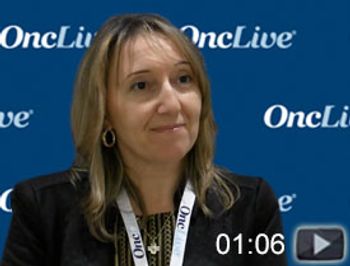
Erminia Massarelli, MD, PhD, MS, associate clinical professor, Department of Medical Oncology and Therapeutics Research, City of Hope, discusses the adoption of alectinib (Alecensa) as the first-line therapy in the treatment of patients with ALK-positive non–small cell lung cancer (NSCLC).
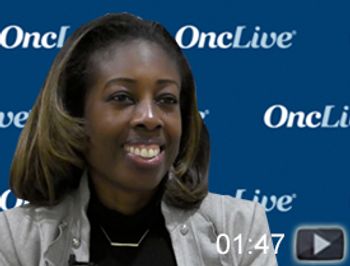
Loretta Erhunmwunsee, MD, thoracic surgeon, assistant professor of surgery, City of Hope, discusses disparities in the treatment of lung cancer.
Maurie Markman, MD, discusses the need to change the paradigm of clinical trials and FDA approvals in ovarian cancer.
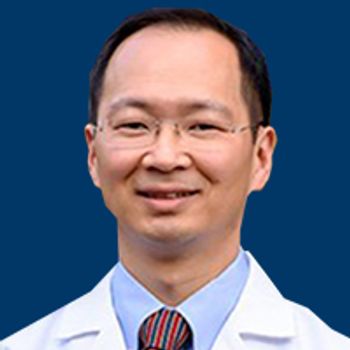
Jae Y. Kim, MD, discusses developments with checkpoint inhibition in patients with resectable NSCLC.
Ravi Salgia, MD, PhD, discusses the evolution and current state of biomarker testing in the field of NSCLC.
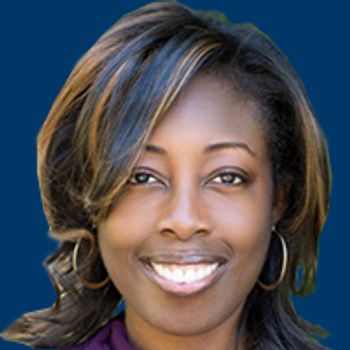
Loretta Erhunmwunsee, MD, discusses the racial and socioeconomic disparities in lung cancer trials
City of Hope announced that it has appointed Michael A. Caligiuri, M.D., in a new executive leadership role as president of City of Hope National Medical Center and physician-in-chief.
Jonathan N. Warner, MD, reconstructive urologist, City of Hope, discusses the future of surgery for patients with prostate cancer.
Sumanta K. Pal, MD, discusses advancements in prostate cancer, bladder cancer, and promising results in kidney cancer.
Patients who received maintenance therapy with rituximab (Rituxan) following autologous stem cell transplantation as treatment for mantle cell lymphoma had a survival advantage, according to results from a retrospective single-center study.
City of Hope physician Arti Hurria knows what it is like to be a young faculty member balancing life as a doctor, researcher and parent.
Alex Herrera, MD, assistant professor, Department of Hematology and Hematologic Cell Transplantation, City of Hope, discusses next steps for a phase I/II study of brentuximab vedotin (Adcetris) in combination with nivolumab (Opdivo) in patients with relapsed or refractory Hodgkin lymphoma.
Jun Gong, MD, fellow, City of Hope, discusses adverse events (AEs) associated with TKI/VEGF-directed therapy for patients with metastatic renal cell carcinoma (RCC).
Sumanta Kumar Pal, MD, medical oncologist, assistant clinical professor, Department of Medical Oncology and Therapeutics Research, co-director, Kidney Cancer Program, City of Hope, discusses the potential with immunotherapy in the preoperative setting for patients with renal cell carcinoma.
Maurie Markman, MD, president, Medicine and Science, Cancer Treatment Centers of America, editor-in-chief, OncologyLive, discusses combination treatments in ovarian cancer.
Przemyslaw W. Twardowski, MD, director, Prostate Oncology Strategic Program, director, Genitourinary Program, clinical professor, Department of Medical Oncology and Therapeutics Research, discusses the necessary steps toward determining optimal sequencing of treatments for patients with metastatic castration-resistant prostate cancer.
The treatment landscape of renal cell carcinoma is changing at a remarkably fast pace.