Dana-Farber Cancer Institute | Strategic Alliance Partners
Latest from Dana-Farber Cancer Institute
Panagiotis A. Konstantinopoulos, MD, PhD, director, Translational Research, Gynecologic Oncology, Dana-Farber Cancer Institute, associate professor of medicine, Harvard Medical School, discusses the rationale behind the TOPACIO trial for the treatment of patients with recurrent ovarian cancer.
Ursula A. Matulonis, MD, chief, Division of Gynecological Oncology, Dana-Farber Cancer Institute, professor of medicine, Harvard Medical School, discusses the rationale behind the QUADRA trial for patients with relapsed ovarian cancer.
Susan N. Chi, MD, senior physician, director, Pediatric Brain Tumor Clinical Trials Program, Dana-Farber Cancer Institute, assistant professor of pediatrics, Harvard Medical School, discusses pediatric atypical teratoid rhabdoid tumors.
David A. Reardon, MD, clinical director, Center for Neuro-Oncology, Dana-Farber Cancer Institute, discusses pembrolizumab (Keytruda) and bevacizumab (Avastin) for the treatment of patients with recurrent PD-L1–positive glioblastoma.
Sara M. Tolaney, MD, MPH, instructor of medicine, Harvard Medical School, attending physician of medical oncology, Dana-Farber Cancer Institute, discusses the phase Ib results of abemaciclib (Verzenio) plus pembrolizumab (Keytruda) for hormone receptor-positive, HER2-negative metastatic breast cancer.
Paul Richardson, MD, discusses the efficacy and tolerability of the combination of pomalidomide (Pomalyst), bortezomib (Velcade), and dexamethasone in patients with multiple myeloma.
Toni Choueiri, MD, director, Lank Center for Genitourinary Oncology, director, Kidney Cancer Center, Jerome and Nancy Kohlberg Associate Professor of Medicine, Harvard Medical School, Dana-Farber Cancer Institute, discusses checkpoint inhibitors in renal cell carcinoma (RCC).
Matthew S. Davids, MD, MMSc, associate director, Center for Chronic Lymphocytic Leukemia, Dana-Farber Cancer Institute, discusses duvelisib in relapsed/refractory chronic lymphocytic leukemia.
Bradley McGregor, MD, physician, Genitourinary Oncology program, Dana-Farber Cancer Institute, instructor of medicine, Harvard Medical School, compares recent data with combination therapy in renal cell carcinoma.
Lindsay Frazier, MD, institute physician, Pediatric Hematology/Oncology, Dana-Farber Cancer Institute, associate professor of pediatrics, Harvard Medical School, discusses the Malignant Germ Cell International Consortium (MaGIC) in pediatric and rare tumors.
Anthony G. Letai, MD, PhD, discusses the complex nature of apoptosis and efforts to target the process.
Bradley McGregor, MD, physician, Genitourinary Oncology program, Dana-Farber Cancer Institute, instructor of medicine, Harvard Medical School, discusses new combinations with immunotherapy in renal cell carcinoma.

Lauren C. Harshman, MD, assistant professor of medicine, Harvard Medical School, senior physician, Dana-Farber Cancer Institute, discusses moving immunotherapy earlier in the line of therapy for patients with renal cell carcinoma (RCC).
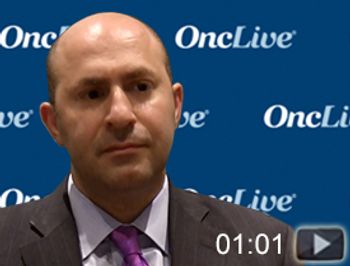
Toni Choueiri, MD, director, Lank Center for Genitourinary Oncology, director, Kidney Cancer Center, Jerome and Nancy Kohlberg Associate Professor of Medicine, Harvard Medical School, Dana-Farber Cancer Institute, discusses the current treatment of patients with renal cell carcinoma.
SL-401, a novel therapy that targets a cancer stemness pathway, is being investigated in patients with blastic plasmacytoid dendritic cell neoplasm in a phase I/II trial.
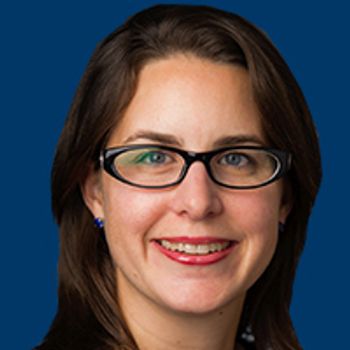
Lauren C. Harshman, MD, discusses ongoing clinical trials examining the incorporation of immune therapies into practice.
Toni K. Choueiri, MD, discusses recent advancements and shares his insight on the future treatment landscape of patients with kidney cancer.
Lauren C. Harshman, MD, assistant professor of medicine, Harvard Medical School, senior physician, Dana-Farber Cancer Institute, discusses the potential for new treatment options in renal cell carcinoma.
Xiao X. Wei, MD, MAS, discusses managing possible adverse events of different systemic therapies in kidney and bladder cancer.
Guru P. Sonpavde, MD, navigates through the treatment landscape of urothelial carcinoma.
Bradley A. McGregor, MD, discusses the growth of combination therapy in the treatment of patients with kidney cancer.
Xiao X. Wei, MD, MAS, instructor of medicine, Harvard Medical School, Dana-Farber Cancer Institute, discusses immune-related adverse events (irAE) in genitourinary (GU) cancers.
Nadine M. Tung, MD, discusses the role of PARP inhibitors for patients with BRCA-positive breast cancer and the importance of genetic testing.
Toni Choueiri, MD, director, Lank Center for Genitourinary Oncology, director, Kidney Cancer Center, Jerome and Nancy Kohlberg Associate Professor of Medicine, Harvard Medical School, Dana-Farber Cancer Institute, discusses the latest treatments in genitourinary (GU) cancers.
Bradley McGregor, MD, physician, Genitourinary Oncology program, Dana-Farber Cancer Institute, instructor of medicine, Harvard Medical School, discusses combinations of immunotherapy for patients with kidney cancer.
Lauren C. Harshman, MD, assistant professor of medicine, Harvard Medical School, senior physician, Dana-Farber Cancer Institute, discusses how the PROTECT trial sought to answer the controversial results of the ASSURE and S-TRAC trials.
Joaquim Bellmunt, MD, PhD, associate professor of medicine, Harvard Medical School, director, Bladder Cancer Center, Dana-Farber Cancer Institute, discusses The Cancer Genome Atlas (TCGA) project in bladder cancer.
Xiao X. Wei, MD, MAS, professor of medicine, Harvard Medical School, Dana-Farber Cancer Institute, discusses the side effect profile of cabozantinib (Cabometyx) in advanced kidney cancer.
Guru Sonpavde, MD, director of Bladder Cancer at Dana-Farber Cancer Institute, discusses immunotherapy plus chemotherapy in bladder cancer.
In an extended follow-up of results from the CheckMate-205 trial, nivolumab (Opdivo) induced an overall objective response rate of 69% in patients with relapsed/refractory classical Hodgkin lymphoma after autologous hematopoietic cell transplantation.
