
Press Release
This month, researchers reduce the risk of infections after pancreatic surgery and discover the best cost-effective treatment combination for prostate cancer patients.
Press Release
This month, researchers reduce the risk of infections after pancreatic surgery and discover the best cost-effective treatment combination for prostate cancer patients.
Neeraj Agarwal, MD, discusses future questions to be addressed following the phase 3 TALAPRO-2 trial evaluating the combination of talazoparib plus enzalutamide in patients with metastatic castration-resistant prostate cancer.
Neeraj Agarwal, MD, speaks on the significance of the approval and how the combination of talazoparib and enzalutamide will fit into the treatment landscape of HRR gene–mutated mCRPC.

Dr Agarwal discusses the significance of the FDA approval of talazoparib plus enzalutamide in HRR gene–mutated mCRPC, key efficacy and safety data from the TALAPRO-2 trial, and how this combination further supports the use of PARP inhibitors in the mCRPC treatment paradigm.
Neeraj Agarwal, MD, discusses the role of PARP inhibitors in metastatic castration-resistant prostate cancer and the potential evolutions of the metastatic castration-resistant prostate cancer and metastatic castration-sensitive prostate cancer treatment paradigms.
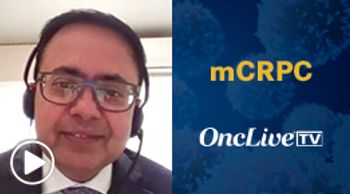
Neeraj Agarwal, MD, discusses the significance of the FDA approval of talazoparib plus enzalutamide in patients with metastatic castration-resistant prostate cancer harboring homologous recombination repair gene alterations.
Press Release
The Center for Health Outcomes and Population Equity at Huntsman Cancer Institute and the University of Utah, in partnership with the Montana State University Center for American Indian and Rural Health Equity, received a grant for Cancer Control in Persistent Poverty Areas from the National Cancer Institute.
Press Release
Huntsman Cancer Institute at the University of Utah, a pioneering innovator dedicated to developing more effective ways to care for and prevent cancer, announced plans today for a new Huntsman Cancer Institute comprehensive cancer center in Utah County.
Press Release
In a recently published manuscript, Howard Colman, MD, PhD, identified a potential breakthrough in glioblastoma treatment.
Press Release
Huntsman Cancer Institute at the University of Utah, the only place in the region devoted to developing new treatments for cancer, announced the opening of the Kathryn F. Kirk Center for Comprehensive Cancer Care and Women’s Cancers.
Sagar Patel, MD, discusses how the timing of autologous stem cell transplant can affect outcomes in those with myelofibrosis, including the risk of patients developing post-transplant complications.
Amandeep Godara, MBBS, discusses important patient factors to consider when deciding between a CAR T-cell therapy vs bispecific antibody in relapsed/refractory multiple myeloma, and the importance of mitigating treatment-related toxicities associated with the administration of bispecific antibodies in this disease setting.
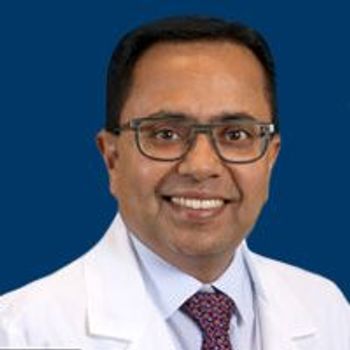
press release
Neeraj Agarwal, MD, is now a distinguished member of the Fellows of the American Society of Clinical Oncology.
Brian Mitzman, MD, FACS, FCCP, discusses the use of adjuvant atezolizumab following platinum-based chemotherapy in patients with resectable non–small cell lung cancer.
press release
TALAPRO-2 demonstrated that using talazoparib in combination with enzalutamide may reduce the risk of disease progression or death by 37%.
Brian Mitzman, MD, FACS, FCCP, discusses the emergence of immunotherapy as a treatment option for patients with early-stage non–small cell lung cancer.
Amandeep Godara, MBBS, discusses CAR T-cell therapies currently available for patients with multiple myeloma.
Press Release
Varghese, known for his innovative research in perioperative care and mentorship to physician-scientists, will become SUS President in February 2024.
Updated data from key trials in non–small cell lung cancer continue to demonstrate the superiority of immunotherapy and targeted therapy regimens for non–small cell lung cancer treatment, but the optimal use of these agents in the adjuvant vs neoadjuvant settings is still contested.
Brian Mitzman, MD, FACS, FCCP, discusses findings from the phase 3 CheckMate 816 trial in patients with resectable non–small cell lung cancer.
Amandeep Godara, MBBS, discusses the evolving treatment landscape in both early and late relapsed multiple myeloma, updated clinical trial results with CAR T-cell therapy, and key considerations when navigating treatment selection in this disease space.
Amandeep Godara, MBBS, expands on the advantages and limitations of teclistamab monotherapy in patients with late-relapsed myeloma, discusses the best use of bispecific antibodies and CAR T-cell therapy in this population, and highlights ongoing efforts to mitigate the impact of treatment-related toxicities and improve accessibility across the paradigm.
Experts in hematologic malignancies conclude their discussion by discussing BTK degraders and other targets in the treatment of mantle cell lymphoma.
Press Release
Huntsman Cancer Institute at the University of Utah congratulates three of their newest endowed chairs.
A comprehensive look at the role of bispecific antibodies, including glofitamab, in the treatment of mantle cell lymphoma.
Bijal D. Shah, MD, and Matthew J. Matasar, MD, discuss how they approach treating patients with MCL who rapidly progress on BTK inhibitors.
Talazoparib plus enzalutamide generated a statistically significant and clinically meaningful improvement in radiographic progression-free survival vs placebo plus enzalutamide as first-line treatment for patients with metastatic castration-resistant prostate cancer, irrespective of homologous recombination repair status.
Sagar Patel, MD, discusses complications following allogeneic stem cell transplant that can occur in patients with myelofibrosis.
A panel of experts in hematologic malignancies analyze clinical studies and real-world data of brexucabtagene autoleucel in mantle cell lymphoma.
Alexey V. Danilov, MD, PhD, presents a second patient profile of a 60-year-old patient with MCL, and the panel discusses using CAR T-cell therapy to treat MCL.