

Bogdana Schmidt, MD, MPH, discussed FDA-approved BCG-refractory treatments and recent shifts in BCG-naive NMIBC management.
Bogdana Schmidt, MD, MPH, discussed FDA-approved BCG-refractory treatments and recent shifts in BCG-naive NMIBC management.
Huntsman Cancer Institute pioneers a clinical trial using deceased donor stem cells, expanding transplant options for patients with aggressive blood cancers.
Bruce Edgar, PhD, researcher at Huntsman Cancer Institute, has been elected as a member to the National Academy of Sciences.
Bogdana Schmidt, MD, MPH, highlights FDA approved bladder-sparing therapies for patients with BCG-refractory non–muscle-invasive bladder cancer.
A federally funded research team is testing a new combination drug therapy that could both treat and prevent melanoma metastasis to the brain.
Anna Parks, MD, Huntsman Cancer Institute investigator, has been awarded the ASH Junior Faculty Scholar Award.
Short-course, higher dose vaginal brachytherapy for endometrial cancer had similar effectiveness to more frequent, lower dose sessions.
Howard Colman, MD, PhD, discusses the STELLAR trial of eflornithine plus lomustine vs lomustine alone in recurrent, IDH-mutant, anaplastic astrocytoma.
Chelsey Schlechter, MPH, PhD, Huntsman Cancer Institute investigator and assistant professor in the Department of Population Health Sciences at the University of Utah, has been selected as a 2024 Cancer Moonshot Scholar.
Douglas W. Sborov, MD, MS, discusses long-term treatment outcomes for patients with myeloma who received CAR T-cell therapy vs another treatment option.
Results of the TALAPRO-2 trial showed that a novel prostate cancer therapy has a higher overall survival rate compared to the standard of care drug alone.
Douglas W. Sborov, MD, MS, discusses where ide-cel and cilta-cel each fit into the myeloma treatment paradigm.
Cabozantinib plus atezolizumab did not produce superior OS outcomes vs a second novel hormonal therapy in metastatic castration-resistant prostate cancer.
Scientists at Huntsman Cancer Institute at the University of Utah, have made a significant breakthrough in predicting the prognosis of triple-negative breast cancer.
Michelle Mendoza, PhD, and Jeffrey Weiss, PhD, received a $2.6 million grant from the NIH to research how tension in lung tissue affects the growth and distribution of tumors.
Press Release
Women with severe endometriosis are 10 times more likely to get ovarian cancer, compared to women who do not have the disease.
Three Huntsman Cancer Institute researchers have recently been recognized for their work as outstanding faculty members at the University of Utah.
Benjamin L. Maughan, MD, PharmD, highlights ongoing research regarding the role of cytoreductive nephrectomy and targeted therapies in RCC.
Benjamin L. Maughan, MD, PharmD, discusses the implications of immuno-oncology and TKI agent combinations in clear cell and non–clear cell RCC.
In a recent study, researchers at Huntsman Cancer Institute found a trend in families with male infertility: an increased risk of certain cancers.

Neli Ulrich, PhD, MS, of Huntsman Cancer Institute, has been awarded the 2024 Governor’s Medal for Science and Technology.

Gita Suneja, MD, MS, has been named the senior director of Programs to Enhance Diversity at Huntsman Cancer Institute.
Sagar Patel, MD, discusses the utility of the Orca-T platform in patients with hematologic malignancies, highlighting the platform's safety.
Elizabeth Plimack, MD, MS, FASCO, recaps the discussion with key takeaways on recent updates in bladder cancer.
Huntsman Cancer Institute at the University of Utah received $75 million from the Utah Legislature toward a cancer research and academic building.
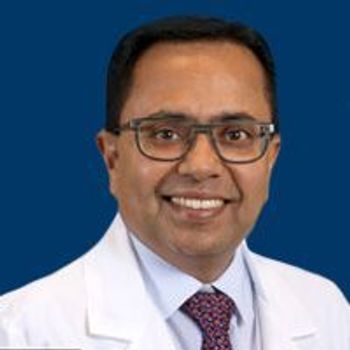
Neeraj Agarwal, MD, FASCO, discusses unmet needs across the prostate cancer spectrum and ongoing trials investigating agents in earlier settings.
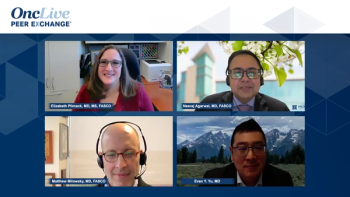
Experts on bladder cancer discuss exciting new agents and treatment strategies and where they can potentially fit into urothelial cancer treatment paradigms.
Focusing on metastatic urothelial carcinoma, the panel discusses the role of chemotherapy and outlines treatment sequencing approaches.
Evan Y. Yu, MD, provides insights on treatment approaches for patients with metastatic urothelial carcinoma in the second line and beyond.
The expert panel discusses how treatment strategies change based on cisplatin eligibility and the role of maintenance therapy in metastatic urothelial carcinoma.