Indiana University Melvin and Bren Simon Comprehensive Cancer Center | Strategic Alliance Partners
Latest from Indiana University Melvin and Bren Simon Comprehensive Cancer Center

Jennifer M. King, MD, discusses results from a retrospective study on the prevalence of teratoma and active germ cell tumors in patients who have residual nonretroperitoneal disease following chemotherapy for nonseminomatous germ cell tumors, and what these findings indicate about the need for surgical resection in this patient population.
Attaya Suvannasankha, MD, discusses addressing the incidence of cytokine release syndrome in a first-in-human phase 1/2 trial for patients with relaped/refractory multiple myeloma.
Attaya Suvannasankha, MD, discusses the unique mechanism of action of REGN5459, the early efficacy and safety of the immunotherapy in heavily pretreated patients with relapsed/refractory multiple myeloma, and opportunities for further exploration.
Harikrishna Nakshatri, BVSc, PhD, discusses the investigation of TONSL in patients with breast cancer.
Attaya Suvannasankha, MD, discusses the safety and efficacy of REGN5459, a BCMAxCD3 bispecific antibody with low affinity to CD3 on T cells, in relapsed/refractory multiple myeloma.
The BCMA- and CD3-directed bispecific antibody REGN5459 led to fast onset, deep, and dose-dependent responses sustained over time, with a high frequency of manageable low-grade cytokine release syndrome in patients with relapsed/refractory multiple myeloma.
Researchers at the Indiana University Melvin and Bren Simon Comprehensive Cancer Center are addressing the low colorectal cancer screening rates in rural Indiana communities with a five-year, $3.3 million grant from the National Cancer Institute.
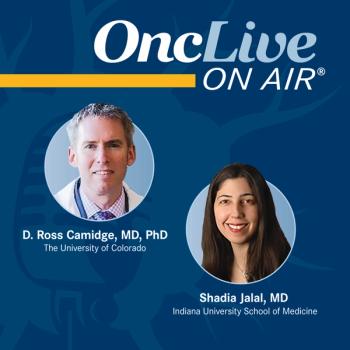
In this episode of ‘How This is Building Me,’ Camidge sits down with Jalal to discuss her transition from life in Jordan to Indianapolis, Indiana, the realities of being a mother in medicine, the importance of transparency in academia, and more.
Gifts totaling $3 million will create an endowed chair in cancer informatics at the Indiana University Melvin and Bren Simon Comprehensive Cancer Center.

IU School of Medicine alumnus Kip E. Virts, MD, has made an $8 million estate gift to support bile duct cancer research at Indiana University Melvin and Bren Simon Comprehensive Cancer Center.
Researchers at Indiana University School of Medicine are learning more about ways to prevent serious side effects from chemotherapy used to treat breast cancer patients.

Indiana University School of Medicine has named Shelley Johns, PsyD, ABPP, the Walther Scholar in Psycho-Oncology.
Analyzing nearly 500,000 single cells, researchers at the Indiana University Melvin and Bren Simon Comprehensive Cancer Center are refining how to classify colorectal cancer and identify new targets to develop effective therapies.

A gift commitment of $12.5 million to Indiana University School of Medicine from the Vera Bradley Foundation for Breast Cancer will support new research to harness immunotherapy for breast cancer treatment.
Kelvin P. Lee, MD, discusses the importance of collaboration in precision medicine.

Kelvin P. Lee, MD, discusses the importance of sequencing in precision medicine.
A researcher at the Indiana University Melvin and Bren Simon Comprehensive Cancer Center found the COVID-19 vaccine protected most cancer patients from getting COVID. However, patients with certain types of cancer have a higher and widely varied risk of breakthrough COVID infections after receiving the COVID vaccine.

Michael J. Robertson, MD, discusses the value of fellowship, choosing a career path, and the second epiphany that led him to focus on one of the hottest topics in oncology years before it became a viable treatment option.
Indiana University School of Medicine has announced the hiring of a world-recognized medical oncologist and multiple myeloma researcher to lead the Indiana University Melvin and Bren Simon Comprehensive Cancer Center.
Roberto Pili, MD, discusses clinical challenges in translocation renal cell carcinoma.
Bert O’Neil, MD, the Joseph W. and Jackie J. Cusick Professor of Oncology, professor of medicine, and director of the Phase I and Gastrointestinal Oncology Programs at Indiana University, discusses the importance of differentiating between neuroendocrine tumors (NETs).
Paul R. Helft, MD, discusses the incidence of gastrointestinal neuroendocrine tumors and available and emerging treatment methods.
Paul R. Helft, MD, professor of medicine, Indiana University School of Medicine, Indiana University Health Melvin and Bren Simon Cancer Center, discusses pancreatic and carcinoid neuroendocrine tumors.
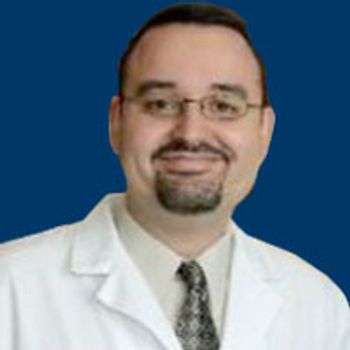
With the growing body of evidence supporting positive outcomes with the use of precision medicine–based approaches, academic cancer centers are increasingly incorporating genomic technology into standard clinical care.

The program brings both high-school and undergraduate students from underrepresented populations to the IU School of Medicine's Indianapolis campus. It offers students positive and meaningful firsthand exposure to biomedical and behavioral science careers that might not otherwise present themselves.
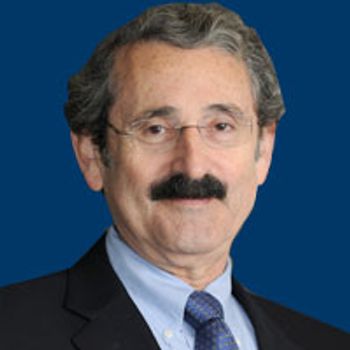
To address the unmet need
for better diagnostic and
therapeutic modalities
in pancreatic cancer, investigators
at the Indiana University
School of Medicine have
established the Pancreatic Cancer
Signature Center at the Indiana
University Melvin and Bren
Simon Cancer Center.

Olanzapine (Zyprexa) demonstrated an improvement in antinausea effects in patients receiving concurrent highly emetogenic chemotherapy and radiation therapy for advanced stage head and neck and esophageal cancer when compared to fosaprepitant.

Thousands of women have made the selfless choice to literally donate a precious piece of themselves by giving a breast tissue sample to the Susan G. Komen Tissue Bank at the Indiana University Melvin and Bren Simon Cancer Center, a unique resource for researchers worldwide.
OncLive and Indiana University Melvin and Bren Simon Cancer Center have joined forces to share news about the center's research and education programs, OncLive announced today. The collaboration is part of OncLive's Strategic Alliance Partnership initiative.
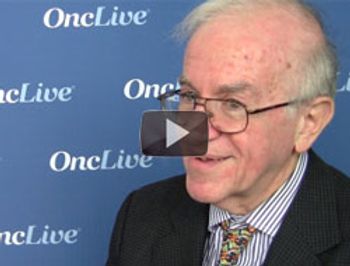
Lawrence H. Einhorn, MD, distinguished professor of medicine, division of hematology/oncology, Indiana University School of Medicine, Giant of Cancer Care: Genitourinary Cancer, discusses new methods being explored to help improve the cure rate in prostate cancer.