
Núria Agustí Garcia, MD, discusses the MELISA trial, which is evaluating further steps toward lymphadenectomy replacement in ovarian cancer.
Núria Agustí Garcia, MD, discusses the MELISA trial, which is evaluating further steps toward lymphadenectomy replacement in ovarian cancer.
Alessandra Ferrajoli, MD, discusses the importance of shared decision-making when considering the use of BTK inhibitors in hematologic malignancies.

Sangeeta Goswami, MD, PhD, discusses her career focused in genitourinary cancers, with a focus on patient-centric science and shares mentorship stories along the way.
Shannon N. Westin, MD, MPH, FACOG, discusses the DENALI trial of azenosertib in patients with high-grade serous ovarian cancer.

Hans Lee, MD, discusses the rationale for the phase 1/2 LINKER-MM1 trial of linvoseltamab in patients with relapsed/refractory multiple myeloma.
Michael J. Overman, MD, discusses future research directions in gastrointestinal cancers.
Experts from across the oncology field highlight their biggest takeaways and the hottest topics from the 2024 AACR Annual Meeting.
Phillip J. Koo, MD, discusses the clinical use of PSMA PET imaging in patients with prostate cancer.
Michael J. Overman, MD, discusses the rationale for utilizing a nonoperative management approach over traditional surgery in gastrointestinal cancers.

Early safety and efficacy data seen with AZD1390 in a phase 1 study indicate it's potential utility as a radiosensitizing treatment in glioblastoma.
Samer A. Srour, MB ChB, MS, discusses efficacy and safety data for the allogeneic CAR T-cell therapy CTX130 in advanced clear cell renal cell carcinoma.
Saruparib's favorable activity and safety may allow patients with advanced solid tumors to stay on treatment longer vs other approved PARP inhibitors.
Adagrasib plus cetuximab elicited a 34% objective response rate in patients with previously treated KRAS G12C-mutant advanced colorectal cancer.
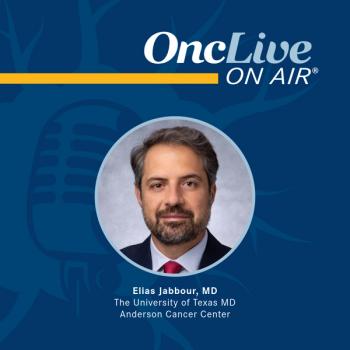
Dr Jabbour expands on the FDA approval of ponatinib for patients with Ph-positive ALL, the agent’s mechanism of action, and data from the PhALLCON trial.
The anti-CD70 CAR T-cell therapy CTX130 showed activity and manageable toxicities in advanced renal cell carcinoma.
Michael R. Migden, MD, discusses efficacy data for RP1 in advanced non-melanoma skin cancer after prior solid organ transplant.

Krina K. Patel, MD, MSc, discusses the FDA approval of ide-cel for patients with triple class–exposed relapsed/refractory multiple myeloma.
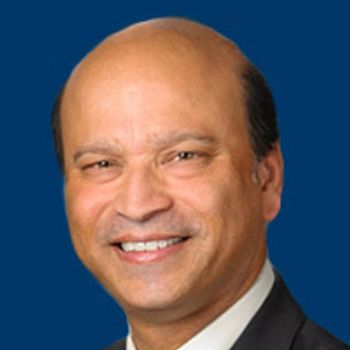
Debu Tripathy, MD, discusses the current treatment paradigm of HER2-positive breast cancer and highlights unmet needs that remain.
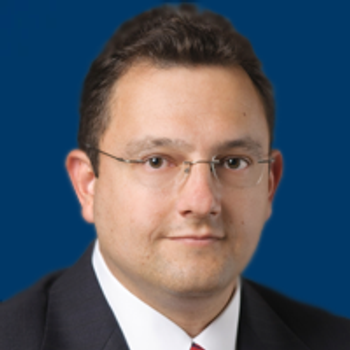
Voruciclib plus venetoclax had antileukemic activity with acceptable safety in patients with relapsed or refractory acute myeloid leukemia.
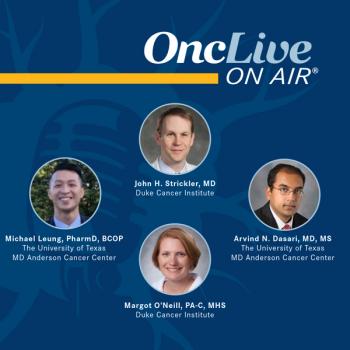
Strickler, Leung, Dasari, and O'Neill discuss adverse effect monitoring and management with standard agents for patients with colorectal cancer.

Anna Lee, MD, MPH, discusses key takeaways from a presentation on managing head and neck cancers that was given at the 2024 ACRO Summit.
Elias Jabbour, MD, discusses the FDA approval of ponatinib plus chemotherapy for Philadelphia chromosome–positive acute lymphoblastic leukemia.
Sara Corvigno, MD, PhD, discusses the incidence of chemotherapy-related clonal hematopoiesis of indeterminate potential in patients with ovarian cancer.
Stereotactic ablative radiotherapy has shown clinical benefit in combination with immunotherapy in early-stage NSCLC, making it a viable treatment to consider.
Debu Tripathy, MD, discusses current considerations for the management of early-stage HER2-positive breast cancer.
Debu Tripathy, MD, provides insights on the management of HER2-positive breast cancer, including the evolving role of trastuzumab in this population.
Jennifer K. Litton, MD, discusses challenges determining the optimal sequencing of PARP inhibitors in early-stage triple-negative breast cancer.
Christina L. Roland, MD, MS, FACS, discusses a study of neoadjuvant immune-checkpoint blockade in retroperitoneal dedifferentiated liposarcoma.
Neil D. Gross, MD, FACS, discusses key safety data from a phase 2 study of neoadjuvant cemiplimab in cutaneous squamous cell carcinoma.
Michael J. Overman, MD, discusses the potential advantages of using nonoperative immunotherapy-based approaches in select gastrointestinal cancers.