
Naval G. Daver, MD, discusses the rationale for an ongoing phase 1 trial investigating uproleselan in combination with azacitidine and venetoclax in patients with treatment-naïve acute myeloid leukemia.
Naval G. Daver, MD, discusses the rationale for an ongoing phase 1 trial investigating uproleselan in combination with azacitidine and venetoclax in patients with treatment-naïve acute myeloid leukemia.
Courtney D. DiNardo, MD, MSCE, discusses ongoing investigations of triplet regimens with an azacitidine/venetoclax backbone for the treatment of patients acute myeloid leukemia and highlights the unmet needs that remain in older and high-risk subgroups within this patient population.
Sanam Loghavi, MD, discusses the expansion of genetically-defined categories of acute myeloid leukemia in the World Health Organization classification, and how this affects the diagnosis of patients in this space.
Alessandra Ferrajoli, MD, discusses the continued investigation of fixed-duration therapy as a frontline approach for patients with CLL, highlights both the pros and cons of this strategy, and touches on the unanswered questions regarding fixed-duration therapy that ongoing research aims to address.
Loretta J. Nastoupil, MD, discusses the rationale for investigating the use of lisocabtagene maraleucel in patients with relapsed/refractory follicular lymphoma.
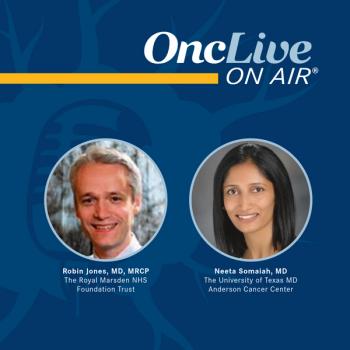
Drs Jones and Somaiah discuss unmet needs in GIST that the Peak trial seeks to answer; the advantages of the methods and design of this trial; and how the tolerable safety profile of bezuclastinib plus sunitinib supports further research with this combination.
Alessandra Ferrajoli, MD, discusses the benefits and limitations of utilizing fixed-duration therapy with monoclonal antibodies in the frontline setting for patients with chronic lymphocytic leukemia.
Paolo Strati, MD, discusses several ongoing investigations aiming to improve upon current immunotherapy combinations, highlighting the introduction of novel regimens into the treatment landscape of follicular lymphoma.
Courtney DiNardo, MD, MSCE, discusses triplets that serve as alternatives to standard-of-care approaches with azacitidine and venetoclax doublet therapy in select patients with acute myeloid leukemia.
Jason R. Westin, MD, director, discusses how the approval of CAR T-cell therapies in the second-line setting has radically shifted preferred treatment approaches in relapsed/refractory large B-cell lymphoma.
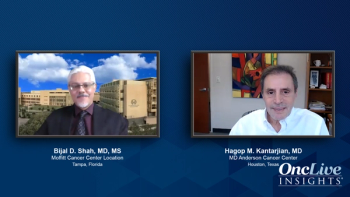
Hagop M. Kantarjian, MD, and Bijal D. Shah, MD, MS, delve into upcoming strategies for handling Philadelphia-chromosome positive acute lymphoblastic leukemia, considering recent breakthroughs.
Insights on real-world ponatinib treatment strategies and safety in Philadelphia-positive acute lymphoblastic leukemia are provided by Hagop Kantarjian, MD, and Bijal D. Shah, MD, MS.
Marcelo Vailati Negrao, MD, discusses efficacy findings from the phase 1b/2 KontRASt-01 trial (NCT04699188) in patients with KRAS G12C–mutated solid tumors.
Guillermo Garcia-Manero, MD, discusses the key efficacy findings from the phase 3 COMMANDS trial evaluating luspatercept-aamt in patients with myelodysplastic syndrome who were erythropoiesis-stimulating agent naïve and red blood cell transfusion dependent.

Loretta J. Nastoupil, MD, discusses the safety and efficacy data from the phase 2 TRANSCEND FL trial evaluating lisocabtagene maraleucel in patients with relapsed/refractory follicular lymphoma.
Hagop M. Kantarjian, MD, discusses the predictive value of early landmark cytogenetic or molecular responses to ponatinib in heavily pretreated patients with chronic-phase chronic myeloid leukemia.
The addition of the TKI ponatinib to reduced-intensity chemotherapy led to an increase in minimal residual disease-negative complete remission rate at the end of induction compared with imatinib among patients with Philadelphia chromosome-positive acute lymphoblastic leukemia.
Natalie Vokes, MD, discusses emerging biomarkers in non–small cell lung cancer, specifically highlighting the promise of HER3-targeted therapy.
Expert hematologist-oncologists consider how the PhALLCON trial elucidates the safety of ponatinib in Ph+ ALL, highlighting comparable toxicity rates and favorable efficacy endpoints.
Bijal Shah, MD, MS, and Hagop Kantarjian, MD, discuss promising results and regulatory progress for ponatinib in frontline Philadelphia-positive acute lymphoblastic leukemia treatment.
Funda Meric-Bernstam, MD, discusses the safety of CBX-12 and exploring dosage of the agent.
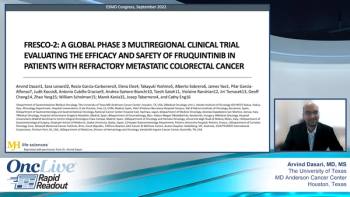
Arvind Dasari, MD, MS, presents data from the FRESCO-2 clinical trial evaluating fruquintinib in patients with refractory metastatic colorectal cancer, and provides insights on the clinical implications of the results.

Xiuning Le, MD, PhD, discusses ongoing and future investigations with osimertinib and chemotherapy in patients with metastatic lung cancer.
Key opinion leaders review the evolution of Ph+ ALL treatment, from Hyper-CVAD to novel TKIs, blinatumomab, and deintensification, improving remission rates and survival.
Leading experts Bijal Shah, MD, MS, and Hagop Kantarjian, MD, discuss diagnostic challenges, evolving treatments, and prognosis in Philadelphia chromosome-positive acute lymphoblastic leukemia (Ph+ ALL).
Closing out their final module, expert panelists consider the role of CAR T-cell therapy in metastatic castration-resistant prostate cancer and look toward future evolutions in the broader treatment landscape.
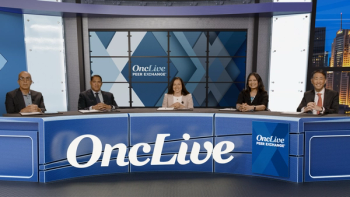
Key opinion leaders in metastatic castration-resistant prostate cancer share insight to key ongoing clinical trials within the landscape.
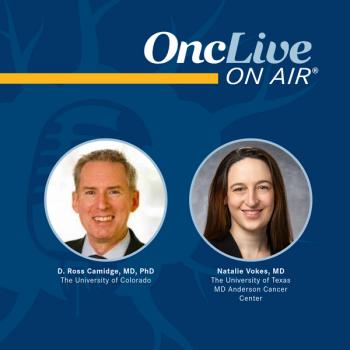
In this episode of "How This Is Building Me," Drs Camidge and Vokes discuss the span of countries and institutions along Dr Vokes’ journey to MD Anderson Cancer Center, how Dr Vokes balances research and work in the clinic, and how the correct mentors can help shape career paths in oncology.
Elias Jabbour, MD, outlines additional findings from PhALLCON and their clinical implications for patients with Philadelphia chromosome-positive ALL
Panelists wrap up their discussion on HER2+ breast cancer by summarizing the most exciting recent advances in the field and their hopes for the future of treatment.