
Matteo Lambertini, MD, PhD, and Virginia Kaklamani, MD, DSc, reflect on the SOFT and TEXT clinical trials to elucidate combination treatment strategies with ovarian function suppression (OFS).
Matteo Lambertini, MD, PhD, and Virginia Kaklamani, MD, DSc, reflect on the SOFT and TEXT clinical trials to elucidate combination treatment strategies with ovarian function suppression (OFS).
Closing out their discussion on biliary tract cancers, Milind Javle, MD, and Laura Goff, MD, highlight current treatment guidelines and unmet needs as the landscape continues to evolve.
Expert perspectives on the KEYNOTE-966 and IMbrave151 clinical trials and novel chemoimmunotherapy combination strategies in biliary tract cancers.
A brief review of data behind lisocabtagene maraleucel and its role as CAR T-cell therapy in patients with relapsed/refractory diffuse large B-cell lymphoma.
Shared insight on the role of CAR T-cell therapy in relapsed/refractory diffuse large B-cell lymphoma, with a focus on axicabtagene ciloleucel.
Expert perspectives on the adverse event profiles of first-line combination therapies in the advanced clear cell renal cell carcinoma space.
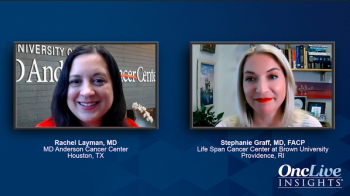
Rachel Layman, MD, describes her impression of the case and discusses risk assessment and a treatment plan for the patient.
Stephanie Graff, MD, presents a clinical case of a patient who is diagnosed with HR+ early-stage breast cancer.
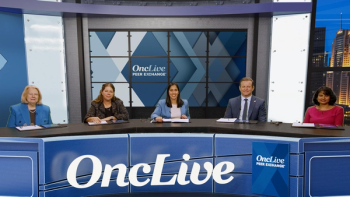
Experts on ovarian cancer discuss germline and somatic testing practices and provide clinical insights on factors that influence treatment decisions.
A panel of expert gynecologic oncologists introduce themselves and review frontline maintenance treatment options in ovarian cancer.
Dr Short discusses data in acute lymphoblastic leukemia that were presented at the 2023 ASCO Annual Meeting and EHA Congress.
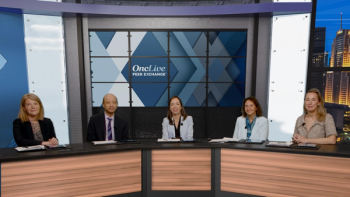
Panelists expand upon the most important clinical factors that inform selection amongst available systemic therapy regimens in the neoadjuvant setting of HER2+ eBC, comment on the potential for treatment de-escalation in lower-risk patients, and discuss exciting treatments on the horizon.
Heather McArthur, MD, and Debu Tripathy, MD, lead a discussion on risk stratification and optimizing treatment for HER2+ early breast cancer (eBC), followed by a review of standard-of-care systemic therapy regimens in the preoperative/neoadjuvant setting.
Shubham Pant, MD, MBBS, discusses the background of the ongoing phase 2 RAGNAR trial evaluating the use of erdafitinib in patients with solid tumors harboring FGFR alterations.
Funda Meric-Bernstam, MD, discusses a first-in-human phase 1/2 study of CBX-12 in patients with advanced or metastatic solid tumors.
Comprehensive insight to available gonadotropin-releasing hormone (GnRH) agonists in breast cancer and the role they play when thinking about fertility preservation.
Key opinion leaders on breast cancer management provide a broad overview of fertility preservation strategies available to patients.
Centering discussion on data from TOPAZ-1, Milind Javle, MD, and Laura Goff, MD, reflect on the value of chemoimmunotherapy combinations in biliary tract cancer management.
Drs Javle and Goff review standard of care treatment strategies for the management of biliary tract cancer and discuss recent NCCN guideline updates for the combination of durvalumab + cisplatin + gemcitabine.
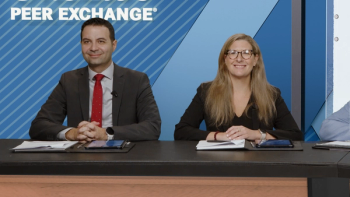
Panelists review data behind the combination of tafasitamab and lenalidomide in relapsed/refractory diffuse large B-cell lymphoma.

Focused discussion on specific patient or disease factors that aid in the selection of therapy for patients with relapsed/refractory diffuse large B-cell lymphoma.
Kanwal P. S. Raghav, MBBS, MD, discusses the rationale behind the phase 2 DESTINY-CRC02 trial evaluating fam-trastuzumab deruxtecan-nxki in patients with metastatic colorectal cancer (mCRC) with HER2 amplification or overexpression.
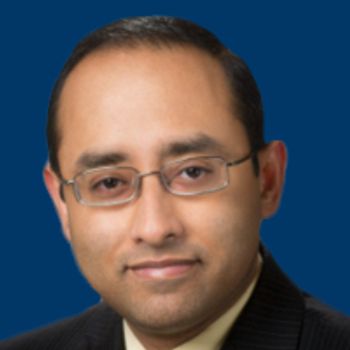
Prithviraj Bose, MD, discusses the development of non-myelosuppressive JAK inhibitors for patients with myelofibrosis, where the future of combination therapy is headed in this population, and the importance of enrolling patients in clinical trials that are tailored to their disease subset and treatment needs.
Shubham Pant, MD, MBBS, discusses the investigation of adagrasib in the treatment of patients with KRAS G12C–mutated advanced solid tumors.
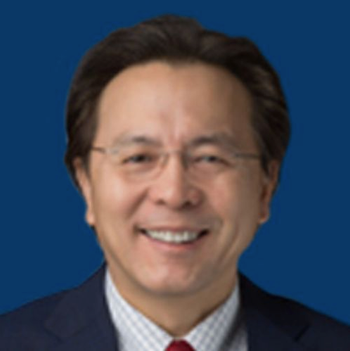
Zilovertamab vedotin was tolerable and generated early efficacy signals in patients with relapsed/refractory non-Hodgkin lymphoma.
Focused discussion on the incidence of chemotherapy-induced menopause in patients receiving treatment for their breast cancer.
Expert oncologists Matteo Lambertini, MD, PhD, and Virginia Kaklamani, MD, DSc, reflect on the subset of patients with breast cancer who are premenopausal and how that impacts their approach to disease management.
Shared insight on the role of molecular testing in the diagnosis of biliary tract cancers and how it may inform the selection of optimal therapy.
Expert oncologists Milind Javle, MD, and Laura Goff, MD, reflect on the subsets of biliary tract cancers and consider best practices in making an accurate diagnosis.
The CAR T-cell therapy lisocabtagene maraleucel produced rapid and durable responses in heavily pretreated patients with relapsed/refractory mantle cell lymphoma.