
Expert panelists briefly reflect on clinical trial data with CDK4/6 inhibitors in metastatic castration-resistant prostate cancer and how their role in this setting might evolve.
Expert panelists briefly reflect on clinical trial data with CDK4/6 inhibitors in metastatic castration-resistant prostate cancer and how their role in this setting might evolve.
A broad discussion on emerging therapeutic targets in metastatic castration-resistant prostate cancer and where they may fall within the treatment landscape.
Expert medical oncologists take a step into the future and discuss developments within the adjuvant setting of early-stage breast cancer they are most excited about.
Dr Kaklamani presents a profile of a patient with HER2+ breast cancer and liver metastases who had disease progression after first-line chemotherapy and a solitary new brain metastasis after second-line T-DM1.
Melinda L. Telli, MD, presents a profile of a patient with early stage breast cancer with residual nodal disease after neoadjuvant chemotherapy and surgery, whose tumor was initially HER2+ but became triple-negative after treatment.
Scott Kopetz, MD, PhD, FACP, discusses the phase 3 BREAKWATER trial in patients with BRAF V600E–mutant metastatic colorectal cancer.
The nation’s top-ranked UT MD Anderson Cancer Center and flagship UT Austin to build new hospitals as part of project.

Krina K. Patel, MD, MSc, discusses maintaining quality of life while treating patients with multiple myeloma, as well as highlights from the phase 3 KarMMa-3 trial.
Lucia Masarova, MD, discusses the investigation of ropeginterferon alfa in adult patients with essential thrombocythemia, highlighting the unmet needs that investigators aim to address with this investigation.
Key opinion leaders share insight to novel combination strategies and clinical trials focused on radioligand therapy in metastatic castration-resistant prostate cancer.
Continuing their segment on radioligand therapy in metastatic castration-resistant prostate cancer, panelists highlight data behind use of radium-223.
The panel looks to the future and offers closing thoughts on the evolving treatment landscape in endometrial cancer.
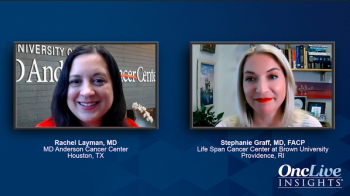
Stephanie Graff, MD, and Rachel Layman, MD, review common toxicities and adverse effects to watch out for with endocrine therapy and CDK4/6 inhibitors, and how to manage these.
Virginia G. Kaklamani, MD, DSc, presents a patient profile of early stage HER2+ breast cancer with residual nodal disease after neoadjuvant chemotherapy and surgery.
Expert medical oncologists talk about the impact of NATALEE trial data on their medical practice.
Experts share their go-to regimens in the third-line and higher setting of HER2+ metastatic breast cancer, and touch on the factors that support their decision-making.
An overview of ongoing research in the endometrial cancer treatment space.
Krina K. Patel, MD, MSc, discusses the background of the phase 3 KarMMa-3 trial, which investigated idecabtagene vicleucel in patients with high-risk, relapsed/refractory multiple myeloma.
Focused discussion on the role of lutetium-177–PSMA-617 as radioligand therapy in patients with metastatic castration-resistant prostate cancer.
Key opinion leaders in metastatic castration-resistant prostate cancer management review a subset of clinical trials focused on combination strategies with PARP inhibitors.

Closing out their discussion on the management of relapsed/refractory diffuse large B-cell lymphoma, expert panelists highlight unmet needs and share excitement for future evolutions in the treatment landscape.
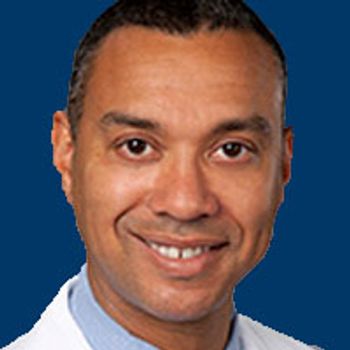
The University of Texas MD Anderson Cancer Center today announced that Christopher Flowers, MD, an internationally recognized physician-scientist and leader in oncology, has been selected as Division Head of Cancer Medicine after a competitive national search.
Debu Tripathy, MD, discusses novel therapies being developed for later-line treatment of HER2+ mBC.
Stephanie Graff, MD, and Rachel Layman, MD, discuss the design and results of the NATALEE trial, which evaluated adjuvant ribociclib + endocrine therapy versus endocrine therapy alone in patients with HR+/HER2− early breast cancer.
The expert panel reviews the KEYNOTE-775 trial, which focused on lenvatinib and pembrolizumab in advanced endometrial cancer.
Stephanie Graff, MD, describes her impression of the case and discusses the risk for recurrence in this particular patient.
Drs McArthur and Telli discuss recent data updates from the DESTINY-Breast trials of T-DXd, including a pooled analysis, and share best practices for monitoring patients for lung complications.
A panel of gynecologic oncologists review the PHAEDRA study and discuss the overall treatment landscape for endometrial cancer.
Moving on to discuss metastatic castration-resistant prostate cancer, panelists highlight the evolving role of PARP inhibition in this setting.
Comprehensive insight to key treatment modalities for patients with nonmetastatic castration-resistant prostate cancer and how to select amongst them.