

Comprehensive insight to available gonadotropin-releasing hormone (GnRH) agonists in breast cancer and the role they play when thinking about fertility preservation.
Comprehensive insight to available gonadotropin-releasing hormone (GnRH) agonists in breast cancer and the role they play when thinking about fertility preservation.
Key opinion leaders on breast cancer management provide a broad overview of fertility preservation strategies available to patients.

Centering discussion on data from TOPAZ-1, Milind Javle, MD, and Laura Goff, MD, reflect on the value of chemoimmunotherapy combinations in biliary tract cancer management.
Drs Javle and Goff review standard of care treatment strategies for the management of biliary tract cancer and discuss recent NCCN guideline updates for the combination of durvalumab + cisplatin + gemcitabine.

Panelists review data behind the combination of tafasitamab and lenalidomide in relapsed/refractory diffuse large B-cell lymphoma.

Focused discussion on specific patient or disease factors that aid in the selection of therapy for patients with relapsed/refractory diffuse large B-cell lymphoma.
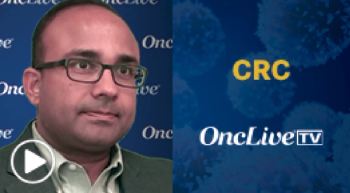
Kanwal P. S. Raghav, MBBS, MD, discusses the rationale behind the phase 2 DESTINY-CRC02 trial evaluating fam-trastuzumab deruxtecan-nxki in patients with metastatic colorectal cancer (mCRC) with HER2 amplification or overexpression.

Prithviraj Bose, MD, discusses the development of non-myelosuppressive JAK inhibitors for patients with myelofibrosis, where the future of combination therapy is headed in this population, and the importance of enrolling patients in clinical trials that are tailored to their disease subset and treatment needs.

Shubham Pant, MD, MBBS, discusses the investigation of adagrasib in the treatment of patients with KRAS G12C–mutated advanced solid tumors.
Zilovertamab vedotin was tolerable and generated early efficacy signals in patients with relapsed/refractory non-Hodgkin lymphoma.
Focused discussion on the incidence of chemotherapy-induced menopause in patients receiving treatment for their breast cancer.
Expert oncologists Matteo Lambertini, MD, PhD, and Virginia Kaklamani, MD, DSc, reflect on the subset of patients with breast cancer who are premenopausal and how that impacts their approach to disease management.
Shared insight on the role of molecular testing in the diagnosis of biliary tract cancers and how it may inform the selection of optimal therapy.
Expert oncologists Milind Javle, MD, and Laura Goff, MD, reflect on the subsets of biliary tract cancers and consider best practices in making an accurate diagnosis.
The CAR T-cell therapy lisocabtagene maraleucel produced rapid and durable responses in heavily pretreated patients with relapsed/refractory mantle cell lymphoma.

Kanwal Pratap Singh Raghav MBBS, MD, discusses data from DESTINY-CRC01 that supported the DESTINY-CRC02 trial, key efficacy and safety data from the trial, and the importance of identifying patients with HER2-positive CRC who may benefit from ADCs like T-DXd in clinical practice.

Krina K. Patel, MD, MSc, discusses the effect of high-risk features on outcomes with ide-cel in triple-class–exposed, relapsed/refractory multiple myeloma.

Key opinion leaders share a broad perspective on relapsed/refractory diffuse large B-cell lymphoma and the current treatment landscape.

Expert panelists open their discussion on diffuse large B-cell lymphoma by reflecting on diagnostic strategies and the frontline treatment armamentarium.
Treatment with the JAK2 inhibitor pacritinib demonstrated comparable improvements in spleen and symptom response regardless of baseline platelet counts and hemoglobin levels, according to findings from the pivotal phase 3 PERSIST-1 and PERSIST-2 trials.

Prithviraj Bose, MD, discusses key data on the use of zilurgisertib alone or in combination with ruxolitinib to reduce disease-related anemia in patients with primary or secondary myelofibrosis.

Hans C. Lee, MD, discusses the investigation of the BCMA x CD3 bispecific antibody linvoseltamab in patients with relapsed/refractory multiple myeloma.
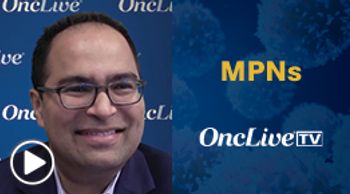
Naveen Pemmaraju, MD, discusses the importance of introducing pacritinib (Vonjo) to the treatment paradigm for patients with myelofibrosis with low platelet counts.
Neoadjuvant zanidatamab monotherapy successfully reduced the incidence of residual disease and was well tolerated in treatment-naïve women with node negative, stage I HER2-positive breast cancer, potentially allowing patients to achieve pathologic complete responses in the absence of chemotherapy.

Lucia Masarova, MD, discusses the single-arm multicenter phase 2 EXCEED-ET trial of ropeginterferon alfa-2b-njft in adult patients with essential thrombocythemia.

Administration of the selective ALK-2 inhibitor zilurgisertib alone or in combination with ruxolitinib was safe, well tolerated, and showed preliminary signals of clinical activity in patients with primary or secondary myelofibrosis and disease-related anemia.

Shubham Pant, MD, MBBS, discusses the rationale for the phase 2b HERIZON-BTC-01 trial and shares the results with zanidatamab in previously treated HER2-amplified biliary tract cancer.
Elias Jabbour, MD, discusses efficacy data from the phase 3 PhALLCON trial of ponatinib plus reduced-intensity chemotherapy vs imatinib plus reduced-intensity chemotherapy in newly diagnosed patients with Philadelphia chromosome–positive acute lymphoblastic leukemia.

Funda Meric-Bernstam, MD, discusses the phase 2 DESTINY-PanTumor02 trial of trastuzumab deruxtecan in difficult-to-treat HER2-positive solid tumors.
Sotorasib provided consistent benefit over docetaxel in the majority of key prespecified molecularly defined subsets of patients with pretreated KRAS G12C–mutated non–small cell lung cancer enrolled to the phase 3 CodeBreaK 200 trial.