
A comprehensive review of liver-directed therapies available to aid in the management of biliary tract cancers.
A comprehensive review of liver-directed therapies available to aid in the management of biliary tract cancers.
Enrollment has commenced for a phase 2 trial investigating the DNA-based interleukin-12 immunotherapy IMNN-001 in combination with bevacizumab and chemotherapy in patients with advanced ovarian cancer.

When treating patients with mantle cell lymphoma, early identification and appropriate frontline therapy remains critical, and therapies may vary for those 65 years and older compared with patients under the age of 65, with several additional factors also having a role in approaching treatment options for a new patient in the clinic.
For patients with acute myeloid leukemia, advances in targeting minimal residual disease represents the next wave of advances in the field and is necessary to cure this disease.
Switching their focus to tucatinib, expert panelists review data from the MOUNTAINEER study and define the role of tucatinib in managing HER2+ metastatic colorectal cancer.
Comprehensive insight on the adverse event profile of antibody drug conjugate therapy as it compares to other agents in HER2+ metastatic colorectal cancer management.

Jasmine Sukumar, MD, discusses the purpose of analyzing endocrine therapy use in HR-positive/HER2-positive patients, key data presented from the retrospective analysis at SABCS, and the need for improved understanding of clinical indications for endocrine therapy in this breast cancer subtype.

Expert hematologic oncologists discuss updates from the ASH 2022 Annual Meeting on emerging therapies for lower-risk MDS.
Following the ASH 2022 Annual Meeting, experts in hematologic oncology review updated data for luspatercept in lower-risk MDS.
Hematologic oncology experts give an overview of first- and second-line treatment options for lower-risk myelodysplastic syndromes.

Virginia Kaklamani, MD, discusses how racial disparities may affect patient outcomes and treatment expectations based on data from the RxPONDER trial in breast cancer.
Key opinion leaders review the advent of molecular testing in biliary tract cancers and consider its impact on informing treatment decisionmaking.
Focused conversation on the optimal workup and staging of biliary tract cancers within the current paradigm.

For patients with aggressive malignant tumors and high tumor burden, onco- logic emergencies such as tumor lysis syndrome emerge as a disease symptom or a treat- ment-related adverse effect.
Phillip J. Koo, MD, highlights insights garnered from prostate cancer experts on topics such as radioligands and modern radiopharmaceuticals, which, along with artificial intelligence, have the potential to revolutionize the field.
Centering discussion on clinical trials and experience with trastuzumab deruxtecan, expert oncologists identify its value in the HER2+ treatment landscape.
After a brief overview on first-line treatment options for patients with metastatic colorectal cancer, panelists highlight the role HER2 status plays in the selection of novel therapies.

An increasing focus on antibody-drug conjugates for HER2-positive breast cancer signals a potential shift in the standard of care for this population.

Shubham Pant, MD, MBBS, discusses significant efficacy and safety data from the RAGNAR trial, how erdafitinib fits into the current treatment paradigm for biliary tract cancers, and the role of next-generation sequencing in the selection of FGFR inhibitors for this patient population.
Yago L. Nieto, MD, PhD, professor, Department of Stem Cell Transplantation and Cellular Therapy, Division of Cancer Medicine, The University of Texas MD Anderson Cancer Center, discusses findings from a phase 2 trial investigating panobinostat (Farydak), gemcitabine, busulfan, and melphalan plus autologous stem cell transplant (ASCT) in patients with high-risk or relapsed/refractory multiple myeloma.
Samer A. Srour, MB ChB, MS, discusses findings with Orca-Q, an investigational therapy consisting of enriched CD34+ stem cells plus T-cell subsets, in patients with high-risk hematologic malignancies eligible for myeloablative conditioning and allogeneic stem cell transplant.
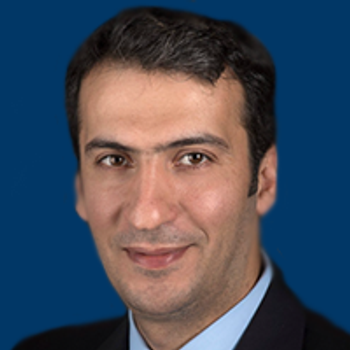
Orca-Q when using myeloablative conditioning with only tacrolimus monotherapy in the haploidentical stem cell transplant setting had acceptable safety and resulted in encouraging outcomes for patients with high-risk hematologic malignancies.
A comprehensive discussion on the barriers to molecular testing in metastatic colorectal cancer, along with challenges in utilizing these tests in the real-world setting.
Panelists consider the potential role for circulating tumor DNA to inform the selection of therapy for patients with metastatic colorectal cancer.

ADI-001, a first-in-class, allogeneic gamma delta1 CAR T-cell therapy, elicited responses and demonstrated a favorable safety profile in patients with relapsed/refractory B-cell non-Hodgkin lymphoma.

Centering focus on a patient scenario, panelists break down mainstay diagnostic strategies used to identify biliary tract cancers.
Expert panelists open their discussion on biliary tract cancers by identifying various subsets and noting the growing incidence of these diseases.
Mariana Chavez-MacGregor, MD, MSC, discussed key efficacy and safety data from the SWOG 1207 trial of adjuvant everolimus in postmenopausal patients with high-risk, hormone receptor–positive breast cancer.

Shared insight on recently updated data in acute myeloid leukemia following the ASH 2022 annual meeting.

Experts in hematologic oncology review and analyze updated data in chronic myeloid leukemia from ASH 2022.