

The addition of magrolimab to azacitidine and venetoclax produced high complete response rates and was well tolerated as first-line therapy in patients with high-risk de novo and secondary acute myeloid leukemia regardless of TP53 mutation status.
The addition of magrolimab to azacitidine and venetoclax produced high complete response rates and was well tolerated as first-line therapy in patients with high-risk de novo and secondary acute myeloid leukemia regardless of TP53 mutation status.
The addition of 1 year of everolimus to adjuvant endocrine therapy did not demonstrate a statistically significant improvement in invasive disease-free survival or overall survival in patients with high-risk, hormone receptor–positive, HER2-negative breast cancer.
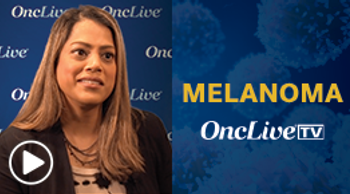
Sapna Patel, MD, discusses the evaluation of adjuvant nivolumab plus ipilimumab in stage IV metastatic melanoma with no evidence of disease.
Building on research his father conducted decades earlier, Robert Orlowski, MD, PhD, redefined myeloma treatment.
For many people who go into research, there’s a moment somewhere along the way that is immediately addictive and makes you want to experience that over and over again.
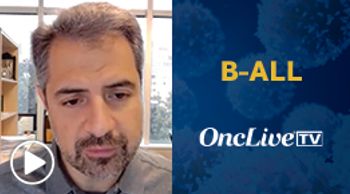
Elias Jabbour, MD, discusses the importance of testing for minimal residual disease when determining optimal treatment strategies for patients with B-cell acute lymphoblastic leukemia.
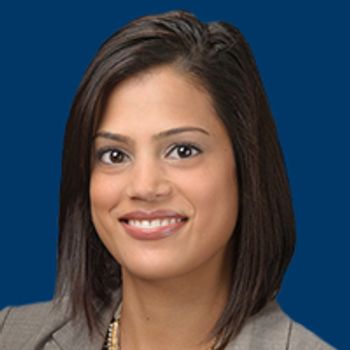
Sapna Patel, MD, reviews several key studies across stages of melanoma and emerging targeted therapies for patients with BRAF mutations.
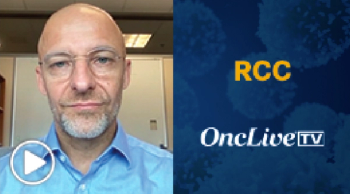
Eric Jonasch, MD, discusses the promise of the hypoxia inducible factor-2 alpha inhibitor belzutifan in metastatic renal cell carcinoma.
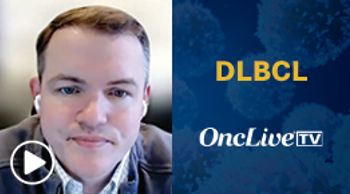
Jason Westin, MD, FACP, discusses reasons to refer patients with diffuse large B-cell lymphoma to second-line CAR T-cell therapy, CAR T-cell eligibility criteria, and high-risk disease features that may further support the use of CAR T-cell therapy in the second line, rather than chemotherapy.
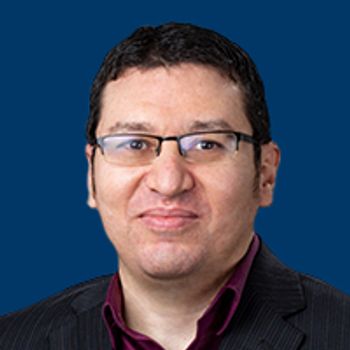
The combination of sotigalimab and pembrolizumab showed encouraging antitumor activity and was well tolerated in the frontline setting of patients with metastatic melanoma.
Arlene O. Siefker-Radtke, MD, discusses key therapeutic developments aimed at addressing unmet needs in metastatic urothelial carcinoma treatment.
Arlene O. Siefker-Radtke, MD, discusses the use of erdafitinib in urothelial carcinoma.
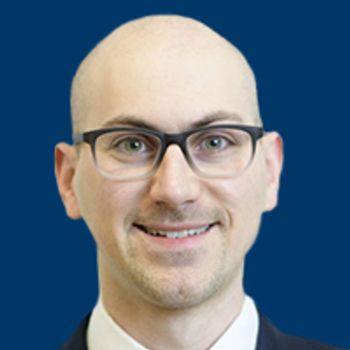
CA-125 levels increased as renal medullary carcinoma worsened and decreased with treatment response.
The combination of nivolumab and ipilimumab led to significant improvements in survival vs sunitinib in patients with intermediate- and poor-risk renal cell carcinoma with sarcomatoid features.
Eric Jonasch, MD, discusses key clinical trials that are paving the way for improved treatment sequencing in renal cell carcinoma and the prospective benefits of neoadjuvant cabozantinib in nonmetastatic clear cell renal cell carcinoma.

Courtney DiNardo, MD, MSCE; Eunice Wang, MD; and Jessica Altman, MD, discuss the scientific achievements they have witnessed in the field of leukemia and their hopes for the future of treating this disease.

Courtney DiNardo, MD, MSCE; Eunice Wang, MD; and Jessica Altman, MD, discuss how they turned career obstacles into opportunities and what they have learned from being women in the leukemia field.
Courtney DiNardo, MD, MSCE; Eunice Wang, MD; and Jessica Altman, MD, discuss the importance of strong mentorship relationships and the unique growth opportunities they found at different points of their careers.

Courtney DiNardo, MD, MSCE; Eunice Wang, MD; and Jessica Altman, MD, discuss the toughest challenges they faced in the leukemia field at the start of their fellowships and careers.
Carefully selected patients with triple-negative or HER2-positive breast cancer who demonstrated pathologic complete responses to neoadjuvant systemic therapy as predicted by image-guided vacuum-assisted core biopsy avoided breast surgery and went on to standard radiotherapy.
A regimen comprised of radiation and intermittent hormone therapy (HT) resulted in an improvement in progression-free survival in patients with oligometastatic prostate cancer, according to data from the phase 2 EXTEND trial.
Naoto T. Ueno, MD, PhD, FACP, discusses patient-reported outcomes with fam-trastuzumab deruxtecan-nxki (Enhertu) in hormone receptor (HR)–positive/HER2-low metastatic breast cancer.
Neil D. Gross, MD, FACS, discusses the current deficits in the treatment of patients with cutaneous squamous cell carcinoma in the curative setting and avenues for continued research generated by the primary analysis of the phase 2 trial examining neoadjuvant cemiplimab in this population.
Immunotherapy and targeted therapy combinations containing BRAF and MEK inhibitors have carved out roles in different settings of melanoma, which has given clinicians different options for treatment sequencing.
Drs DiNardo, Wang, and Altman discuss the challenges they faced in their early careers, the rollout of molecular profiling and targeted therapy in the early 2000s, and their growth from protégés to mentors.
Neil D. Gross, MD, FACS, discusses the investigation of cemiplimab in cutaneous squamous cell carcinoma.
Dr Subbiah discusses the significance of the FDA approval of selpercatinib in RET fusion–positive non–small cell lung cancer, thyroid cancer, and other solid tumors.
Nageshwara Arvind Dasari, MD, discusses the patient population observed in the phase 3 FRESCO-2 trial in metastatic colorectal cancer.
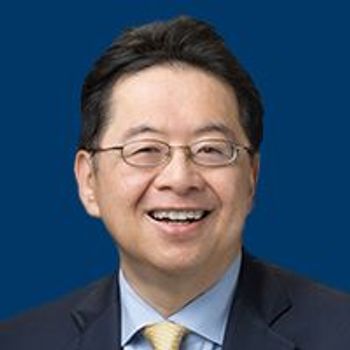
Fam-trastuzumab deruxtecan-nxki preserved quality of life vs physicians choice of treatment in patients with advanced, hormone receptor–positive/HER2-low metastatic breast cancer.
Treatment with rusfertide generated sustained hematocrit control at levels below 45% in patients with polycythemia vera, leading to a reduced need for repeated phlebotomy and eliminating this need in some patients, according to findings from 2 phase 2 clinical trials.