
Following the ASH 2022 Annual Meeting, hematologic oncology experts discuss updated data in acute lymphocytic leukemia.
Following the ASH 2022 Annual Meeting, hematologic oncology experts discuss updated data in acute lymphocytic leukemia.
Drs Short and Reagan discuss risk factors that can contribute to patients’ likelihood of developing tumor lysis syndrome, preventive measures for patients most at risk, and the clinical implications of standard treatment options for patients with tumor lysis syndrome.

Kyle A. Blum, MD, MS, says that results from a study of patients renal medullary carcinoma suggest that with CA-125, an established biomarker for ovarian cancer, may play a similar role in this rare disease.
Kyle A. Blum, MD, MS, says that patients with renal medullary carcinoma have poor prognosis, but anecdotal evidence suggests that survival outcomes may be improving.
Kyle A. Blum, MD, MS, discusses how few physicians have experience with renal medullary carcinoma, and the disease often presents with nonspecific symptoms.
Kyle A. Blum, MD, MS, explains how renal medullary cancer, like most rare cancers, can be difficult to study. However, there are several ongoing studies that include this patient population.
Scott Kopetz, MD, discussed the key objectives of the phase 3 BREAKWATER trial being done in patients with BRAF V600E–mutated mCRC, the recently reported safety and efficacy data observed with encorafenib plus cetuximab and chemotherapy, and the importance of conducting biomarker research to further personalize treatment in these patients.
Experts in metastatic colorectal cancer management highlight the role of molecular testing and testing modalities available in the academic and community settings.
Naveen Pemmaraju, MD, highlights unmet needs in the setting of myelofibrosis management and looks toward future evolutions in the treatment paradigm.
Expert perspectives on specific subsets of the REFINE study, which combined ruxolitinib with navitoclax in patients diagnosed with myelofibrosis.
Shifting his focus to treatment strategies in myelofibrosis, Naveen Pemmaraju, MD, reviews the current drug armamentarium and explains how it ties into disease modification.
Expert hematologist-oncologist Naveen Pemmaraju, MD, highlights current strategies in diagnosing and stratifying patients with myelofibrosis.

Mariana Chavez Mac Gregor, MD, MSC, discusses key efficacy and safety data from the phase 3 SWOG S1207 trial of everolimus in hormone receptor–positive, HER2-negative breast cancer.
Michael L. Wang, MD, discusses the efficacy of the noncovalent BTK inhibitor pirtobrutinib, as well as safety data from the phase 1/2 BRUIN trial in mantle cell lymphoma.
Van K. Morris, MD, discusses the evaluation of circulating tumor as a predictive biomarker for the use of adjuvant chemotherapy in patients with low-risk, stage II colon cancer.

Shubham Pant, MD, discusses the rationale, trial design, and key efficacy and safety data from an expansion cohort of the phase 2 RAGNAR trial in biliary tract cancers.

Axicabtagene ciloleucel continued to elicit improved progression-free survival and overall response rates in patients with relapsed/refractory indolent non-Hodgkin lymphoma.
Sapna Patel, BA, MD, discusses the sequencing of immunotherapy and targeted therapy in BRAF-mutant melanoma.
Dr Somaiah discusses the excitement surrounding novel agents such as CSF1R inhibitors and ULK1/2 inhibitors, and the utility of broad spectrum TKIs such as ripretinib.
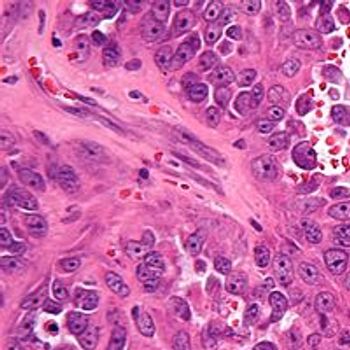
Moderately hypofractionated preoperative radiotherapy did not increase risk for major wound complication in patients with soft tissue sarcomas, according to findings from the single-arm, phase 2 trial HYPORT-STS.

Jaffer A. Ajani, MD, has an unyielding drive that has resulted in breakthroughs in a deadly, but often overlooked, disease.
Investigators may have discovered a key detail about renal medullary carcinoma that could have significant ramifications for patients.
During his career, David M. Gershenson, MD, has helped turn ovarian cancer treatment into an evidence-based field and built better therapies through an improved biological understanding of the disease.
Guillermo Garcia-Manero, MD, discusses the exploration of these doublet therapies and what they could mean for the high-risk myelodysplastic syndromes treatment landscape, the difficulties in making strides for patients with relapsed/refractory disease, and the top highlights in myelodysplastic syndromes from the 2022 ASH Annual Meeting.
Elias Jabbour, MD, discusses the evaluation of olverembatinib in patients with ponatinib-resistant chronic myeloid leukemia and Philadelphia chromosome-positive acute lymphoblastic leukemia.

Dr Kumar, Dr Patel, Falbo, and Ahlstrom highlight the importance of community-based discussions regarding adverse effects in multiple myeloma, the benefits of considering the whole treatment course, and subgroup analyses from the MAIA trial.
Virginia G. Kaklamani, MD, discusses the ongoing investigation of novel oral SERDs in patients with ER-positive/HER2-negative breast cancer, the remaining unmet needs for this patient population, and ongoing trials aiming to further understand the optimal use of oral SERDs.
Dr Blum discusses renal medullary carcinoma, the lack of approved systemic therapy for these patients, and findings showing a correlation between CA-125 levels and increased tumor burden and treatment response in this disease.
Elias Jabbour, MD, discusses the current and emerging roles of CAR T-cell therapy in B-ALL, emphasizes the importance of testing patients for MRD when determining CAR T-cell treatment strategies, and highlights how obe-cel, with its favorable safety profile, may address unmet needs related to CAR T-cell toxicities.
Olverembatinib elicited encouraging responses and tolerability in US patients with ponatinib-resistant chronic myeloid leukemia, Philadelphia chromosome-positive acute lymphoblastic leukemia, and in patients with CML whose tumors have a T315I mutation.