The University of Texas MD Anderson Cancer Center | Strategic Alliance Partners
Latest from The University of Texas MD Anderson Cancer Center
Brian F. Chapin, MD, assistant professor, Department of Urology, Division of Surgery, The University of Texas MD Anderson Cancer Center, discusses the considering factors for a patient with prostate cancer to undergo active surveillance versus active treatment.
John C. Araujo, MD, PhD, discusses targeted therapies, current and emerging, for patients with bone-metastatic castration-resistant prostate cancer.
Eric Jonasch, MD, speaks on the evolving choices for patients with renal cell carcinoma in the first- and second-line settings, as well as the remaining challenges in the field.
John C. Araujo, MD, PhD, assistant professor, Department of Genitourinary Medical Oncology, Division of Cancer Medicine, The University of Texas MD Anderson Cancer Center, discusses the importance of bone-targeting agents for the treatment of patients with metastatic castration-resistant prostate cancer (mCRPC). Araujo shared this insight during the 2017 OncLive® State of the Science Summit on Genitourinary Cancers.
Eric Jonasch, MD, professor, Department of Genitourinary Medical Oncology, Division of Cancer Medicine, The University of Texas MD Anderson Cancer Center, discusses the advancements in the first- and second-line settings for treating patients with renal cell carcinoma (RCC). Jonasch shared this insight during the 2017 OncLive® State of the Science Summit on Genitourinary Cancers.
Nancy Gordon, MD, a pediatric oncologist and research assistant at The University of Texas MD Anderson Cancer Center, discusses current immunotherapy research being conducted in the field of osteosarcoma.
Michelle A. Fanale, MD, associate professor, Department of Lymphoma/Myeloma, Division of Cancer Medicine, The University of Texas MD Anderson Cancer Center, discusses clinical trials for potential treatments for patients with T-cell lymphoma.
Ann H. Klopp, MD, PhD, discusses a phase III study highlighting the benefit of using intensity-modulated radiation therapy in gynecologic cancers and remaining challenges with radiation therapy in this setting.
William G. Wierda, MD, PhD, medical director of the Leukemia Center at The University of Texas MD Anderson Cancer Center, discusses a clinical trial exploring the combination of ibrutinib (Imbruvica) plus venetoclax (Venclexta) in patients with chronic lymphocytic leukemia (CLL).
Nancy B. Gordon, MD, assistant professor, department of pediatrics, The University of Texas MD Anderson Center, discusses immunotherapy treatments for osteosarcoma.
Sattva S. Neelapu, MD, associate professor, Department of Lymphoma/Myeloma, Division of Cancer Medicine, The University of Texas MD Anderson Cancer Center, discusses the design of the ZUMA-1 trial of the chimeric antigen receptor (CAR) T-cell therapy KTE-C19 for patients with aggressive lymphomas.
Rozita Yarmand, PhD, assistant professor, Department of Endocrine Neoplasia and Hormonal Disorders-Research, The University of Texas MD Anderson Cancer Center, discusses how ATF4 targets RET for degradation and is a candidate tumor suppressor gene in medullary thyroid cancer.
Carlos Barcenas, MD, assistant professor, Department of Breast Medical Oncology, Division of Cancer Medicine, The University of Texas MD Anderson Cancer Center, discusses managing neratinib-related side effects with colestipol (Colestid).
Michael J. Overman, MD, discusses the significance of the ongoing CheckMate-142 study and the next steps in microsatellite instability-high metastatic colorectal cancer.
Carlos Barcenas, MD, assistant professor, Department of Breast Medical Oncology, Division of Cancer Medicine, University of Texas MD Anderson Cancer Center, discusses side effects of neratinib in patients with HER2-positive early-stage breast cancer.
Henry M. Kuerer, MD, PhD, discusses surgical advancements in the field of breast cancer and the goals of a phase II single-center trial and how it could impact these exceptional responders.
Welela Tereffe, MD, discusses the current state of radiation therapy in breast cancer and the importance of a multidisciplinary approach.
Sattva S. Neelapu, MD, associate professor, Department of Lymphoma/Myeloma, Division of Cancer Medicine, The University of Texas MD Anderson Cancer Center, discusses the next steps with KTE-C19, an anti-CD19 chimeric antigen receptor T-cell therapy explored in the ZUMA-1 trial for patients with aggressive lymphomas.
Steven H. Lin, MD, PhD, associate professor at The University of Texas MD Anderson Center, discusses study of chemoradiation in elderly patients with esophageal cancer.
Ann H. Klopp, MD, PhD, an associate professor of Radiation Oncology at The University of Texas MD Anderson Cancer Center, discusses data from a trial comparing standard radiation therapy with intensity-modulated radiation therapy in patients with gynecologic malignancies.
Steven H. Lin, MD, PhD, associate professor, Department of Radiation Oncology, Division of Radiation Oncology, The University of Texas MD Anderson Cancer Center, discusses advances in radiation therapy for patients with esophageal cancer.
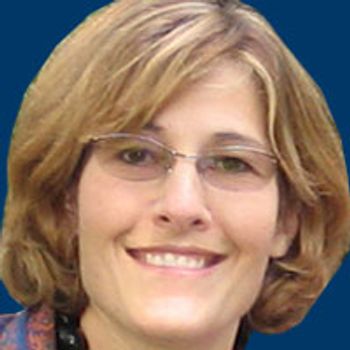
Lois Ramondetta, MD, discusses the updated recommendations and the importance of advocating for lesser-known HPV-associated cancers.

Henry M. Kuerer, MD, PhD, professor of Surgery, The University of Texas MD Anderson Cancer Center, discusses the elimination of breast cancer surgery in exceptional responders.
Welela Tereffe, MD, associate professor, Department of Radiation Oncology, The University of Texas MD Anderson Cancer Center, discusses the role of radiation therapy in the treatment of patients with breast cancer who previously received neoadjuvant chemotherapy.
Ramona Dadu, MD, assistant professor, Department of Endocrine Neoplasia and Hormonal Disorders, Division of Internal Medicine, The University of Texas MD Anderson Cancer Center, discusses the use of immunotherapy to treat patients with thyroid cancer.
Sattva S. Neelapu, MD, associate professor, Department of Lymphoma/Myeloma, Division of Cancer Medicine, The University of Texas MD Anderson Cancer Center, discusses the safety profile of KTE-C19, an anti-CD19 chimeric antigen receptor (CAR) T-cell therapy explored in the ZUMA-1 trial for patients with aggressive lymphomas.
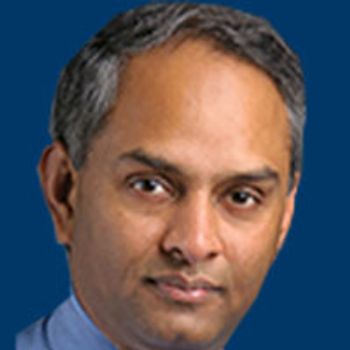
KTE-C19, an investigational CAR T-cell therapy, recently demonstrated positive results for patients with chemorefractory aggressive non-Hodgkin lymphoma.

Elizabeth A. Mittendorf, MD, PhD, associate professor in the Department of Surgical Oncology at the University of Texas MD Anderson Cancer Center, discusses the possibility of using vaccines as a preventative measure for breast cancer, particularly to fight recurrence.
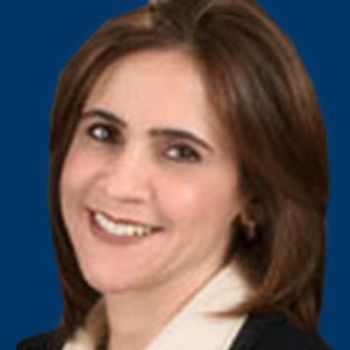
According to Nancy Gordon, MD, immunotherapy stands to play a critical role in the treatment of patients with osteosarcoma and lung metastases.
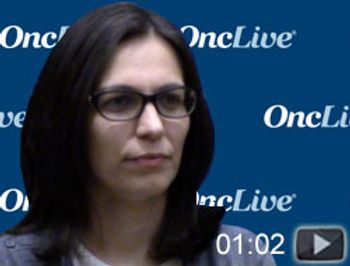
Ramona Dadu, MD, assistant professor, Department of Endocrine Neoplasia and Hormonal Disorders, Division of Internal Medicine, The University of Texas MD Anderson Cancer Center, discusses treatment approaches in medullary thyroid cancer.
