
Padmanee Sharma, MD, PhD, professor of Immunology in the Department of Genitourinary Medical Oncology at The University of Texas MD Anderson Cancer Center, discusses immunotherapy in prostate cancer.
Padmanee Sharma, MD, PhD, professor of Immunology in the Department of Genitourinary Medical Oncology at The University of Texas MD Anderson Cancer Center, discusses immunotherapy in prostate cancer.
James P. Allison, PhD, reflects on his research in immunology, the impact it has had on patients with cancer, and where the field is headed.

James P. Allison, PhD, chair of Immunology and executive director of the Immunotherapy Platform at The University of Texas MD Anderson Cancer Center, and a recipient of the 2018 Nobel Prize in Physiology or Medicine, discusses the future of immunotherapy in the treatment of patients with cancer.
Robert L. Coleman, MD, FACOG, FACS, professor, Department of Gynecologic Oncology and Reproductive Medicine, The University of Texas MD Anderson Cancer Center, discusses the future of PARP inhibitors in patients with ovarian cancer.
Michael Wang, MD, professor in the Department of Lymphoma and Myeloma at The University of Texas MD Anderson Cancer Center, discusses how to manage adverse events related to BTK inhibitors in the treatment of mantle cell lymphoma.
Jorge E. Cortes, MD, professor and deputy chair, Department of Leukemia, The University of Texas MD Anderson Cancer Center, discusses quizartinib for the treatment of patients with acute myeloid leukemia.
The addition of atezolizumab to carboplatin/cisplatin in the first-line setting and to pemetrexed as maintenance therapy significantly improved progression free survival in patients with stage IV nonsquamous NSCLC.
Cathy Eng, MD, professor of gastrointestinal medical oncology, The University of Texas MD Anderson Cancer Center, discusses the ADORE trial in patients with rectal cancer.
Robert L. Coleman, MD, FACOG, FACS, discusses the evolution of treatment for patients with ovarian cancer, the therapies with the most potential, and the importance of classification schemes in directing treatment in recurrent disease.
Vassiliki Papadimitrakopoulou, MD, professor, Department of Thoracic/Head and Neck Medical Oncology, The University of Texas MD Anderson Cancer Center, discusses impactful targeted therapies in lung cancer.
Debu Tripathy, MD, professor and chairman, Department of Breast Medical Oncology, Division of Cancer Medicine, The University of Texas MD Anderson Cancer Center, discusses combination strategies with CDK4/6 inhibitors for the treatment of patients with hormone receptor (HR)-positive breast cancer.

Padmanee Sharma, MD, PhD, shares her insight on the current state of immunotherapy in the treatment of patients with genitourinary cancers.
Scott Kopetz, MD, PhD, FACP, discusses the current treatment landscape of colorectal cancer and the importance of molecular subtyping.
Wendy A. Woodward, MD, PhD, professor and chief, Clinical Breast Radiotherapy Service, Department of Radiation Oncology, The University of Texas MD Anderson Cancer Center, discusses regional nodal irradiation for the treatment of patients with breast cancer.
Rashmi K. Murthy, MD, assistant professor, Department of Breast Medical Oncology, Division of Cancer Medicine, The University of Texas MD Anderson Cancer Center, discusses de-escalation strategies for patients with HER2-positive breast cancer.
Banu Arun, MD, professor in the Department of Breast Medical Oncology, Division of Cancer Medicine, The University of Texas MD Anderson Cancer Center, discusses immunogenicity in triple-negative breast cancer (TNBC).

Robert Coleman, MD, professor in the department of Gynecologic Oncology and Reproductive Medicine, The University of Texas MD Anderson Cancer Center, discusses the classification of patients with ovarian cancer.
Arlene O. Siefker-Radtke, MD, professor, Department of Genitourinary Medical Oncology, Division of Cancer Medicine, The University of Texas MD Anderson Cancer Center, discusses next steps with erdafitinib in patients with bladder cancer.
Banu K. Arun, MD, discusses the challenge of treating patients with TNBC and BRCA1-related breast cancers, the value of genotyping, and what she hopes to see in future trial results.
Elias Jabbour, MD, an associate professor in the Department of Leukemia at The University of Texas MD Anderson Cancer Center, discusses recent advances in the treatment of patients with acute lymphoblastic leukemia.

Robert Coleman, MD, professor in the department of Gynecologic Oncology and Reproductive Medicine, The University of Texas MD Anderson Cancer Center, discusses ongoing research with immunotherapy in ovarian cancer.
Debu Tripathy, MD, professor and chairman, Department of Breast Medical Oncology, Division of Cancer Medicine, The University of Texas MD Anderson Cancer Center, discusses frontline endocrine therapies for patients with hormone receptor (HR)-positive breast cancer.
Michael J. Overman, MD, discusses the current state of immunotherapy in patients with CRC and how to optimally manage immune-related adverse events.
Axicabtagene ciloleucel (axi-cel; Yescarta) is being evaluated in patients with relapsed or refractory mantle cell lymphoma—a rare B-cell non-Hodgkin lymphoma that contributes 4200 new patients in the United States each year.
Vassiliki Papadimitrakopoulou, MD, professor, Department of Thoracic/Head and Neck Medical Oncology, The University of Texas MD Anderson Cancer Center, discusses the need for more targeted therapies in non–small cell lung cancer.
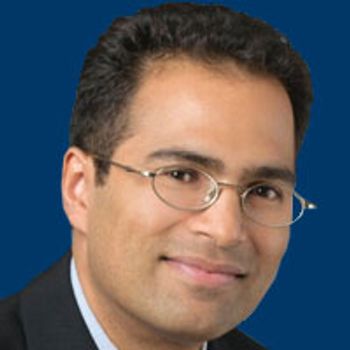
Naveen Pemmaraju, MD, discusses SL-401 and the future of treatment for patients with blastic plasmacytoid dendritic cell neoplasm.
Debu Tripathy, MD, professor and chairman, Department of Breast Medical Oncology, Division of Cancer Medicine, The University of Texas MD Anderson Cancer Center, discusses the progression of biosimilars in oncology.
Naveen Pemmaraju, MD, Department of Leukemia, Division of Cancer Medicine, The University of Texas MD Anderson Cancer Center, discusses the trial of SL-401 in blastic plasmacytoid dendritic cell neoplasms.

Banu Arun, MD, professor in the Department of Breast Medical Oncology, Division of Cancer Medicine, The University of Texas MD Anderson Cancer Center, discusses biosimilars in the context of global cancer care.
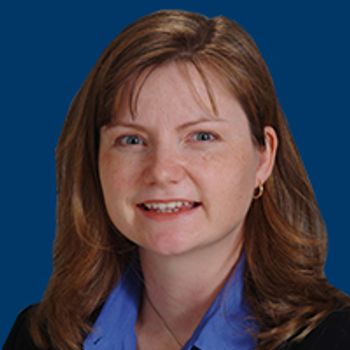
Wendy A. Woodward, MD, PhD, highlights encouraging advances and ongoing developments with radiotherapy in breast cancer.