The University of Texas MD Anderson Cancer Center | Strategic Alliance Partners
Latest from The University of Texas MD Anderson Cancer Center
Vassiliki A. Papadimitrakopoulou, MD, professor of medicine, Department of Thoracic/Head and Neck Medical Oncology, the University of Texas MD Anderson Cancer Center, discusses distinguishing features of the Guardant360 assay in non–small cell lung cancer (NSCLC).
Michael Wang, MD, professor in the Department of Lymphoma and Myeloma at The University of Texas MD Anderson Cancer Center, discusses challenges in treating patients with relapsed/refractory mantle cell lymphoma (MCL).
Scott Kopetz, MD, PhD, FACP, associate professor, Department of Gastrointestinal Medical Oncology, Division of Cancer Medicine, The University of Texas MD Anderson Cancer Center, discusses the correlation between tumor sidedness and biomarkers in colorectal cancer.
Rozita Yarmand, PhD, assistant professor, Department of Endocrine Neoplasia and Hormonal Disorders-Research, The University of Texas MD Anderson Cancer Center, discusses unmet needs in medullary thyroid cancer.
Banu Arun, MD, discusses how the role of genetic testing is evolving in breast cancer with the development of new targeted agents.
Michael Wang, MD, professor in the Department of Lymphoma and Myeloma at The University of Texas MD Anderson Cancer Center, discusses emerging treatment strategies in mantle cell lymphoma.
David S. Hong, MD, deputy director of the Department of investigational Cancer Therapeutics, Division of Cancer Medicine, The University of Texas MD Anderson Cancer Center, discusses the design of the InnovaTV 201 trial in cervical cancer.
Funda Meric-Bernstam, MD, chair, Department of Investigational Cancer Therapeutics, medical director, Institute for Personalized Cancer Therapy, professor of medicine, The University of Texas MD Anderson Cancer Center, discussed preliminary data with a novel combination in the treatment of patients with renal cell carcinoma.

The University of Texas MD Anderson Cancer Center named David Jaffray, PhD, as its first-ever chief technology and digital officer.
Scott Kopetz, MD, PhD, FACP, associate professor, Department of Gastrointestinal Medical Oncology, Division of Cancer Medicine, The University of Texas MD Anderson Cancer Center, discusses the biology of right- versus left-sided colorectal cancer.
David S. Hong, MD, deputy director of the Department of investigational Cancer Therapeutics, Division of Cancer Medicine, The University of Texas MD Anderson Cancer Center, discusses the safety profile of tisotumab vedotin (HuMax-TF-ADC) in patients with cervical cancer.
Jonathan Mizrahi, MD, a hematology/oncology fellow at The University of Texas MD Anderson Cancer Center, discusses the importance of early genomic testing in patients with colorectal cancer.
Scott Kopetz, MD, PhD, FACP, associate professor, Department of Gastrointestinal Medical Oncology, Division of Cancer Medicine, The University of Texas MD Anderson Cancer Center, discusses the significance of tumor sidedness in colorectal cancer.
Vassiliki A. Papadimitrakopoulou, MD, professor of medicine, Department of Thoracic/Head and Neck Medical Oncology, the University of Texas MD Anderson Cancer Center, discusses the utility of liquid biopsies in non–small cell lung cancer (NSCLC).
Eric Jonasch, MD, professor, Department of Genitourinary Medical Oncology, Division of Cancer Medicine, The University of Texas MD Anderson Cancer Center, discusses the molecular understanding of clear cell renal cell carcinoma (RCC).
Scott Kopetz, MD, PhD, FACP, explains the biologic difference between left- and right-sided colorectal cancer and highlights recent research on tumor sidedness and its impact on clinical practice.
Michael J. Overman, MD, professor in the Department of Gastrointestinal Medical Oncology, Division of Cancer Medicine, The University of Texas MD Anderson Cancer Center, discusses tailoring approaches to molecular subsets of patients with metastatic colorectal cancer.
Tagraxofusp led to a 90% overall response rate as a first-line therapy in patients with blastic plasmacytoid dendritic cell neoplasm.
Eric Jonasch, MD, professor of medicine, The University of Texas MD Anderson Cancer Center, discusses the use of single-agent pembrolizumab in the treatment of patients with metastatic non–clear cell renal cell carcinoma.
Jonathan Mizrahi, MD, a hematology/oncology fellow at The University of Texas MD Anderson Cancer Center, discusses the importance of personalized care in patients with metastatic colorectal cancer.
Michael J. Overman, MD, associate professor, Department of Gastrointestinal Medical Oncology, The University of Texas MD Anderson Cancer Center, discusses unmet needs with immunotherapy in metastatic colorectal cancer.
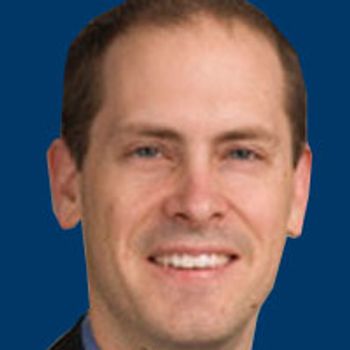
Michael J. Overman, MD, discusses an immunotherapy combination regimen in metastatic colorectal cancer and highlights existing challenges that still need to be addressed in future research.
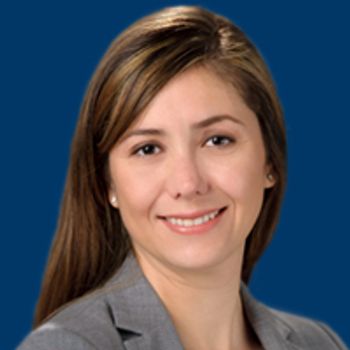
Mariana Chavez Mac Gregor, MD, MSc, discussex recent shifts in the treatment of patients with metastatic triple-negative breast cancer.
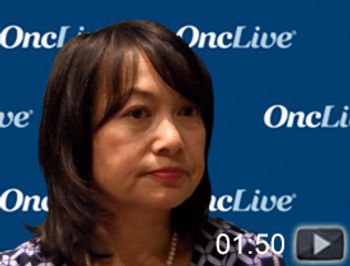
Cathy Eng, MD, professor of gastrointestinal and medical oncology, Department of Gastrointestinal Medical Oncology, Division of Cancer Medicine, The University of Texas MD Anderson Cancer Center, discusses the BEACON CRC study in patients with BRAF-mutated colorectal cancer.
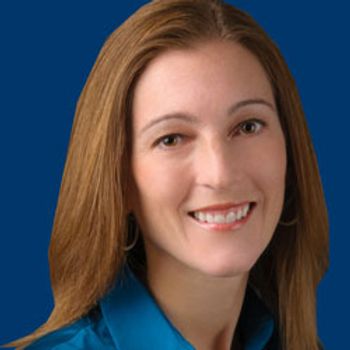
Courtney D. DiNardo, MD, MSCE, discusses the findings of the phase I dose-escalating study that led to the initial approval of ivosidenib for adult patients with relapsed or refractory acute myeloid leukemia with an IDH1 mutation.
Mariana Chavez Mac Gregor, MD, MSc, discusses the optimal applications of these assays in patients with early-stage, HR-positive/HER2-negative breast cancer and shed light on the overall outlook of personalized medicine in this setting.
Mariana Chavez Mac Gregor, MD, MSc, associate professor, Department of Health Services Research, Division of OVP, Cancer Prevention and Population Sciences, The University of Texas MD Anderson Cancer Center, discusses the use of chemotherapy in patients with node-positive, hormone receptor (HR)-positive, HER2-negative breast cancer.
Jonathan Mizrahi, MD, discusses recent pivotal data in colorectal cancer and its impact on personalized care in the treatment paradigm.
Robert Coleman, MD, professor in the Department of Gynecologic Oncology and Reproductive Medicine, The University of Texas MD Anderson Cancer Center, discusses the benefit of rucaparib in the treatment of patients with ovarian cancer.
The NCCN has updated their clinical practice guidelines for the treatment of patients with colorectal cancer to include the regimen of encorafenib and binimetinib plus EGFR inhibition with either cetuximab or panitumumab as a Category 2a treatment recommendation for patients with BRAF V600E–mutant metastatic colorectal cancer, after failure of 1 or 2 lines of therapy for metastatic disease.