
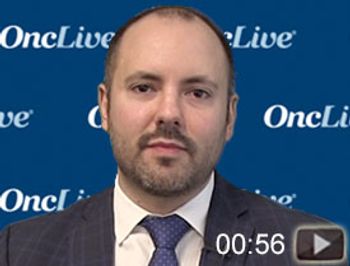
Jonathan Mizrahi, MD, discusses the goal of the phase III COMMIT trial in mismatch repair deficient colorectal cancer.
Jonathan Mizrahi, MD, discusses the goal of the phase III COMMIT trial in mismatch repair deficient colorectal cancer.
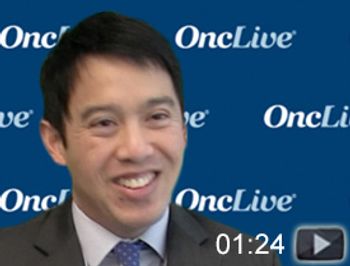
Phat Le, MD, assistant professor, Department of General Oncology, Division of Cancer Medicine, The University of Texas MD Anderson Cancer Center, discusses treatment approaches for patients with oligometastatic colorectal cancer (CRC).
David S. Hong, MD, discusses the burgeoning role of multitargeted therapeutics in patients with hematologic malignancies.
Prithviraj Bose, MD, discusses the high unmet need in post-myeloproliferative neoplasms acute myeloid leukemia and the impact of findings from the phase I/II trial on current and future treatment strategies in the space.
Matthew T. Campbell, MD, MS, shares ways to prevent the spread of coronavirus 2019.
Jason Westin, MD, MS, FACP, discusses the role of rituximab, cyclophosphamide, doxorubicin, vincristine, and prednisone in diffuse large B-cell lymphoma.
Neeta Somaiah, MD, discusses ongoing research in the field of sarcoma.
Ruben Mesa, MD, discusses the utility of fedratinib for patients with myelofibrosis who progress on first-line ruxolitinib.
Juan C. Lopez-Mattei, MD, FACC, FASE, FSCCT, FSCMR, discusses the findings of the retrospective analysis of pulmonary hypertension in patients with myelofibrosis and their impact on clinical practice.
Matthew H.G. Katz, MD, FACS, discusses the eligibility criteria for up-front surgery in patients with pancreatic cancer.
Shubham Pant, MD, discusses exciting data with PARP inhibitors in pancreatic cancer.
Jason Westin, MD, MS, FACP, discusses the potential for a chemotherapy-free future in large cell lymphoma.
Ryan W. Huey, MD, discusses potential sequencing options with sorafenib among novel combination strategies in hepatocellular carcinoma.
Combination therapy with cirmtuzumab and ibrutinib induced a 50% complete response rate in the phase I/II CIRLL study.
Robert L. Coleman, MD, FACOG, FACS, discusses the results of the phase III VELIA trial examining veliparib in combination with chemotherapy in ovarian cancer.
Ahmed O. Kaseb, MD, discusses the progression of therapy options for patients with hepatocellular carcinoma.
Douglas A. Nelson, MD, associate professor in the Department of General Oncology, Division of Cancer Medicine, The University of Texas MD Anderson Cancer Center, discusses the benefit of primary tumor resection in patients with metastatic colorectal cancer (mCRC).
Shubham Pant, MD, discusses frontline treatment selection in metastatic pancreatic cancer and shed light on some of the latest research being done in the space.
Robert L. Coleman, MD, FACOG, FACS, discusses the impact of the VELIA trial on ovarian cancer practice.
Michael J. Overman, MD, professor in the Department of Gastrointestinal Medical Oncology of the Division of Cancer Medicine and committee vice chair at The University of Texas MD Anderson Cancer Center, discusses investigational targeted therapies in metastatic colorectal cancer (mCRC).
Matthew H.G. Katz, MD, FACS, discusses data with neoadjuvant therapy and ongoing research in pancreatic cancer.
Kanwal Raghav, MBBS, MD, discusses the implications of molecular profiling on treatment decisions in metastatic colorectal cancer and the importance of referring patients to clinical trials.
Shubham Pant, MD, discusses combination immunotherapies and upcoming developments in pancreatic cancer.
Ahmed O. Kaseb, MD, discusses important considerations in the frontline treatment of patients with advanced hepatocellular carcinoma, the potential for targeted therapy in the space, and ongoing research with immunotherapy in earlier stages of disease.
Naval G. Daver, MD, discusses the results of a phase Ib/II study that evaluated the combination of azacitidine and nivolumab (Opdivo) in patients with relapsed/refractory acute myeloid leukemia.

Claire Manuszak, BS, discusses a phase I study (NCT03495323) with prexasertib (LY2606368) and LY3300054 in ovarian cancer.
Multiple immune-infiltrate features in the immune-genomic landscape of osteosarcoma, such as poor tumor infiltration by immune cells, low T-cell activity, a lack of immune-stimulating neoantigens, and immune-suppressing pathways, contribute to the limited clinical activity associated with checkpoint inhibitors in this disease, according to results of a study published in Nature Communications.
Michael J. Overman, MD, discusses the current treatment landscape of metastatic colorectal cancer and ongoing research efforts in the space.
Matthew H.G. Katz, MD, FACS, discusses the utility of preoperative chemotherapy for patients with resectable pancreatic cancer.
Michael Wang, MD, discusses the safety profile of the CAR T-cell therapy KTE-X19 in patients with relapsed/refractory mantle cell lymphoma, according to results from the phase II ZUMA-2 trial.