
Ignacio I. Wistuba, MD, chair, Department of Translational Molecular Pathology, Division of Pathology/Medicine, The University of Texas MD Anderson Cancer Center, discusses biomarkers for immunotherapy in lung cancer.
Ignacio I. Wistuba, MD, chair, Department of Translational Molecular Pathology, Division of Pathology/Medicine, The University of Texas MD Anderson Cancer Center, discusses biomarkers for immunotherapy in lung cancer.
Rashmi K. Murthy, MD, assistant professor, Department of Breast Medical Oncology, Division of Cancer Medicine, The University of Texas MD Anderson Cancer Center, discusses dual HER2 blockade in HER2-positive breast cancer.
Arlene O. Siefker-Radtke, MD, professor, Department of Genitourinary Medical Oncology, Division of Cancer Medicine, The University of Texas MD Anderson Cancer Center, discusses the treatment of patients with bladder cancer who have fibroblast growth factor receptor (FGFR)-altered tumors.
Elias Jabbour, MD, an associate professor in the Department of Leukemia at The University of Texas MD Anderson Cancer Center, discusses blinatumomab (Blincyto) in acute lymphoblastic leukemia.
Rashmi K. Murthy, MD, assistant professor, Department of Breast Medical Oncology, Division of Cancer Medicine, The University of Texas MD Anderson Cancer Center, discusses the future of tucatinib in HER2-positive breast cancer.
Wendy A. Woodward, MD, PhD, professor and chief, Clinical Breast Radiotherapy Service, Department of Radiation Oncology, The University of Texas MD Anderson Cancer Center, discusses proton radiotherapy in breast cancer.
Debu Tripathy, MD, professor and chairman, Department of Breast Medical Oncology, Division of Cancer Medicine, The University of Texas MD Anderson Cancer Center, discusses the importance of biosimilars in oncology.
Rashmi K. Murthy, MD, assistant professor, Department of Breast Medical Oncology, Division of Cancer Medicine, The University of Texas MD Anderson Cancer Center, discusses caveats of the PERSEPHONE trial.
Naveen Pemmaraju, MD, Department of Leukemia, Division of Cancer Medicine, The University of Texas MD Anderson Cancer Center, discusses the use of SL-401 in patients with blastic plasmacytoid dendritic cell neoplasms.
Banu Arun, MD, professor in the Department of Breast Medical Oncology, Division of Cancer Medicine and Department of Clinical Cancer Prevention, Division of OVP, Cancer Prevention and Population Sciences, The University of Texas MD Anderson Cancer Center, discusses ongoing research in triple-negative breast cancer (TNBC).
Cathy Eng, MD, professor of gastrointestinal medical oncology, The University of Texas MD Anderson Cancer Center, discusses why the negative results of the PRODIGE 7 trial are beneficial moving forward.
Wendy A. Woodward, MD, PhD, professor and chief, Clinical Breast Radiotherapy Service, Department of Radiation Oncology, The University of Texas MD Anderson Cancer Center, discusses radiotherapy in breast cancer.
Debu Tripathy, MD, professor and chairman, Department of Breast Medical Oncology, Division of Cancer Medicine, The University of Texas MD Anderson Cancer Center, discusses the management of hormone-receptor (HR)-positive early-stage breast cancer.
Cathy Eng, MD, professor of gastrointestinal medical oncology, The University of Texas MD Anderson Cancer Center, discusses the FDA approval of nivolumab (Opdivo) plus ipilimumab (Yervoy) in patients with microsatellite instability-high (MSI-H) or mismatch repair deficient (dMMR) metastatic colorectal cancer (mCRC) following progression on a fluoropyrimidine, oxaliplatin, and irinotecan.
Investigators are hopeful that idasanutlin, a novel small molecule that targets the MDM2 protein, can improve the efficacy of chemotherapy in patients with relapsed/refractory acute myeloid leukemia.
Scott Kopetz, MD, PhD, FACP, associate professor, Department of Gastrointestinal Medical Oncology, Division of Cancer Medicine, The University of Texas MD Anderson Cancer Center, discusses the importance of molecular testing in colorectal cancer.
Tucatinib used in combination with capecitabine, trastuzumab, or both agents showed promising antitumor activity in heavily pretreated women with HER2-positive breast cancer with or without brain metastases.
The CD19-targeted CAR T-cell product axicabtagene ciloleucel (axi-cel; Yescarta) is currently being investigated in patients with relapsed/refractory MCL in the ongoing ZUMA-2 trial.
Scott Kopetz, MD, PhD, FACP, associate professor, Department of Gastrointestinal Medical Oncology, Division of Cancer Medicine, The University of Texas MD Anderson Cancer Center, discusses triplet therapy for patients with BRAF-mutant colorectal cancer
Scott Kopetz, MD, PhD, FACP, associate professor, Department of Gastrointestinal Medical Oncology, Division of Cancer Medicine, The University of Texas MD Anderson Cancer Center, discusses the treatment of patients with BRAF-mutant colorectal cancer.
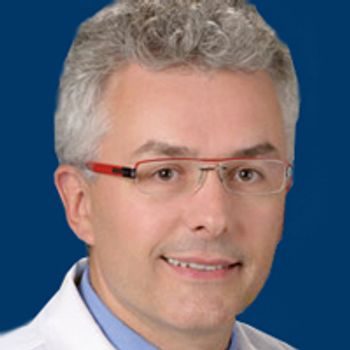
Srdan Verstovsek, MD, PhD, discusses the rationale for targeting JAK signaling, new drugs under study for this pathway, and clinical challenges associated with these therapies.
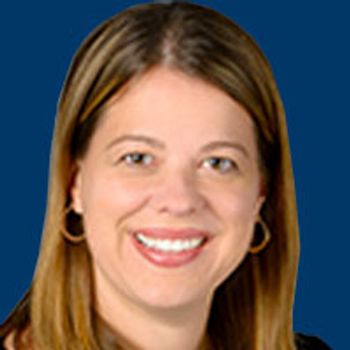
Ann H. Klopp, MD, PhD, discusses optimizing the use of chemoradiation and the future of the treatment landscape in endometrial cancer.
Ann H. Klopp, MD, PhD, an associate professor of radiation oncology at The University of Texas MD Anderson Cancer Center, discusses chemoradiation in endometrial cancer.
Obese men treated with targeted or immune therapies for metastatic melanoma had a 47% reduced risk of death compared with men who had a normal BMI.
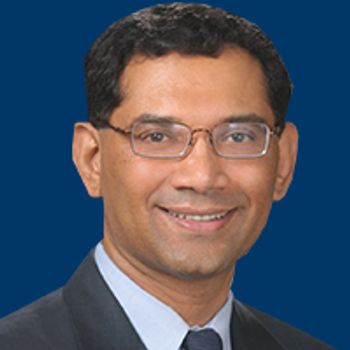
George R. Simon, MD, discusses emerging advancements with immunotherapy combination strategies for patients with NSCLC.

George R. Simon, MD, FACP, FCCP, professor of medicine, The University of Texas MD Anderson Cancer Center, discusses how the introduction of immunotherapy in the treatment of patients with locally advanced, stage III non–small cell lung cancer (NSCLC) has affected prognosis.
Michael J. Overman, MD, associate professor, Department of Gastrointestinal Medical Oncology, The University of Texas MD Anderson Cancer Center, discusses the remaining questions with immunotherapy in colorectal cancer.
Jean-Bernard Durand, MD, medical director of Cardiomyopathy Services, director of Cardiovascular Genetics Research, The University of Texas MD Anderson Cancer Center, discusses web-based management technologies for patients with cancer.
Ferdinandos Skoulidis, MD, PhD, MRCP, assistant professor, Department of Thoracic/Head and Neck Medical Oncology, The University of Texas MD Anderson Cancer Center, discusses combining chemotherapy and immunotherapy in non-small cell lung cancer (NSCLC).
George R. Simon, MD, FACP, FCCP, professor of medicine, The University of Texas MD Anderson Cancer Center, discusses durvalumab (Imfinzi) for patients with lung cancer.