Michael Wang, MD, a professor in the Department of Lymphoma and Myeloma at The University of Texas MD Anderson Cancer Center, discusses next steps for research with acalabrutinib in mantle cell lymphoma.
Michael Wang, MD, a professor in the Department of Lymphoma and Myeloma at The University of Texas MD Anderson Cancer Center, discusses next steps for research with acalabrutinib in mantle cell lymphoma.
Michael J. Overman, MD, associate professor, Department of Gastrointestinal Medical Oncology, The University of Texas MD Anderson Cancer Center, discusses progress made with immunotherapy agents in gastrointestinal (GI) cancer.
Sattva Neelapu, MD, professor of Lymphoma and Myeloma at The University of Texas MD Anderson Cancer Center, discusses the efficacy of axicabtagene ciloleucel in patients with large B-cell lymphoma.
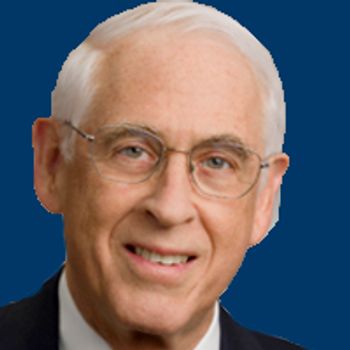
John Mendelsohn, MD, a 2016 Giants of Cancer Care® in Scientific Advances in recognition of his groundbreaking research that led to the development of cetuximab, died January 7 at his home in Houston, Texas at the age of 82.
John Mendelsohn, MD, president emeritus of The University of Texas MD Anderson Cancer Center and an internationally acclaimed leader in the field of medicine and scientist whose research helped pioneer a new type of cancer therapy, died January 7, 2019 at his home in Houston, Texas.
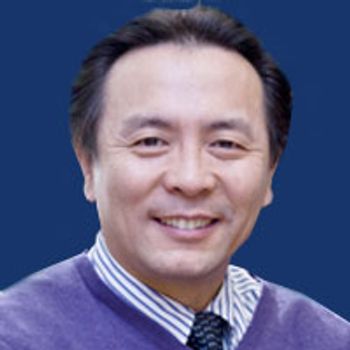
Michael Wang, MD, discusses the promise of single-agent acalabrutinib in the treatment of patients with relapsed/refractory mantle cell lymphoma.
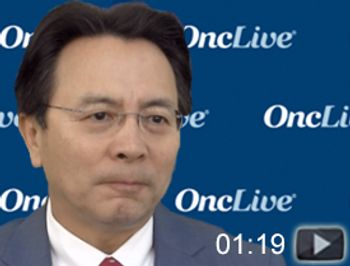
Michael Wang, MD, professor in the Department of Lymphoma and Myeloma at The University of Texas MD Anderson Cancer Center, discusses the safety and efficacy of single-agent acalabrutinib in the treatment of mantle cell lymphoma.
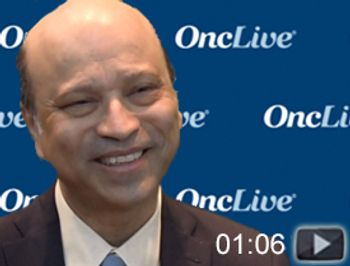
Debu Tripathy, MD, professor and chairman, Department of Breast Medical Oncology, Division of Cancer Medicine, The University of Texas MD Anderson Cancer Center, discusses the impact of T-DM1 in HER2-positive breast cancer.
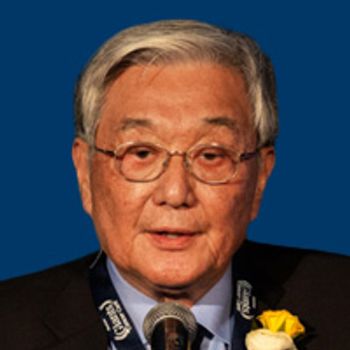
Waun Ki Hong, MD, reflects on his career milestones in head and neck cancer and how his pioneer initiatives continue to make inroads across malignancies.
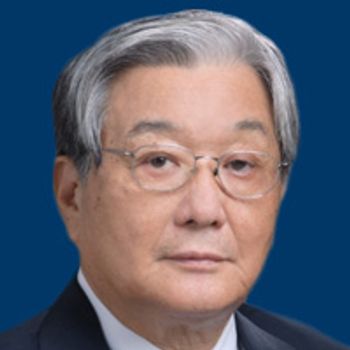
Waun Ki Hong, MD, a pioneering medical oncologist who was named a 2018 OncLive Giants of Cancer Care® award winner in recognition of his practice-changing research in head and neck cancer, died at his home in California on January 2 at the age of 76.

Waun Ki Hong, MD, a trail-blazing physician-scientist, mentor, and 2018 Giant of Cancer Care® in Head and Neck Cancers, whose clinical research innovations led to successful organ-sparing cancer treatment, advanced the field of targeted therapy and launched chemoprevention, died Wednesday at his home in California.

Michael Andreeff, MD, PhD, chair of genetics, professor of medicine, Department of Leukemia, Division of Cancer Medicine, The University of Texas MD Anderson Cancer Center, discusses the promise of venetoclax in acute myeloid leukemia.
Debu Tripathy, MD, professor and chairman, Department of Breast Medical Oncology, Division of Cancer Medicine, The University of Texas MD Anderson Cancer Center, discusses the use of pertuzumab in HER2-positive breast cancer.
Michael J. Overman, MD, associate professor, Department of Gastrointestinal Medical Oncology, The University of Texas MD Anderson Cancer Center, discusses next steps with immunotherapy in the treatment of patients with metastatic colorectal cancer.
Farhad Ravandi, MBBS, professor of medicine, department of leukemia, The University of Texas MD Anderson Cancer Center, discusses targeting CD33 in patients with relapsed/refractory acute myeloid leukemia.
An investigational antibody directed against Dickkopf-3 may be the key in suppressing tumor growth and extending survival in patients with pancreatic adenocarcinoma.
The combination of nivolumab and azacitidine demonstrated favorable responses and overall survival in patients with relapsed/refractory acute myeloid leukemia.
Hussein A. Tawbi, MD, PhD, associate professor of medicine, The University of Texas MD Anderson Cancer Center, discusses evolving treatment for patients with melanoma.
Cathy Eng, MD, shares her insight on the current paradigm of gastrointestinal cancers, specifically colorectal cancer and hepatocellular carcinoma.
Srdan Verstovsek, MD, PhD, director of the Hanns A. Pielenz Clinical Research Center for Myeloproliferative Neoplasms at The University of Texas MD Anderson Cancer Center, discusses JAK inhibition in the treatment of polycythemia vera.
Hussein A. Tawbi, MD, PhD, associate professor, The University of Texas MD Anderson Cancer Center, discusses the promise of checkpoint inhibition in the treatment of melanoma.
Shannon N. Westin, MD, MPH, clinical investigator, Department of Gynecologic Oncology and Reproductive Medicine, The University of Texas MD Anderson Cancer Center, discusses PARP inhibitors being tested in clinical trials.
Michael J. Overman, MD, associate professor, Department of Gastrointestinal Medical Oncology, The University of Texas MD Anderson Cancer Center, discusses the combination of atezolizumab (Tecentriq) and bevacizumab (Avastin) in hepatocellular carcinoma (HCC).
Michael Wang, MD, professor in the Department of Lymphoma and Myeloma at The University of Texas MD Anderson Cancer Center, discusses new agents in the field of mantle cell lymphoma (MCL).
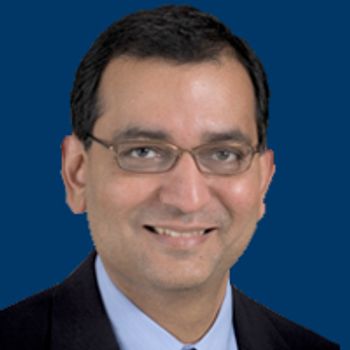
Milind Javle, MD, discusses findings from a phase II study of infigratinib in patients with intrahepatic cholangiocarcinoma, emphasizing the importance of molecular testing.
Michael Wang, MD, professor in the Department of Lymphoma and Myeloma at The University of Texas MD Anderson Cancer Center, discusses the treatment of patients with relapsed/refractory mantle cell lymphoma.
Padmanee Sharma, MD, PhD, professor of Immunology in the Department of Genitourinary Medical Oncology at The University of Texas MD Anderson Cancer Center, discusses immune checkpoint resistance in genitourinary cancers.
Vassiliki Papadimitrakopoulou, MD, professor, Department of Thoracic/Head and Neck Medical Oncology, The University of Texas MD Anderson Cancer Center, discusses biomarker-driven clinical trials in non–small cell lung cancer.
Srdan Verstovsek, MD, PhD, director of the Hanns A. Pielenz Clinical Research Center for Myeloproliferative Neoplasms at The University of Texas MD Anderson Cancer Center, discusses accelerated phase myelofibrosis.
Shannon N. Westin, MD, MPH, clinical investigator, Department of Gynecologic Oncology and Reproductive Medicine, The University of Texas MD Anderson Cancer Center, discusses resistance to PARP inhibitors in patients with ovarian cancer.