
In case you missed it, here is a recap of the most popular episodes of OncLive On Air® from 2023.
In case you missed it, here is a recap of the most popular episodes of OncLive On Air® from 2023.
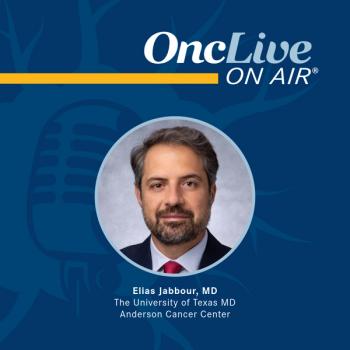
Dr Jabbour discusses the activity and the utilization of olverembatinib in chronic myeloid leukemia and expanded upon the role that TKIs can play in the management of malignancies beyond chronic myeloid leukemia and acute lymphoblastic leukemia.
The presence of ESR1 coabnormalities, including TP53 and PIK3CA mutations, and CCND1 and FGFR1 amplification, did not demonstrate a negative impact on the efficacy with lasofoxifene and abemaciclib in patients with estrogen receptor–positive, ESR1-mutant metastatic breast cancer.

Although there are no FDA-approved treatments specifically indicated for low-grade serous ovarian cancer, therapeutic options for these patients are rapidly expanding, with promising new approaches progressing through clinical development.
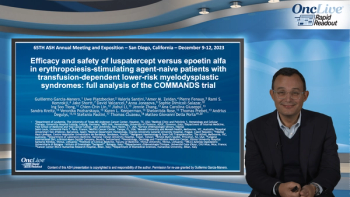
Guillermo Garcia-Manero, MD, presents data from the COMMANDS trial investigating luspatercept in erythropoiesis-stimulating agent-naive patients with transfusion-dependent lower-risk myelodysplastic syndromes.
Leading experts discuss the exciting progress and challenges in the field of kidney cancer treatment, addressing topics like immunotherapy, biomarkers, and the role of multidisciplinary care.
Experts discuss the potential of triple combination therapies for high-risk renal cell carcinoma (RCC) patients and the challenges posed by their toxicity profiles, emphasizing the need for compelling clinical trial data.
Treatment with SD-101 distributed via pressure-enabled drug delivery with immune checkpoint inhibition was tolerated and resulted in the depletion of Tregs, M-MDSCs, and M2 macrophages in liver metastases in patients with uveal melanoma.
A panel of experts discuss the evolving landscape of newly diagnosed multiple myeloma.
Leading oncologists discuss advanced treatment options for patients with progressing renal cell carcinoma (RCC), focusing on the promising results from LITESPARK-005 and treatment sequencing strategies.
Expert insight into how to discuss and manage treatment-related toxicities with cancer patients and their families, emphasizing the importance of early communication and vigilance.
The high-precision cellular product Orca-Q demonstrated early signals of clinical activity as well as an acceptable safety profile for patients undergoing haploidentical stem cell transplantation without posttransplant cyclophosphamide.
Brentuximab vedotin plus nivolumab, doxorubicin, and dacarbazine was found to have efficacy and acceptable safety and tolerability when used as a frontline treatment in patients with previously untreated advanced, classical Hodgkin lymphoma.
Up-front treatment with navitoclax plus ruxolitinib significantly reduced spleen volume by 35% or more at week 24 vs ruxolitinib plus placebo in patients with myelofibrosis; however, a significant difference was not observed in total symptom score v. 4.0 between the arms, according to data from the phase 3 TRANSFORM-1 study.
Revumenib, decitabine/cedazuridine, plus venetoclax elicited an objective response rate of 100% with acceptable safety in patients with relapsed/refractory acute myeloid leukemia enrolled in the small phase 1/2 SAVE study.
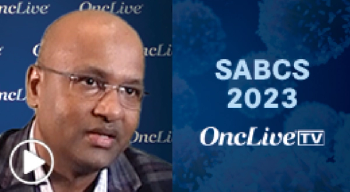
Senthil Damodaran, MD, PhD, discusses the efficacy of futibatinib plus fulvestrant in patients with FGFR1-amplified metastatic hormone receptor–positive, HER2-negative breast cancer according to findings from the phase 2 FOENIX-MBC2 trial.
Expert oncologists discuss the nuances of managing toxicities associated with Cabozantinib and Nivolumab combination therapy for advanced renal cell carcinoma (RCC).
Expert oncologists discuss the challenges and considerations in choosing second-line therapy for a patient with metastatic renal cell carcinoma (RCC) in a case-based context.
Stefan Maksimovic, MD, discusses the preclinical investigation of innovative tissue engineering with optical windows, state-of-the-art fluorescence reporter technology, and intravital multiphoton microscopy in mouse models with clear cell renal cell carcinoma.
Jose A. Karam, MD, FACS, discusses key takeaways from the 2023 International Kidney Cancer Symposium.
Eric Jonasch, MD, discusses the evolution of belzutifan in cancer care, highlighting the agent’s potential for the treatment of patients with renal cell carcinoma.
Renowned oncologists discuss critical factors influencing their decisions for frontline therapy in metastatic renal cell carcinoma (RCC), including risk assessment, sites of metastasis, performance status, and treatment goals.
A comprehensive discussion on VEGF-TKI-based combinations and immune checkpoint inhibitor combinations in the treatment of renal cell carcinoma, featuring key clinical trial results and treatment strategies.

Dr Dumbrava discusses the rationale and design of the PYNNACLE trial; phase 1 efficacy and safety findings with PC14586 in patients with p53 Y220C–mutated advanced solid tumors; and the next steps for this research.
Oncologists discuss the selection of the optimal frontline therapy for renal cell carcinoma, considering factors like response rates, progression, quality of life, and long-term results.
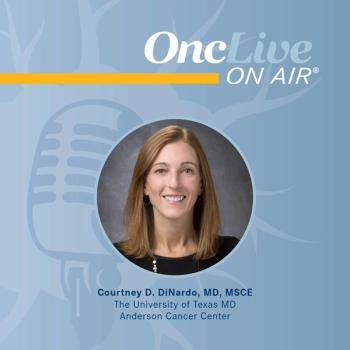
Dr DiNardo discusses the the FDA approval of ivosidenib for patients with relapsed/refractory IDH1-mutant myelodysplastic syndromes, the unique mechanism of action of ivosidenib, and key efficacy and safety findings from the AG120-C-001 trial.
Key opinion leaders discuss the use of brain MRI and bone assessment in the staging and monitoring of patients with renal cell carcinoma.
Renowned oncologists discuss the case of a 75-year-old man with advanced renal cell carcinoma, providing insights into evaluation and frontline therapy choices.

Arlene O. Siefker-Radtke, MD, discusses the efficacy of erdafitinib in patients with metastatic urothelial cancer with select FGFR alterations in the phase 3 THOR study.

Neeta Somaiah, MD, discusses enrollment criteria for the phase 3 Peak trial in patients with gastrointestinal stromal tumor and the advantages of this trial’s design.