
Ibrahim T. Aldoss, MD; and Elias Jabbour, MD, discuss the efficacy with ponatinib observed in the PHALLCON trial of patients with Philadelphia chromosome–positive acute lymphoblastic leukemia.
Ibrahim T. Aldoss, MD; and Elias Jabbour, MD, discuss the efficacy with ponatinib observed in the PHALLCON trial of patients with Philadelphia chromosome–positive acute lymphoblastic leukemia.
Ibrahim T. Aldoss, MD; and Elias Jabbour, MD, discuss the impact of the FDA approval of ponatinib for the treatment of newly diagnosed patients with Philadelphia chromosome–positive acute lymphoblastic leukemia.
Ibrahim T. Aldoss, MD; and Elias Jabbour, MD, discuss current standards of care for the treatment of patients with Philadelphia chromosome–positive acute lymphoblastic leukemia.
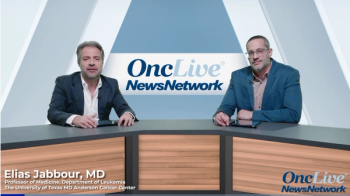
Ibrahim T. Aldoss, MD; and Elias Jabbour, MD, discuss the prevalence and prognostic outcomes of patients with Philadelphia chromosome–positive acute lymphoblastic leukemia.
Patients with leptomeningeal metastasis from HER2-positive breast cancer experienced clinical benefit with tucatinib plus trastuzumab and capecitabine.
Shubham Pant, MD, MBBS, discusses the utility of zanidatamab in patients with previously treated HER2+ biliary tract cancer.

Frontline treatment with acalabrutinib and bendamustine/rituximab (BR) improved PFS over BR alone in older patients with mantle cell lymphoma.
Sattva S. Neelapu, MD, discusses processes that have been adopted to streamline the delivery of CAR T-cell therapy to patients with lymphoma.
Sattva S. Neelapu, MD, discusses key clinical trial data that support the use of CAR T-cell therapy in standard practice for patients with lymphoma.
Neoadjuvant nivolumab/chemotherapy, followed by surgery and adjuvant nivolumab, significantly improved EFS in stage III N2 and stage III non-N2 NSCLC.

Zanidatamab continued to show confirmed responses, disease control, and prolonged overall survival in pretreated HER2+ biliary tract cancer.
Consolidation treatment with durvalumab after concurrent chemoradiation led to a survival benefit vs placebo in limited-stage small cell lung cancer.
Daniel M. Halperin, MD, discusses the FDA approval of lutetium Lu 177 dotatate for pediatric patients with SSTR-positive GEP-NETs.
In case you missed any, below is a recap of every OncLive On Air episode that aired in May 2024.
Timothy Yap, MBBS, PhD, FRCP, discusses next steps for investigating saruparib in advanced solid tumors with genetic mutations, including prostate cancer.
Timothy Yap, MBBS, PhD, FRCP, discusses the rationale for investigating saruparib in advanced solid tumors, such as prostate cancer with genetic mutations.
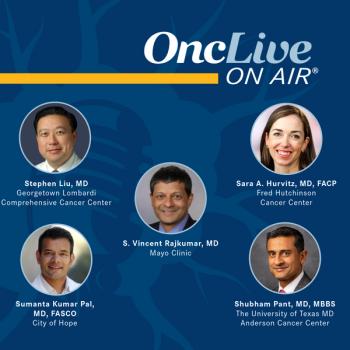
Experts from across oncology specialties discuss the abstracts and presentations they are most looking forward to seeing at the 2024 ASCO Annual Meeting.
Timothy Yap, MBBS, PhD, FRCP, discusses encouraging data seen with the first-in-class PARP1 selective inhibitor saruparib in solid tumors and how the agent is being further investigated.
Debu Tripathy, MD, discusses the current state of HER2-positive breast cancer treatment.
Debu Tripathy, MD, discusses real-world strategies for CDK4/6 inhibitor use and the importance of HER2 testing in HER2-positive metastatic breast cancer.
Parul N Barry, MD, discusses the integration of partial breast irradiation therapy into the treatment of patients with breast cancer.
Ramez Kouzy, MD, discusses efforts to improve knowledge of the use of AI in radiation oncology through the creation of an online repository.
James Ignatz-Hoover, MD, PhD, discusses the current arsenal of FDA-approved bispecific antibodies in multiple myeloma.

Naval G. Daver, MD, highlights ongoing research efforts in relapsed/refractory AML, including combination regimens and pathways targeted by novel agents.
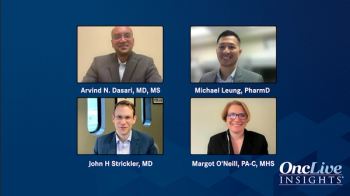
The panel concludes with perspectives on the future of treatment for patients with colorectal cancer, including unmet needs in the disease space.
Núria Agustí Garcia, MD, discusses the mapping of sentinel lymph nodes in early-stage ovarian cancer.
Clinical insights on the roles of various members within a multidisciplinary team involved in the care of patients with colorectal cancer.
Experts on colorectal cancer discuss the treatment decision-making process, highlighting the safety profiles of fruquintinib and regorafenib.
Naval G. Daver, MD, discusses the future of targeted therapy development for patients with acute myeloid leukemia.
Elias Jabbour, MD, discusses outcomes from the phase 3 PhALLCON trial in patients with Ph-positive acute lymphoblastic leukemia.