
Drs Rhodes and Patel highlight how the chronic lymphocytic leukemia treatment paradigm continues to evolve with advances in targeted therapy.
Drs Rhodes and Patel highlight how the chronic lymphocytic leukemia treatment paradigm continues to evolve with advances in targeted therapy.
Lower odds of enrollment in cancer clinical trials could be associated with education, transportation, and neighborhood resources.
Mansi R. Shah, MD, highlights the data on the effects of IVIG on infections in patients with relapsed/refractory multiple myeloma treated with teclistamab.
Mansi R. Shah, MD, on the effects of IVIG on infections in recipients of teclistamab therapy for multiple myeloma.
Bruce G. Haffty, MD, MS, discusses radiation therapy in node-positive breast cancer that becomes node negative after neoadjuvant chemotherapy.
During Sarcoma Awareness Month, Adam C. Berger, MD, FACS, discusses the importance of timely scans and recognizing the symptoms of sarcoma.
Malcolm Mattes, MD, discusses the CTEP 10492 trial of ipatasertib plus chemoradiotherapy in locally advanced head and neck squamous cell carcinoma.
Matthew Matasar, MD, discusses the design of the phase 3 OLYMPIA-3 trial of odronextamab plus CHOP in treatment-naive intermediate- or high-risk DLBCL.
Press Release
Researchers at Rutgers Cancer Institute of New Jersey provided commentary on how changes in the structure of DNA influence the mutation patterns in cancer.

Press Release
Health systems have put a stronger emphasis on making preventive care accessible, contributing to a reduction in colorectal cancer incidence and mortality.
Press Release
Rutgers Cancer Institute of New Jersey along with RWJBarnabas Health was redesignated by the National Cancer Institute.
M. Michele Blackwood, MD, FACS, discusses the significance of early cancer screenings.
Press Release
George Raptis, MD, MBA, begins role at Rutgers Cancer Institute of New Jersey and RWJBarnabas Health.
Press Release
Rutgers Cancer Institute of New Jersey together with RWJBarnabas Health will offer hepatic artery infusion therapy for patients with liver tumors.
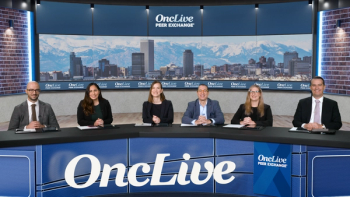
A panel of expert oncologists offer closing thoughts on the future treatment landscape and unmet needs in CLL.
Expert oncologists explore emerging therapies being investigated in CLL, including BTKi degraders, CAR-T therapy, and bispecific antibodies, and discussed their potential impact in shaping the future of CLL treatment.
Press Release
Rutgers Cancer Institute of New Jersey has elevated 2 associate director functions to deputy director positions.
The expert panel discusses recent data regarding the mechanisms of resistance to non-covalent BTK inhibitors in CLL.
Jacqueline Barrientos, MD, MS, discusses the role of non-covalent BTK inhibitors in R/R CLL and provided concise comments on the latest data, including insights from the ongoing BRUIN and Bellwave trials.
Javier Pinilla, MD, PhD explores evidence on molecular mechanisms leading to resistance in second-generation BTK inhibitors for CLL, providing insights from recently presented data at ASH 2023.
A panel of expert oncologists explore the influence of hypertension risk and other cardiovascular AEs in guiding treatment selection with BTKis, sharing insights from ASH 2023.
Faculty provide insights into the selection of BTK inhibitors, emphasizing the role of efficacy, toxicity, and quality of life data in treatment decisions, and exploring the impact of MAIC data.
Panel experts examine considerations for BTKi-based strategies in R/R CLL, highlighting pivotal findings from head-to-head trials, including acalabrutinib vs ibrutinib in ELEVATE-RR and zanubrutinib vs ibrutinib in ALPINE, covering safety, quality of life, and extended follow-up data.
Faculty share insights into the overall strategy for managing relapsed/refractory CLL following first-line therapy with venetoclax-based regimens and BTK inhibitors, discussing strategy variations based on prior first-line treatments.
Experts explore the role of BTKi-based combination therapy in the front-line treatment of CLL, focusing on patient considerations and referencing key data from CAPTIVATE, FLAIR, MAJIC, and SEQUOIA (Arm D).
Javier Pinilla, MD, PhD, provides a brief overview of the changing CLL treatment landscape, discussing the influence of off-target adverse events and the development of treatment resistance on the evolution of BTK inhibitor therapy.
Joanna Rhodes, MD, MSCE, explores the general approach to treatment-naïve CLL patients with high-risk factors such as del17p and TP53 mutations.
Brian Hill, MD, PhD, discusses the use of BTK inhibitor monotherapy in CLL and presented recent long-term data updates from studies such as the 6-year follow-up of ELEVATE-TN and the extended follow-up from SEQUOIA.
Joanna M. Rhodes, MD, MSCE, discusses the use of pirtobrutinib after covalent BTK inhibition in chronic lymphocytic leukemia or small lymphocytic lymphoma.

Nina D'Abreo, MD, discusses advances made in the treatment of patients with HER2-low and HER2-positive breast cancers.