

A new study presented at the 2025 ASH Annual Meeting revealed that subtle disruptions in genome architecture can predispose individuals to lymphoma.
A new study presented at the 2025 ASH Annual Meeting revealed that subtle disruptions in genome architecture can predispose individuals to lymphoma.

Researchers at Sylvester Comprehensive Cancer Center lead the way in innovative AML treatments.

Erdafitinib had a safety profile that was deemed tolerable in patients with recurrent or progressive IDH wild-type glioma harboring F3T3 gene fusions.
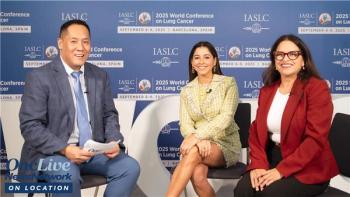
Estelamari Rodriguez, MD, MPH, Coral Olazagasti, MD, and Tina Roy, MD, sit down with Chandler Park, MD, FACP, to discuss the latest abstracts in lung cancer presented during the International Association for the Study of Lung Cancer 2025 World Conference on Lung Cancer.

Loncastuximab tesirine plus glofitamab demonstrated early promise in patients with relapsed or refractory large B-cell lymphoma.

Gina Z. D’Amato, MD, discusses the rationale for investigating olaparib plus temozolomide in previously treated advanced uterine leiomyosarcoma.

The novel targeted drug olutasidenib has been shown to be effacacious in select patients with MDS.

The top 5 OncLive videos of the week cover insights in lung cancer, myelofibrosis, and mantle cell lymphoma.

New study takes a deep dive into how TAF1 operates to promote development of new blood cells.
Gina Z. D’Amato, MD, shares her interpretation of efficacy outcomes from the negative Alliance A092104 trial in advanced uterine leiomyosarcoma.
Gina Z. D’Amato, MD, shares her interpretation of efficacy outcomes from the negative Alliance A092104 trial in advanced uterine leiomyosarcoma.

Olaparib plus temozolomide was not superior to pazopanib or trabectedin for the treatment of patients with advanced uterine leiomyosarcoma.

Dara-KRd improved rates of MRD negativity compared with KRd alone in patients with newly diagnosed multiple myeloma, regardless of transplant eligibility.

Mikkael A. Sekeres, MD, discusses the design of a study assessing the correlation between smoking intensity and genetic mutations in patients with MDS.

Lung cancer experts discuss successes and hesitations regarding the evolving use of antibody-drug conjugates in non–small cell lung cancer.

Mikkael A. Sekeres, MD, discusses questions that remain unanswered regarding the association between smoking and MDS development and progression.

Mikkael A. Sekeres, MD, discusses the implications of a study that found associations between smoking intensity and disease progression in MDS.
The top 5 OncLive videos of the week cover insights in multiple myeloma, AL amyloidosis, ovarian cancer, prostate cancer, breast cancer, and follicular lymphoma.

Scientists from Sylvester Comprehensive Cancer Center have found that targeting ZNF638 can induce an antiviral response in glioblastoma.

Sylvester researchers recently published positive data on a new treatment regimen for patients with relapsed or refractory follicular lymphoma.

During an OncLive Peer Exchange at the 2024 ASH Meeting, expert investigators in hematology discussed findings from several clinical trial updates in CLL.

Estelamari Rodriguez, MD, MPH, discusses a case study of a patient with non–small cell lung cancer harboring an EGFR L858R mutation and a TP53 mutation.

Sangeetha Venugopal, MD, MS, discusses other notable myelofibrosis data from the 2024 ASH Annual Meeting.
Sangeetha Venugopal, MD, MS, discusses data from the BOREAS trial for navtemadlin in relapsed/refractory myelofibrosis.
Sangeetha Venugopal, MD, MS, discusses post hoc overall survival data for pacritinib in myelofibrosis.
Sangeetha Venugopal, MD, MS, discusses the relationship between thrombocytopenia and anemia on disease progression in myelofibrosis
Sangeetha Venugopal, MD, MS, discusses challenges with low-dose ruxolitinib in myelofibrosis.

The combination of bezuclastinib and sunitinib generated favorable efficacy outcomes vs historical data in patients with previously treated GIST.
Alvaro Alencar, MD, explains the rationale of a phase 1 trial investigating NX-5948, a BTK degrader, in chronic lymphocytic leukemia.

Lenalidomide plus luspatercept demonstrated safety, tolerability, and efficacy in patients with non-del(5q) myelodysplastic syndrome.