Estelamari Rodriguez, MD, MPH, discusses the rationale for combining LAG-3 and PD-1 blockade to overcome immunotherapy resistance in NSCLC.

Estelamari Rodriguez, MD, MPH, is associate director of Community Outreach – Thoracic Oncology at Sylvester Comprehensive Cancer Center.
Estelamari Rodriguez, MD, MPH, discusses the rationale for combining LAG-3 and PD-1 blockade to overcome immunotherapy resistance in NSCLC.
Both panelists express enthusiasm about multiple emerging developments in EGFR-mutant NSCLC management.
Following first-line combination therapy, sequencing becomes more complex as chemotherapy exposure limits subsequent options.
The discussion addresses whether preserving sequencing flexibility should influence first-line treatment selection for patients with borderline fitness and small asymptomatic brain metastases.
A 72-year-old patient presents with multiple baseline challenges: mild hypertension, stage 2 chronic kidney disease, hearing loss, and 3 small brain metastases planned for stereotactic radiosurgery.
A 50-year-old never-smoker presents with stage IV disease involving bone and contralateral lung metastases, excellent performance status, and molecular testing revealing EGFR exon 19 deletion with concurrent TP53 R175H mutation.
Beyond TP53 mutations, several molecular and clinical characteristics influence treatment intensification decisions. Dr. Rodriguez emphasizes that patient factors including age, comorbidities, and chemotherapy tolerance capacity must be considered alongside molecular features.
Both panelists acknowledge that most academic centers now adopt combination regimens as standard practice, with the TOP study providing additional supportive evidence rather than fundamentally changing treatment approaches. However, the data proves particularly valuable for clinicians who must prioritize resources or convince patients about combination therapy benefits.
Experts unpack TOP trial data on TP53 co-mutations, guiding first-line EGFR lung cancer choices between osimertinib alone or with chemo.
TOP study prospectively shows TP53-mutant EGFR lung cancer gains from first-line combination therapy, reshaping choices amid FLAURA2 and MARIPOSA.

Learn practical systems for managing EGFR therapy side effects, triage tips, and what’s next for resistance in metastatic NSCLC.
Experts weigh EGFR L858R/TP53 stage IV NSCLC options, combo regimens and brain-met strategies to boost control, ease visits.
Experts weigh combo therapy for EGFR L858R/TP53 lung cancer with brain mets, balancing radiation and systemic options to cut visits.
Experts compare EGFR lung cancer first-line combos, weighing chemo vs amivantamab-lazurtnib toxicity, quality of life, and patient-centered choice.
Experts weigh NCCN category 1 value and show how serial brain MRIs shape EGFR lung cancer first-line treatment decisions.
This episode explores how overall survival data, toxicity profiles, and guideline categorizations inform frontline decision-making.
This segment frames the current first-line treatment landscape for EGFR-mutant metastatic non–small cell lung cancer and how it has evolved over two decades.
Dr. Wistuba emphasizes the critical need for reinforcing RNA testing alongside DNA testing for comprehensive NGS in lung cancer.
Dr. Leal outlines her approach to frontline treatment selection for newly diagnosed patients with ROS1-positive lung cancer.
Dr. Rodriguez outlines patient education strategies emphasizing partnership from treatment initiation, as clinical trials demonstrate over half of patients require dose adjustments.
Dr. Rodriguez reviews historical toxicity profiles from earlier ROS1 inhibitors, noting that crizotinib and entrectinib presented novel side effects including visual field changes preventing night driving due to floaters, along with liver function test (LFT) abnormalities requiring monitoring.
Dr. Wistuba explains that acquired resistance to ROS1-targeted therapies frequently involves on-target mutations, with G2032R representing the most frequently observed resistance mutation among 10 to 12 described mutations that affect the ATP binding site and reduce drug binding efficiency.
Dr. Wistuba addresses the complexity of NGS reports that may include multiple abnormalities beyond ROS1 fusions.
Dr. Wistuba confirms that fusion variant identification does not impact treatment selection, emphasizing that ROS1-positive versus ROS1-negative status represents the key clinical decision point.
Dr. Wistuba provides detailed information about ROS1 gene fusions, discovered in the 1980s with over 30 to 40 fusion partners identified that constitutively activate ROS1 in cells, leading to malignant properties.
Dr. Leal emphasizes that although actionable genomic alterations like ROS1 are rare, their clinical implications are enormous. Following National Comprehensive Cancer Network (NCCN) guidelines, these targets should be acted upon in the first-line setting as the initial targeted therapy treatment.
Panelists discuss the role of ctDNA (liquid biopsy) in clinical practice, highlighting its benefits and limitations in detecting actionable mutations, interpreting results, and guiding treatment decisions when tissue testing is insufficient.
Panelists discuss strategies for identifying and managing ROS1-positive NSCLC, focusing on comprehensive testing approaches, emerging clinical data, and factors that guide treatment decisions.
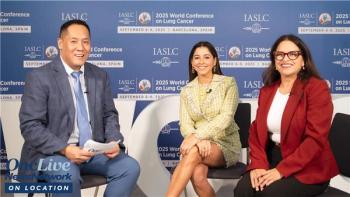
Estelamari Rodriguez, MD, MPH, Coral Olazagasti, MD, and Tina Roy, MD, sit down with Chandler Park, MD, FACP, to discuss the latest abstracts in lung cancer presented during the International Association for the Study of Lung Cancer 2025 World Conference on Lung Cancer.
Lung cancer experts discuss successes and hesitations regarding the evolving use of antibody-drug conjugates in non–small cell lung cancer.
February 2nd 2024
September 16th 2021