
Opinion|Videos|April 27, 2026
Frontline Treatment Selection and Future Directions
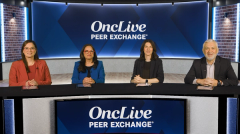
Dr. Leal outlines her approach to frontline treatment selection for newly diagnosed patients with ROS1-positive lung cancer.
Advertisement
Episodes in this series
Dr. Leal outlines her approach to frontline treatment selection for newly diagnosed patients with ROS1-positive lung cancer. With several FDA-approved strategies showing high response rates, intracranial responses, and prolonged PFS, treatment selection focuses on agents providing the best quality of life with the longest PFS duration. She prefers newer-generation, more selective ROS1 TKIs, specifically taletrectinib as her first-line choice, based on 88% response rates, 76% intracranial response rates, 44-month duration of response, and PFS exceeding 45 months representing the longest reported across trials.
The safety profile supporting this selection includes ROS1 selectivity avoiding TRKB side effects and very low neurotoxicity rates. Treatment continuation rates demonstrate approximately 17% dose reductions with gastrointestinal side effects and AST/ALT elevations being most prominent, but overall less than 2% dose discontinuation rates, suggesting patients can remain on treatment for extended periods. As taletrectinib covers G2032R resistance mutations, sequencing implications require consideration, emphasizing re-biopsy importance at progression to understand resistance mechanisms for optimal second-line sequencing.
Dr. Rodriguez addresses optimal support strategies for rare population-targeted therapies, emphasizing initial drug access through patient assistance programs, manufacturer support, and foundation copayment assistance. Beyond financial support, patients need comprehensive assistance including side effect management, work reintegration, and life responsibility management. Younger patient populations often work and have children, requiring substantial support systems. Oral drugs provide convenience with quarterly visits after initial intensive monitoring, but patients need ongoing resource connections including patient advocacy groups like ROS1ders and ROS1 Wanderers that provide clinical trial connections, compassionate use program access, and treatment sequencing guidance.
Dr. Leal identifies key future priorities including understanding resistance mechanisms to newer-generation ROS1 TKIs, moving targeted therapies to earlier treatment lines including consolidation settings following chemoradiation for unresectable stage III disease, and addressing gaps in resectable disease settings where actionable genomic alterations including ROS1 are increasingly identified through perioperative testing strategies. Leptomeningeal disease management represents another critical area requiring ROS1-targeted therapy role clarification and appropriately designed clinical studies addressing these complex clinical scenarios.
Advertisement
Related to this article
Benjamin Weinberg, MD, discusses the FDA approval of daraxonrasib, RASolute 302 survival data, safety considerations, and future RAS-targeted therapies in pancreatic cancer.
Half of lenalidomide-refractory patients with 1 to 3 prior lines remained alive and progression free at least 5 years after a single cilta-cel infusion.

Andrew Kuykendall, MD, discusses the FDA approval of rusfertide and how to apply it in clinical practice for polycythemia vera management.

An NDA seeks FDA approval of savolitinib plus osimertinib for EGFR-mutated NSCLC with MET overexpression or amplification after EGFR TKI therapy.
Jason Hafron, MD, discusses the emotional, clinical, and financial burden of false positive cancer screening results and improved risk stratification.

Raajit K. Rampal, MD, PhD, discusses JAK inhibitor choice in cytopenic myelofibrosis, emerging combinations, and anemia-directed agents.

The sNDA for elinzanetant seeks FDA approval for moderate-to-severe vasomotor symptoms in women receiving endocrine therapy for HR-positive breast cancer.

The NMPA has approved of pirtobrutinib in treatment-naive and previously treated CLL/SLL.
Advertisement
Advertisement
Trending on OncLive
1
Ifinatamab Deruxtecan BLA Voluntarily Withdrawn in Previously Treated Extensive-Stage SCLC
2
China's NMPA Approves Pirtobrutinib Across CLL
3
FDA Grants Priority Review to Elinzanetant for Endocrine Therapy–Associated Vasomotor Symptoms in HR+ Breast Cancer
4
Long-Term PERSEUS Data Confirm Durable PFS Benefit With D-VRd in Transplant-Eligible Newly Diagnosed Myeloma
5