Now Playing
Panelists discuss strategies for identifying and managing ROS1-positive NSCLC, focusing on comprehensive testing approaches, emerging clinical data, and factors that guide treatment decisions.
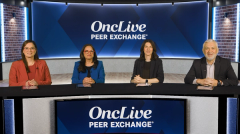
Dr. Julia Rotow moderates this OncLive Peer Exchange with distinguished panelists Dr. Ticiana Leal from Emory University, Dr. Estelamari Rodriguez from University of Miami, and Dr. Ignacio Wistuba from Moffitt Cancer Center. The discussion focuses on optimizing care for patients with ROS1-positive non-small cell lung cancer (NSCLC), emphasizing patient identification through comprehensive testing strategies, updated trial data, and safety considerations influencing clinical decision-making.
The panelists stress that comprehensive next-generation sequencing (NGS) testing is essential for all patients with NSCLC, as no patient should be missed. Dr. Leal emphasizes that identifying ROS1 fusions represents a game changer, with new treatments offering high response rates, durability of responses, intracranial activity, and improved tolerability that significantly impacts quality of life. Dr. Rodriguez highlights that ROS1 fusions can be missed with traditional DNA-based NGS platforms, making comprehensive testing of both DNA and RNA critical, as these patients achieve better long-term outcomes with durable responses and central nervous system (CNS) efficacy when placed on appropriate targeted agents.
Dr. Wistuba provides the pathologist perspective, noting that comprehensive testing requires good quality material for solid histologic diagnosis, followed by careful specimen handling to extract DNA and RNA for comprehensive NGS testing. Pathology laboratories should implement reflex testing approaches including PD-L1, ALK, and ROS1 immunohistochemistry, followed by comprehensive NGS testing. RNA-based testing emerges as crucial because DNA sequencing has limitations in capturing some mutations affecting large intronic sequences, which are better identified through RNA approaches that can detect rare translocations affecting ROS1 and other fusions like ALK, RET, and NTRK.