
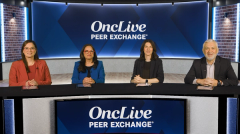
Opinion|Videos|April 13, 2026
CNS Activity and Treatment Implications
Dr. Wistuba confirms that fusion variant identification does not impact treatment selection, emphasizing that ROS1-positive versus ROS1-negative status represents the key clinical decision point.
Advertisement
Episodes in this series
Dr. Wistuba confirms that fusion variant identification does not impact treatment selection, emphasizing that ROS1-positive versus ROS1-negative status represents the key clinical decision point. Although publications explore correlations between specific fusions and brain metastases or drug responsiveness, these have not been proven clinically relevant for treatment selection, with NGS-based testing providing the definitive diagnostic approach.
Dr. Leal explains that ROS1 fusion identification provides crucial information about disease biology, as these fusions demonstrate predilection for CNS involvement both at baseline and during disease progression. High intracranial activity from ROS1-targeted therapy has transformed treatment approaches for patients with lung cancer and brain metastases harboring ROS1 fusions. Starting patients with brain metastases on ROS1-targeted therapy can spare patients from radiation therapy toxicities, delaying radiation use for extended periods, and significantly delaying CNS recurrence or progression represents a critical endpoint for patient outcomes.
Modern agents, particularly taletrectinib, demonstrate CNS response rates exceeding 60%, providing security that oral therapy initiation can achieve meaningful responses avoiding radiation therapy. Dr. Rodriguez describes evolution in convincing radiation oncologists about the profound efficacy data, noting that responses occur rapidly with standard 6-week follow-up MRI monitoring when using oral TKIs like taletrectinib for initial treatment. Safety has been established for minimally symptomatic patients included in clinical trials, allowing TKI initiation before radiation consideration.
Dr. Rotow groups ROS1 with other actionable drivers like EGFR and ALK for very high CNS response rates, enabling systemic therapy initiation with close monitoring in most scenarios. Exceptions include large symptomatic CNS disease requiring different approaches. With PFS extending nearly 4 years with modern ROS1-directed therapies, considerations include late radiation toxicity risks like radiation necrosis, similar to ALK-positive disease where long survival necessitates careful consideration of late toxicities.
The importance of multidisciplinary discussions through tumor boards or real-time multidisciplinary clinics allows learning nuances across medical oncology and radiation oncology applications. The paradigm has shifted from crizotinib lacking sufficient CNS activity to successive agents including entrectinib, repotrectinib, and taletrectinib showing high brain responses.
Advertisement
Related to this article
SurVaxM missed the SURVIVE trial OS end point in newly diagnosed glioblastoma, whereas a subgroup of patients 65 or younger had significantly improved OS.
The resubmission follows a third complete response letter issued in July 2026 that cited manufacturing deficiencies rather than efficacy or safety concerns.

The FDA has approved atezolizumab in combination with chemotherapy for some patients with stage 3 colon cancer following surgery.
The FDA approved nogapendekin alfa inbakicept plus BCG for BCG-unresponsive NMIBC with high-grade papillary-only tumors.

The FDA set a PDUFA target action date of March 31, 2027, for tabelecleucel in relapsed or refractory EBV-positive post-transplant lymphoproliferative disease.
Experts in gynecologic oncology overview top research being presented at the 2026 ESMO Congress.
Matthew P. Goetz, MD, explores menopausal status, recurrence risk, and adjuvant CDK4/6 inhibitor selection in HR-positive breast cancer.
First-line IO-based combination regimens were increasingly used and associated with longer observed survival in advanced renal cell carcinoma.
Advertisement
Advertisement
Trending on OncLive
1
FDA Approves Nogapendekin Alfa Inbakicept Plus BCG for High-Grade, Papillary-Only BCG-Unresponsive NMIBC
2
Real-World, First-Line IO-Based Combos Are Associated With Improved OS vs TKI Monotherapy in Advanced RCC
3
CDK4/6 Inhibitors Anchor First-Line Metastatic Breast Cancer Care, But Oral SERDs May Fall Short
4
Tenumomeran/Raplemomeran Plus Pembrolizumab Misses PFS End Point in HPV16+ HNSCC
5