
Laurence J. DiNardo, MD, FACS, discusses ctDNA testing in head and neck cancers, advancements in targeted therapies, and multidisciplinary collaboration.
Laurence J. DiNardo, MD, FACS, discusses ctDNA testing in head and neck cancers, advancements in targeted therapies, and multidisciplinary collaboration.
Jose Trevino, MD, discusses how immunotherapy and precision medicine approaches may advance treatment for patients with immune-resistant PDAC.
Jose Trevino, MD, discusses unmet needs in PDAC, highlighting early detection and multidisciplinary care amid Pancreatic Cancer Awareness Month.
Charles E. Geyer, Jr., MD, discusses the efficacy and safety of perioperative atezolizumab plus chemotherapy in stage II/III triple-negative breast cancer.
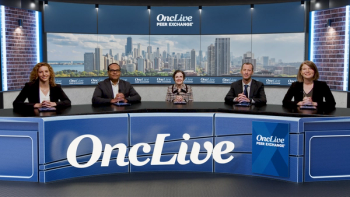
The panel looks to the future landscape for HER2+ breast cancer, highlighting emerging treatment practices and currently unmet needs.
Focusing on the selection of subsequent therapies for patients with HER2-low/HER2+ metastatic breast cancer, the panel discusses treatment sequencing considerations and practices.
Breast cancer specialists discuss adverse events associated with T-DXd, focusing on monitoring for interstitial lung disease (ILD) and the role of re-challenging patients with T-DXd after resolution of grade 1 ILD.
Aditya Bardia, MD, MPH, shares comprehensive insights on the DESTINY-Breast06 study evaluating T-DXd in HER2-low and HER2 ultra-low metastatic breast cancer, and the panel offers its initial impressions.
Ian Krop, MD, PhD, provides an overview of HER2-low and HER2 ultra-low breast cancer and discusses challenges encountered during diagnosis.
Experts on breast cancer discuss the potential impact of ongoing research in HER2+ breast cancer, highlighting how results from the DESTINY-Breast07 study may translate to DESTINY-Breast09.
Melinda Telli, MD, provides an overview of ongoing research in HER2+ metastatic breast cancer, highlighting the DESTINY-Breast09, PATINA, INAVO122, and HER2CLIMB-05 studies.
The panel provides comprehensive insights on approaching first-line treatment of patients with HER2+ metastatic breast cancer and the role of neratinib.
Breast cancer specialists outline their institution’s practices regarding the choice between subcutaneous fixed-dose pertuzumab – trastuzumab-hyaluronidase and intravenous pertuzumab and trastuzumab.
Kandace P. McGuire, MD, provides clinical insights on how patient monitoring practices inform discussions around surgical options, providing the potential for deescalating surgical management.
Ian Krop, MD, PhD, outlines his institution’s approach to utilizing neoadjuvant therapy in patients with HER2+ early breast cancer, and Melinda Telli, MD, discusses the role of surgery.
A panel of experts on breast cancer provide insights on challenges encountered during the diagnosis of HER2+ early breast cancer and discuss the role of immunohistochemistry and FISH testing.
Survivors of childhood cancer are at a significantly higher risk of death following a major cardiovascular event than the general public.
Press Release
Three Virginia health systems together will serve as one of eight groups in the U.S. to conduct research for the Cancer Screening Research Network.
Press Release
VCU Massey Cancer Center has been designated a Comprehensive Cancer Center by the National Cancer Institute, the nation’s principal authority on cancer research and training.
Homogeneous trials present a missed opportunity to discover treatments that might be highly successful in a particular subset of patients.
Leslie M. Randall, MD, MAS, discusses the unmet needs in platinum-resistant ovarian cancer.
Charles E. Geyer, Jr, MD, professor of medicine, Virginia Commonwealth University School of Medicine; associate director for clinical research and Harrigan, Haw, Luck Families chair in Cancer Research, Massey Cancer Center, discusses ongoing challenges in the management of patients with metastatic HER2-positive breast cancer.
Charles E. Geyer, Jrm, MD, discusses the clinical implications of the KATHERINE trial and the outlook for T-DM1 in patients with HER2-positive breast cancer.
Charles E. Geyer, Jr, MD, professor of medicine, Virginia Commonwealth University School of Medicine; associate director for clinical research and Harrigan, Haw, Luck Families chair in Cancer Research, Massey Cancer Center, discusses the impact of targeted agents in HER2-positive breast cancer.
Charles E. Geyer, Jr, MD, professor of medicine, Virginia Commonwealth University School of Medicine; associate director for clinical research and Harrigan, Haw, Luck Families chair in Cancer Research, Massey Cancer Center, discusses pertuzumab in HER2-positive breast cancer.
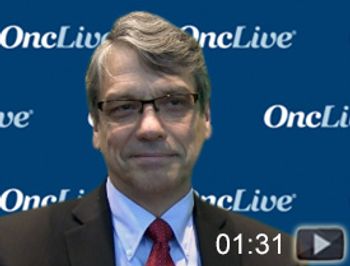
Charles E. Geyer, Jr, MD, professor of medicine, Virginia Commonwealth University School of Medicine; associate director for clinical research and Harrigan, Haw, Luck Families chair in Cancer Research, Massey Cancer Center, discusses the rationale and results of the phase III KATHERINE trial in HER2-positive breast cancer.
Studies conducted at VCU Massey Cancer Center in Richmond, Virginia, over the past 7 years have developed the therapeutic combination of pemetrexed and sorafenib (Nexavar) from the bench to the bedside, and now into phase II clinical trial evaluation.
Investigators at Virginia Commonwealth University Massey Cancer Center discuss the current treatment for children with high-risk neuroblastoma including high-dose chemotherapy, surgery, stem cell transplantation, radiation therapy, isotretinoin, and immunotherapy.
Investigators at Virginia Commonwealth University Massey Cancer Center are developing dynamical models that may allow clinicians to move beyond simple human leukocyte antigen matching to personalize immunosuppressive regimens and thus improve donor selection.
The Department of Radiation Oncology at Virginia Commonwealth University Massey Cancer Center has long been at the forefront worldwide in the development of various radiation therapy technologies that are now considered standard and have become widely available.