Winship Cancer Institute of Emory University | Strategic Alliance Partners
Latest from Winship Cancer Institute of Emory University
Suresh S. Ramalingam, MD, FASCO, deputy director, director, Lung Cancer Program, Winship Cancer Institute of Emory University, professor, assistant dean, Roberto C. Goizueta Distinguished Chair for Cancer Research, director, Division of Medical Oncology, Department of Hematology and Medical Oncology, Emory University School of Medicine, discusses treatment after osimertinib (Tagrisso) in EGFR-mutant non–small cell lung cancer (NSCLC).
The 3 most common types of amyloidosis––TTR mutant, TTR wild-type, and amyloid light chain––have a significant amount of cardiac involvement, making cardiologists essential players in the diagnostic workup and treatment of these patients
The FDA's accelerated approval of sacituzumab govitecan-hziy in April
2020, filled a previously undefined role for antibody-drug conjugates in patients with triple-negative breast cancer.
With the identification of numerous molecular abnormalities that can affect treatment and the course of disease in patients with breast cancer, it’s become understood that genetic profiling can define clinical trial eligibility, the presence or absence of aberrations help to drive treatment decisions, and variants can be predictive for response or resistance.
Ajay K. Nooka, MD, MPH, FACP, discusses the utility of BCMA as a target in multiple myeloma.
Jane L. Meisel, MD, discusses sequencing considerations in the first- and second-line settings of HER2-positive breast cancer.
Ragini Kudchadkar, MD, discusses future research directions for patients with rare, non-melanoma skin cancers.
Nabil F. Saba, MD, FACP, discusses the results of the JAVELIN Head and Neck 100 trial, as well as data from other key, recent studies in head and neck cancer.
Suresh S. Ramalingam, MD, FASCO, discusses the potential of HER2 as a driver mutation in non–small cell lung cancer.

Adam Marcus, PhD, has been appointed interim executive director of Winship Cancer Institute of Emory University, the National Cancer Institute–designated comprehensive cancer center for Georgia.
Sagar Lonial MD, FACP, discusses unanswered questions with T-cell engagers in myeloma.
Suresh S. Ramalingam, MD, FASCO, discusses limitations with immunotherapy in non–small cell lung cancer.
In our exclusive interview, Nabil F. Saba, MD, FACP, sheds light on the implications of targeting HRAS in head and neck squamous cell carcinoma, details the data that has been reported to date with tipifarnib, and shares his expectations for the ongoing KO-TIP-007 trial.
Nabil F. Saba, MD, FACP, discusses ongoing clinical trials in head and neck cancer.
Data from a subgroup analysis of the phase 2 GRIFFIN study demonstrated that adding daratumumab to lenalidomide, bortezomib, and dexamethasone improved depth of response, stringent complete response, and minimal residual disease negativity, in Black patients with newly diagnosed multiple myeloma.
Sagar Lonial, MD, FACP, discusses the development of bispecific T-cell engagers (BiTEs) and CAR T-cell therapy in multiple myeloma.
Sagar Lonial, MD, FACP, discusses the approval of belantamab mafodotin-blmf and how it addressed an unmet need in relapsed/refractory multiple myeloma.
Nabil F. Saba, MD, FACP, discusses scheduling challenges with cisplatin in head and neck cancer.
Nabil F. Saba, MD, FACP, discusses emerging sequencing strategies in head and neck cancer.
Sagar Lonial, MD, FACP, discusses the FDA approval of belantamab mafodotin in patients with relapsed/refractory multiple myeloma.
Nabil F. Saba, MD, FACP, discusses the future of treatment in head and neck cancer.
Sagar Lonial, MD, FACP, discusses the benefits of early intervention in high-risk smoldering multiple myeloma.
Nabil F. Saba, MD, FACP, director, Head and Neck Medical Oncology Program, Winship Cancer Institute of Emory University, professor, Department of Hematology and Medical Oncology, Department of Otolaryngology, Emory University School of Medicine, discusses the impact of the coronavirus disease 2019 (COVID-19) on telehealth in head and neck cancer.
Nabil F. Saba, MD, FACP, discusses how the COVID-19 pandemic has impacted treatment in head and neck cancer and the health care system at large.
Ragini R. Kudchadkar, MD, discusses the biological differences between ocular melanoma and cutaneous melanoma.
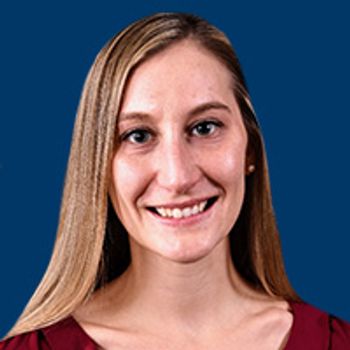
Obese men with nonmetastatic prostate cancer have higher cardiovascular disease–related mortality and all-cause mortality, and potentially increased prostate cancer–specific mortality.

Ragini Kudchadkar, MD, discusses the prognosis of patients with metastatic ocular melanoma and the work being done to define novel approaches in melanoma.
Walter J. Curran, Jr, MD, FACR, FASCO, explains the eligibility criteria for immunotherapy and radiation in patients with lung cancer.
Sagar Lonial, MD, FACP, discusses the role of targeted therapy in acute myeloid leukemia and acute lymphoblastic leukemia.
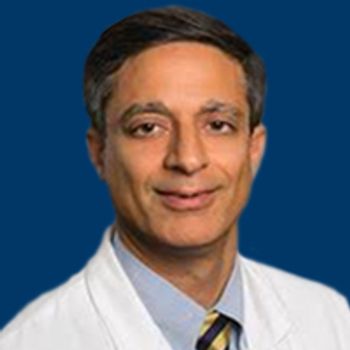
Sagar Lonial, MD, FACP, discusses the encouraging activity with the BCMA-targeted agent belantamab mafodotin in multiple myeloma.
