
Medical oncologists review the complexities of molecular testing, including tissue exhaustion, and discuss management approaches.
Medical oncologists review the complexities of molecular testing, including tissue exhaustion, and discuss management approaches.

Sandip P. Patel, MD, discusses treatment options available for patients with EGFR-mutated NSCLC who progress on EGFR TKIs and platinum-based chemotherapy.

Medical oncologists specializing in lung cancer give an overview of the current treatment landscape for patients with EGFR-mutated non–small cell lung cancer (NSCLC).
Comprehensive insights on biomarker testing practices for patients with lung or gastrointestinal cancers.
A breast medical oncologist and nurse practitioner review molecular testing practices for patients with breast cancer.

Ajay Kumar Nooka, MD, MPH, FACP, highlights the significance of the FDA approval of elranatamab for select patients with relapsed/refractory multiple myeloma and sheds light on the agent’s role in the expanding field of T cell–redirecting therapies approved for the treatment of this patient population.

Madhav V. Dhodapkar, MBBS, discusses efficacy and safety findings from the dose-expansion portion of the phase 2 LINKER-MM1 trial of linvoseltamab in patients with relapsed/refractory multiple myeloma.
Sagar Lonial, MD, FACP, discusses the final overall survival analysis of the phase 3 IKEMA trial of isatuximab when combined with carfilzomib and dexamethasone in patients with relapsed multiple myeloma, highlighting the progression-free survival and OS outcomes.
The expert panel discusses the history of antibody-drug conjugates and explores their mechanisms of action.
A panel of cancer-treating specialists introduce the discussion with a broad overview of antibody-drug conjugates (ADCs).
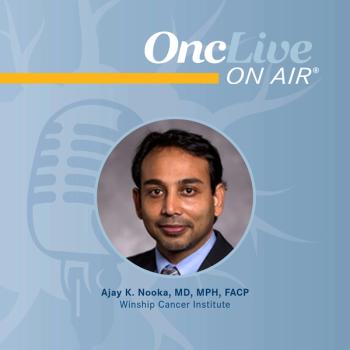
Dr Nooka discusses the FDA approval of elranatamab in relapsed/refractory multiple myeloma, key data from MagnetisMM-3, and the evolving role of bispecific antibodies in the multiple myeloma treatment paradigm.
Ticiana Leal, MD, discusses the rationale for and findings from a PD-L1 subgroup analysis of the phase 3 LUNAR trial in patients with metastatic non–small cell lung cancer.
Anthony M Hunter, MD, discusses the current treatment landscape with JAK inhibitors in myelofibrosis.
Nabil F. Saba, MD, FACP, discusses key findings from the phase 3 CONTINUUM trial of sintilimab plus chemoradiotherapy in patients with locally advanced nasopharyngeal carcinoma.
Treatment with elranatamab monotherapy produced early, deep, and durable responses in patients with relapsed/refractory multiple myeloma who received a prior BCMA-directed therapy, according to a pooled analysis of the MagnetisMM-1, MagnetisMM-2, MagnetisMM-3, and MagnetisMM-9 trials.
Closing out his review of therapy for HER2+ metastatic breast cancer, Kevin Kalinsky, MD, MS, looks toward future evolutions in the treatment landscape.

Ribociclib plus switch endocrine therapy induced a statistically significant progression-free survival benefit compared with placebo plus switch endocrine therapy in patients with hormone receptor–positive, HER2-negative, metastatic breast cancer.
A brief discussion on the role of trastuzumab deruxtecan (T-DXd) in patients with HER2+ metastatic breast cancer who progress on tucatinib therapy.
A key opinion leader in HER2+ metastatic breast cancer shares his perspective on key factors in selecting second or later-line therapy.
Comprehensive insight on the treatment armamentarium currently available to patients with HER2+ metastatic breast cancer and CNS disease.
Expert oncologist Kevin Kalinsky, MD, MS, reviews a patient case of HER2+ metastatic breast cancer and highlights key findings in this disease setting.
Manali Bhave, MD, discusses the effect of emerging therapies on the treatment landscape for patients with HR-positive, HER2-negative or -low breast cancer, highlighted her stance on sequencing decisions for these patients, and expanded on the additional work being done to optimize treatment sequencing from a growing list of options.
Kevin Kalinsky, MD, MS, discusses differences in efficacy data for CDK4/6 inhibitors in the treatment of patients with metastatic hormone receptor–positive/HER2-negative breast cancer.

Manali Bhave, MD, discusses the impact of new treatment strategies on the landscape of hormone receptor–positive/HER2-negative breast cancer.
Jane Lowe Meisel, MD, discusses previously reported data from the ELAINE-1 and ELAINE-2 trials, their significance within the ESR1-mutant, ER-positive, HER2-negative breast cancer treatment paradigm, and the purpose of the ongoing ELAINE-3 trial.
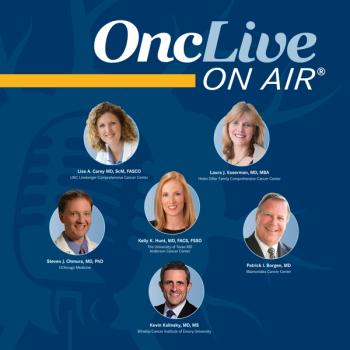
Faculty from the 40th Annual Miami Breast Cancer Conference® feature updates in the treatment of patients across the breast cancer continuum.
Press Release
The American Cancer Society, in partnership with Winship Cancer Institute of Emory University, announced a new project that aims to significantly accelerate cancer research and improve patient outcomes.
Kevin Kalinsky, MD, MS, discusses genetic sequencing in triple-negative breast cancer, the significance of breast cancer tumor board discussions for informing further research and optimizing patient care, and how future directions in breast cancer treatment are building off the current benefits of drugs classes like antibody-drug conjugates.
Closing out their discussion on biomarkers and precision medicine in cancer care, key opinion leaders look toward future evolutions in the oncology landscape.
Ryan Haumschild, PharmD, MS, MBA, reflects on how oncologic pharmacists can help to develop treatment pathways and educate patients on precision medicine.