

The top 5 OncLive videos of the week cover insights in myelodysplastic syndrome, lung cancer, hepatocellular carcinoma, colorectal cancer, and ovarian cancer.
The top 5 OncLive videos of the week cover insights in myelodysplastic syndrome, lung cancer, hepatocellular carcinoma, colorectal cancer, and ovarian cancer.
Amer Zeidan, MBBS, discusses completed and ongoing research evaluating immunotherapy and other novel agents in patients with myelodysplastic syndromes.
Michael Cecchini, MD, discusses the effects of neoadjuvant chemotherapy on tumor-infiltrating lymphocyte levels in colorectal cancer with liver metastases.
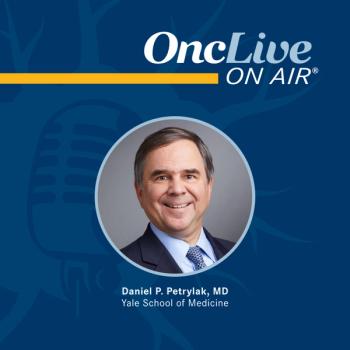
Daniel P. Petrylak, MD, discusses the role of Lutetium Lu 177 vipivotide tetraxetan in metastatic castration-resistant prostate cancer.
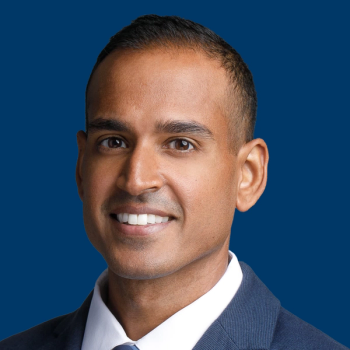
Zafar Sayed, MD, explains advances in surgical head and neck cancer approaches, including the use of transoral robotic surgery.
Dr Braun discusses molecular factors that contribute to exceptional immune checkpoint inhibition responses among patients with renal cell carcinoma.
Thejal Srikumar, MD, MPH, discusses the Yale School of Medicine's unique approach to offering fellows a space to address professional burnout.

William K. Oh, MD, highlights the evolution of targeted therapy for prostate cancer treatment, including antibody-drug conjugates and bispecific antibodies.

Experts highlight the top presentations to watch for at the 2025 Genitourinary Cancers Symposium.

Press Release
Yale Medicine was ranked third in the nation for physician practices, an annual designation by Castle Connolly.

Amer Zeidan, MBBS, and Guillermo Garcia-Manero, MD, discuss the potential for the use of oral HMAs in MDS.
Amer Zeidan, MBBS, and Guillermo Garcia-Manero, MD, discuss the implications of the FDA approval of imetelstat for transfusion-dependent anemia in MDS.
Amer Zeidan, MBBS, and Guillermo Garcia-Manero, MD, discuss other potential roles for luspatercept in MDS and beyond.
Amer Zeidan, MBBS, and Guillermo Garcia-Manero, MD, discuss long-term transfusion independence data for luspatercept in MDS.
Amer Zeidan, MBBS, and Guillermo Garcia-Manero, MD, on treatment goals for anemia and transfusion independence in MDS.
Amer Zeidan, MBBS, and Guillermo Garcia-Manero, MD, on the FDA approval of luspatercept in ESA-naive lower-risk MDS.
Amer Zeidan, MBBS, and Guillermo Garcia-Manero, MD, discuss the importance of treating anemia in myelodysplastic syndrome.
Eric Winer, MD, discusses the significance of 2 FDA approvals for HR-positive, HER2-negative breast cancer and emerging novel breast cancer treatments.

David Rimm, MD, PhD, discusses pathology limitations that have been exacerbated by the current lineup of breast cancer IHC tests.
Ian Krop, MD, PhD, spotlights emerging HER2-directed agents of interest for pretreated patients with HER2-positive breast cancer.
Amer Zeidan, MBBS, and Guillermo Garcia-Manero, MD, discuss current treatment trends in myelodysplastic syndromes.
Mariya Rozenblit, MD, discusses how genomic alterations and TMB influence the efficacy of immune checkpoint inhibitors in HR+ metastatic breast cancer.

David Rimm, MD, PhD, discusses the effect of inaccurate HER2 immunohistochemistry testing on the subclassification of patients with breast cancer.

David Rimm, MD, PhD, discusses current HER2 immunohistochemistry assays that are used in the management of breast cancer, and their shortcomings.
Roy S. Herbst, MD, PhD, discusses advances in EGFR inhibition throughout the past several decades in patients with lung cancer.
David A. Braun, MD, PhD, discusses the potential for protein glycosylation as a biomarker to predict nivolumab/cabozantinib responses in advanced RCC.
David Rimm, MD, discusses the current limitations of immunohistochemistry diagnostic kits for HER2-low and HER2-ultralow breast cancer.
Dr Foss discusses the significance of the FDA approval of denileukin diftitox for patients with relapsed/refractory CTCL.

Ian Krop, MD, PhD, and Aditya Bardia, MD, MPH, FASCO, detail how TROP2-directed ADCs have generated excitement in breast cancer and other solid tumors.
Dr Shallis discusses the ELEMENT-MDS trial in MDS and the potential of intervening with luspatercept before patients become RBC transfusion dependent.