
Alessandro Santin, MD, discusses the investigation of sacituzumab govitecan in patients with recurrent endometrial carcinoma overexpressing TROP2.
Alessandro Santin, MD, discusses the investigation of sacituzumab govitecan in patients with recurrent endometrial carcinoma overexpressing TROP2.
Daniel P. Petrylak, MD, discusses strategies he and his colleagues at Yale Cancer Center have employed to reduce the effect of the current chemotherapy shortage on patients, and emphasizes the need to reassess current manufacturing strategies in an effort to potentially mitigate future drug shortages.
Daniel P. Petrylak, MD, discusses sequencing treatment selections in patients with FGFR2/3-altered metastatic urothelial cancer.
Alessandro Santin, MD, discusses the rationale and design of a phase 2 trial of sacituzumab govitecan in patients with persistent or recurrent endometrial cancer; unmet needs for patients with this disease; and key findings from the stage 1 portion of the trial.
Paul Stockhammer, MD, PhD, discusses research into the association between alterations in multiple tumor suppressor genes and poorer outcomes in patients with EGFR-mutant lung cancer, which was presented at the 2023 ASCO Annual Meeting.
Michael Cecchini, MD, discusses the phase 3 PROSPECT trial of neoadjuvant chemoradiation vs neoadjuvant fluorouracil, leucovorin, and oxaliplatin chemotherapy with selective use of chemoradiation, followed by total mesorectal excision in patients with locally advanced rectal cancer, and how this regimen may fit into the current treatment landscape for rectal cancer.
Pamela Kunz, MD, details key clinical trial updates across the gastrointestinal cancer arena presented during the 2023 ASCO Annual Meeting, including the phase 3 PROSPECT trial in locally advanced rectal cancer and the phase 3 IMbrave050 trial in patients with resected in hepatocellular carcinoma at high risk of recurrence.
Sarah Goldberg, MD, MPH, discusses the design and key objectives of an ongoing phase 1a/b study of VIC-1911 as a monotherapy and in combination with sotorasib in KRAS G12C–mutant non–small cell lung cancer.

Alessandro Santin, MD, discusses the clinical activity of sacituzumab govitecan-hziy in patients with recurrent endometrial cancer who overexpress Trop-2.
Amin Nassar, MD, discusses findings from a retrospective study of the use of EGFR TKI therapy, durvalumab, or observation following concurrent chemoradiation in patients with unresectable, stage III non–small cell lung cancer harboring EGFR mutations.
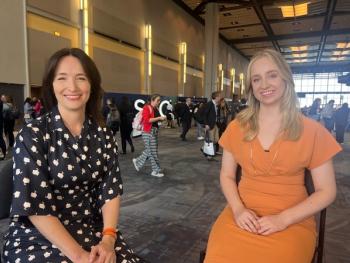
OncLive® will be LIVE with OncLive® News Network: On Location at the 2023 ASCO Annual Meeting. Each day, we will broadcast a series of interviews with top thought leaders, to learn their thoughts and reactions to data presented across hematologic oncology during the conference.
Roy S. Herbst, MD, PhD, discusses findings from the overall survival analysis of the phase 3 ADAURA trial of adjuvant osimertinib in patients with stage IB to IIIA resected non–small cell lung cancer harboring EGFR mutations.
Treatment with adjuvant osimertinib produced a statistically significant and clinically meaningful improvement in overall survival compared with placebo in patients with resected, EGFR-mutated, stage IB to IIIA non–small cell lung cancer.
Amer Zeidan, MBBS, discusses topline efficacy findings from the IMerge trial of imetelstat in patients with transfusion-dependent lower-risk myelodysplastic syndrome.
Henry S. Park, MD, MPH, discusses the importance of considering radiation therapy in patients with non–small cell lung cancer and how this therapeutic approach can work in concert with targeted therapy and other systemic therapies.
Anne Chiang, MD, PhD, discusses treatment options for patients with extensive-stage small cell lung cancer.
Sarah Goldberg, MD, MPH, discusses ongoing investigations with antibody-drug conjugates and bispecific antibodies in patients with non–small cell lung cancer harboring EGFR mutations.
Press Release
Yale Cancer Center and Smilow Cancer Hospital scientists and clinicians will present new research at the 2023 Annual Meeting of the American Society of Clinical Oncology, June 2nd to June 6th at McCormick Place in Chicago, Illinois.
Barbara Burtness, MD, discusses preclinical data on the combination of VIC1911 and adavosertib in head and neck squamous cell carcinoma and lung cancer.
Ranjit S. Bindra, MD, PhD, discusses a new class of DNA modifiers which selectively target tumor DNA with the goal of overcoming resistance mechanisms across multiple types of cancer.
Roy S. Herbst, MD, PhD, discusses the implications of the phase 3 AEGEAN trial in patients with resectable non–small cell lung cancer.
David A. Braun, MD, PhD, discusses the rationale for evaluating frontline nivolumab and salvage nivolumab plus ipilimumab in patients with advanced renal cell carcinoma in the phase 2 HCRN GU16-260 trial.
Anne Chiang, MD, PhD, discusses recent advancements in the biological understanding and treatment of small cell lung cancer.

David Rimm, MD, PhD, discusses both the use and advantages of utilizing multiplex spatial proteomic profiling in breast cancer.
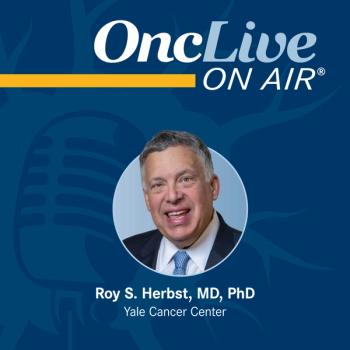
Dr Herbst discusses the FDA approval of adjuvant pembrolizumab in non–small cell lung cancer, key efficacy and safety data from the KEYNOTE-091 trial, and future research efforts that may further improve outcomes in this population.
Osimertinib produced a statistically significant and clinically meaningful improvement in overall survival compared with placebo as adjuvant treatment for patients with stage IB, II, or IIIA, EGFR-mutated non–small cell lung cancer after complete tumor resection with curative intent.
David A. Braun, MD, PhD, discusses the enrichment of SLAMF7-positive, CD8-positive T-cells and their role on nivolumab resistance in clear cell and non–clear cell renal cell carcinoma.
Expert hematologic oncologists discuss updates from the ASH 2022 Annual Meeting on emerging therapies for lower-risk MDS.
Following the ASH 2022 Annual Meeting, experts in hematologic oncology review updated data for luspatercept in lower-risk MDS.
Hematologic oncology experts give an overview of first- and second-line treatment options for lower-risk myelodysplastic syndromes.